
Judith Suminwa: DRC Mining Governance UN Proposes Global Framework
Summary
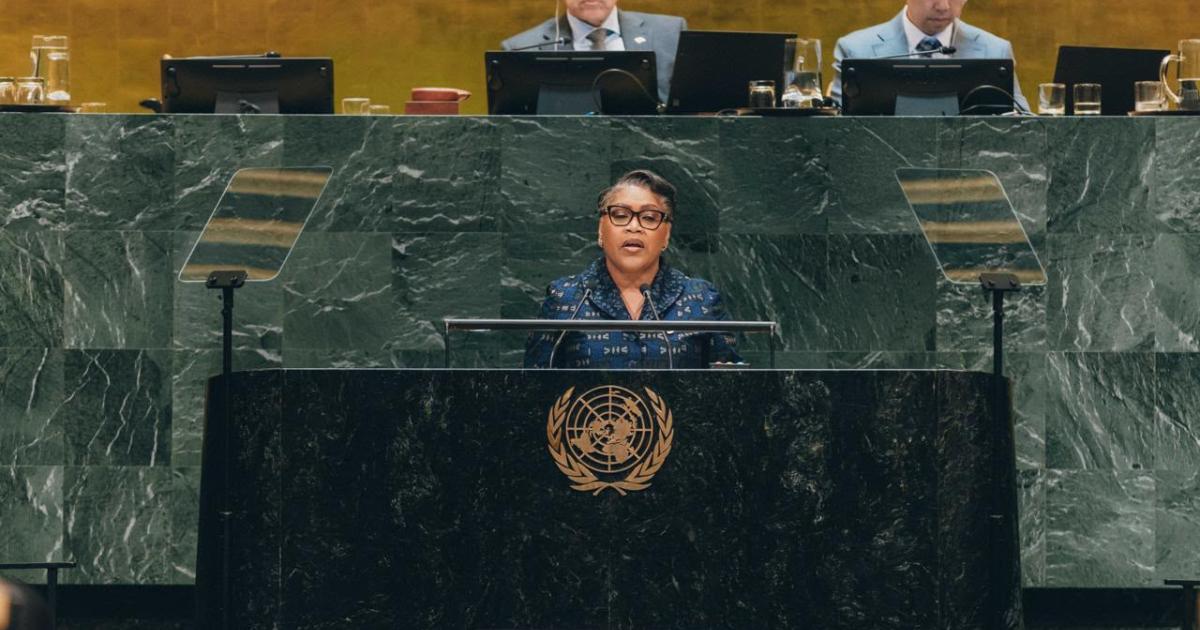
- DRC Prime Minister Judith Suminwa Tuluka, representing President Félix Tshisekedi, addressed the 81st session of the UN on Wednesday, September 23, 2026.
- She proposed a global framework designed to ensure transparent mining governance worldwide.
- The Prime Minister also advocated for the establishment of responsible value chains for minerals.
- This initiative underscores the DRC's commitment to ethical sourcing and accountability in the global mineral trade.
DRC Prime Minister Proposes Global Mining Framework at UN
It signals a potential future shift towards stricter international and national regulations for mining governance and supply chain due diligence, particularly impacting companies operating in or sourcing from the DRC.
Judith Suminwa Tuluka, serving as the Prime Minister of the Democratic Republic of Congo (DRC), recently addressed the United Nations, advocating for a new international approach to mineral resource management. Representing President Félix Tshisekedi, Prime Minister Suminwa presented a significant proposal during her appearance at the 81st session of the UN. Her intervention took place on Wednesday, September 23, 2026, where she outlined the DRC's vision for enhanced global cooperation.
The core of Prime Minister Suminwa's address centered on the urgent need for a comprehensive global framework. This proposed framework is designed to foster transparent mining governance across the world. The initiative underscores the DRC's commitment to ensuring that the extraction and trade of minerals are conducted openly and accountably, benefiting all stakeholders from producing nations to end-users.
Beyond governance, the Prime Minister's proposal also emphasized the establishment of responsible value chains for minerals. This aspect aims to ensure ethical sourcing and processing throughout the entire supply chain, from the mine to the market. The DRC's push for such a framework highlights its desire to see greater integrity and sustainability in the global mineral trade, particularly for critical minerals originating from regions like Africa.
Advocating for Transparent Mineral Governance
The Democratic Republic of Congo, a nation rich in vital mineral resources, has consistently championed the cause of transparent mineral governance. Prime Minister Suminwa's presentation at the UN's 81st session reinforces the country's long-standing position that robust international standards are essential for equitable resource management. The proposed global framework seeks to standardize practices and increase oversight, thereby reducing illicit activities and ensuring that mineral wealth contributes directly to national development and prosperity.
This initiative aligns with broader efforts to promote Congo transparent mineral governance, aiming to create an environment where mining operations are not only economically viable but also socially and environmentally responsible. The call for a UN global mining framework proposal from such a significant mineral-producing nation signals a strong desire for collective action to address the complexities of the global mining sector. It suggests a future where international collaboration dictates the norms for resource extraction and trade.
Implications for Responsible Supply Chains
The DRC's proposal for responsible value chains carries substantial implications for the global minerals industry, particularly concerning supply chain due diligence minerals Africa. By advocating for a global framework, Prime Minister Suminwa is pushing for a system that would require greater accountability from all actors involved in the mineral supply chain, from miners to manufacturers. This could lead to more stringent requirements for companies sourcing minerals, compelling them to verify the origin and ethical production of their materials.
Such a framework could significantly impact how companies operate within the DRC responsible mining value chains and beyond. It signals a potential future shift towards stricter international and national regulations for mining governance and supply chain due diligence, particularly impacting companies operating in or sourcing from the DRC. The emphasis on responsibility aims to mitigate risks associated with conflict minerals, human rights abuses, and environmental degradation, fostering a more sustainable and ethical global mineral trade.
Practical Implications
This proposal signals a potential future shift towards stricter international and national regulations for mining governance and supply chain due diligence, particularly impacting companies operating in or sourcing from the DRC. Lawyers and compliance officers should monitor developments for new compliance obligations related to transparency and responsible sourcing.
Source
Source: Original reporting via {source}
How does this affect you?
Get an AI analysis of this article grounded in your jurisdictions, practice areas, and any policy documents you've uploaded to Wansom.
Finish Reading the Full Story and the Expert Analysis.
Get the latest legal & regulatory intelligence in DR Congo
Wansom is AI and can make mistakes.