
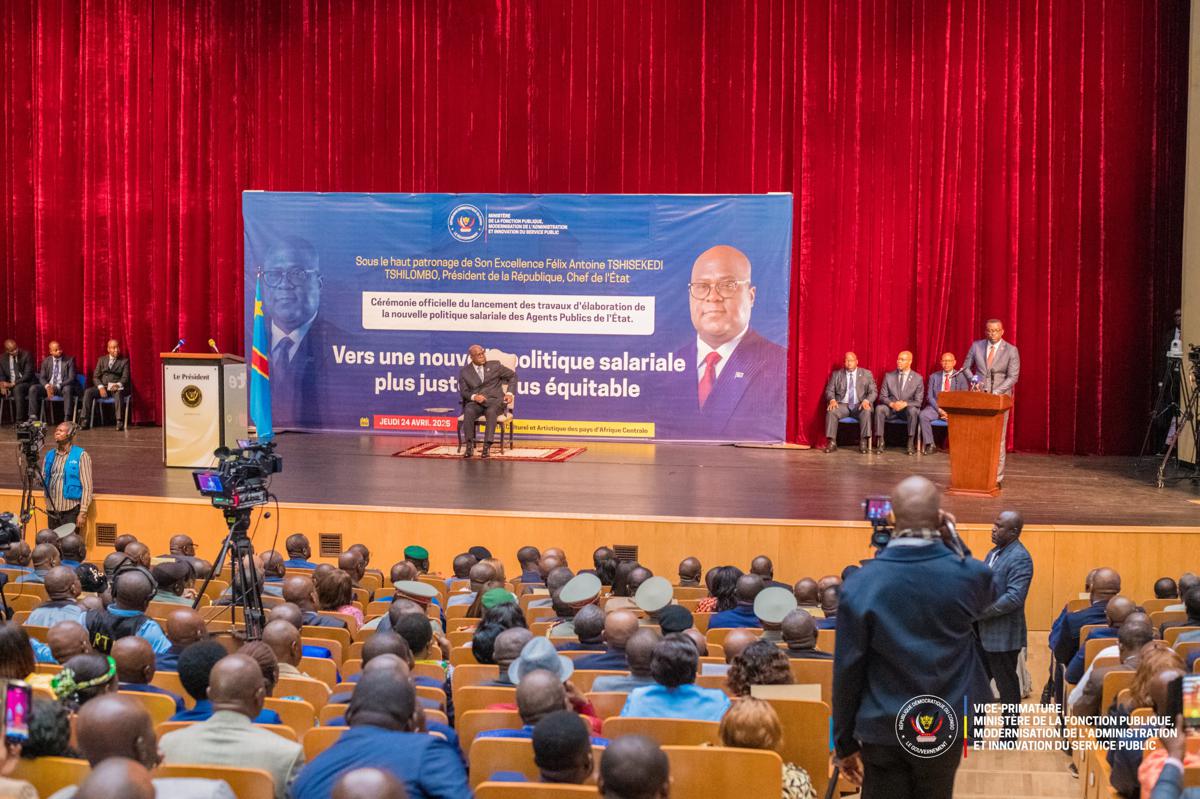
RDC: Commission Paritaire Politique Salariale Addresses State Pay
Summary
- A joint commission on salary policy for state employees was launched in Kinshasa on November 6.
- Led by Vice-Prime Minister Jean-Pierre Lihau Ebua, the commission aims to find consensual solutions to improve public administration salaries.
- The discussions will address historical salary disparities and incorporate recommendations from the IMF and World Bank.
- Trade unions, represented by Bienvenu Mulenda, advocate for improved purchasing power and greater salary equity for public agents.
- The two-day session is expected to yield recommendations to strengthen social dialogue and enhance public administration efficiency.
Launch of Salary Policy Discussions
Vice-Prime Minister Jean-Pierre Lihau Ebua expressed optimism that the current initiative marks a transition into a new era, fostering hope among numerous citizens who dedicate their service to the state without currently receiving what is perceived as equitable remuneration.
The Democratic Republic of Congo has initiated a significant joint commission, known as the commission paritaire politique salariale RDC, aimed at addressing the remuneration framework for state employees. This crucial dialogue commenced on Friday, November 6, in Kinshasa, under the leadership of Jean-Pierre Lihau Ebua, who serves as both Vice-Prime Minister and Minister of Public Service. The commission brings together representatives from the Congolese Government and the collective trade union bench, known as the Banc syndical, for a two-day intensive session.
The primary objective of these proceedings is to meticulously examine a range of demands focused on enhancing the salary conditions for personnel across the public administration. A core aim is to forge consensual solutions to the various concerns articulated by state agents and civil servants, ensuring that their welfare is adequately addressed. This collaborative effort underscores a commitment to improving the working lives of those serving the state.
Addressing Historical Disparities
During the opening remarks, Vice-Prime Minister Jean-Pierre Lihau Ebua underscored the critical role of social dialogue as a fundamental mechanism for maintaining social peace within the public administration. He articulated that this commission provides an opportune platform to scrutinize worker grievances and to mitigate the existing salary disparities prevalent within the fonction publique RDC salaires. This examination, he noted, must also carefully consider the state's prevailing budgetary constraints.
Lihau Ebua reflected on the nation's past, acknowledging that the Democratic Republic of Congo had long operated without a clearly defined salary policy. He expressed optimism that the current initiative marks a transition into a new era, fostering hope among numerous citizens who dedicate their service to the state without currently receiving what is perceived as equitable remuneration. Furthermore, the commission is tasked with integrating recommendations from key multilateral partners, including the International Monetary Fund (IMF) and the World Bank, into its deliberations.
Union Calls for Equity and Reform
From the perspective of the trade unions, their representatives are advocating strongly for a substantial improvement in the purchasing power of public agents. They are also pressing for the continuation of reforms specifically designed to guarantee greater salary equity across the board. Bienvenu Mulenda, who holds the position of First Vice-President of the Intersyndicale nationale administration publique, emphasized the expectation that these discussions will be instrumental in rectifying the existing disparities in treatment among state agents.
Mulenda further elaborated that the deliberations would focus on establishing overarching principles intended to rebalance the remuneration conditions for career agents within the state's public services. The overarching goal, as articulated by the union leader, is to diminish the current gaps and to foster a greater degree of social equity in the decisions that will ultimately emerge from these proceedings. This highlights the unions' commitment to a fair and just compensation structure.
Anticipated Outcomes and Broader Impact
Over the course of the two-day session, participants are expected to thoroughly review the various concerns that have been raised and to formulate concrete recommendations. These recommendations are anticipated to play a vital role in strengthening the dialogue social RDC between the Government and the diverse trade union organizations. The collaborative nature of this process is seen as crucial for future labor relations.
According to several observers, the conclusions drawn from these extensive discussions hold the potential to significantly enhance the social climate within the public service sector. Moreover, these outcomes could contribute to bolstering the overall efficiency of the public administration. The proceedings are scheduled to conclude on Saturday with the formal adoption of the final recommendations, potentially accompanied by the signing of specific commitments between all involved parties, marking a tangible step forward in the réforme salariale fonctionnaires Congo.
Practical Implications
Lawyers advising public sector entities or employees in the DRC should closely monitor the outcomes of this joint commission. Potential changes to salary policies, employment terms, and compensation structures for civil servants could necessitate revisions to employment contracts, internal regulations, and compliance frameworks related to public sector remuneration.
Source
How does this affect you?
Get an AI analysis of this article grounded in your jurisdictions, practice areas, and any policy documents you've uploaded to Wansom.
Wansom is AI and can make mistakes.