
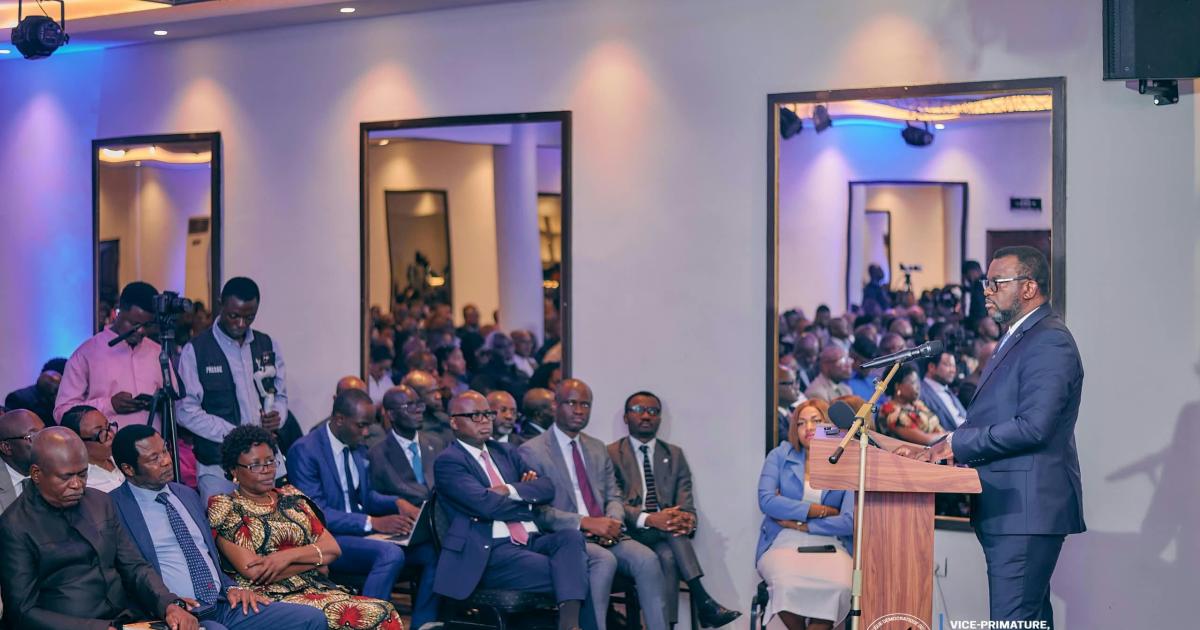
Jean-Pierre Lihau: Initie la Commission Salariale RDC Pour Juste Rémunération
Summary
- Jean-Pierre Lihau Ebua launched a joint government-trade union commission in Kinshasa.
- The commission's mandate is to review and redefine the salary policy for the public service.
- The objective is to achieve "just remuneration" for public servants in the Democratic Republic of Congo.
- This initiative took place on Friday, November 6, 2026.
Launch of a Pivotal Salary Commission in Kinshasa
The formal launch of this Jean-Pierre Lihau commission salariale RDC signifies a critical turning point for the Democratic Republic of Congo's public sector.
Jean-Pierre Lihau Ebua, who holds the significant portfolio of Vice-Prime Minister responsible for the Public Service, Modernization of the Administration, and Innovation of Public Service, officially initiated the proceedings of a crucial joint commission in Kinshasa. This important event occurred on Friday, November 6, 2026, marking a formal commitment to addressing fundamental issues related to public sector compensation in the Democratic Republic of Congo. The establishment of this body, formally known as the commission paritaire gouvernement banc syndical, represents a collaborative endeavor between governmental authorities and representatives from the trade union sector.
The primary mandate entrusted to this newly inaugurated commission is the thorough examination and subsequent redefinition of the existing salary policy within the RDC. This initiative, directly overseen by Jean-Pierre Lihau, is specifically designed to cultivate a framework that guarantees "just remuneration" for all public servants. The explicit focus on a comprehensive review of the politique salariale RDC highlights a strategic commitment to enhancing the economic well-being of state employees and, by extension, improving the overall efficiency and morale of the public administration. This collaborative approach aims to ensure that the resulting policy is both fair and sustainable for the nation's workforce.
Collaborative Mandate for Public Service Remuneration
The commission paritaire gouvernement banc syndical is structured to integrate diverse perspectives, drawing equally from government representatives and the trade union bank. This unique collaborative design is intended to foster a balanced and equitable methodology for reforming the Fonction publique RDC rémunération system. Vice-Prime Minister Jean-Pierre Lihau, in his capacity as the lead official for public service matters, plays a pivotal role in guiding the discussions and ensuring that the commission's stated objectives are diligently pursued.
The intricate task of achieving "juste rémunération RDC" for public servants is a multifaceted challenge. It necessitates a meticulous consideration of the nation's economic realities, existing budgetary constraints, and the legitimate expectations and rights of the workforce. The commission's agenda will encompass detailed deliberations and negotiations aimed at formulating recommendations that are not only sustainable in the long term but also inherently fair to all stakeholders. This structured dialogue is considered indispensable for cultivating a stable, motivated, and productive workforce within the RDC's public administration, thereby strengthening the state's capacity to deliver essential services.
Broader Implications for the DRC's Public Sector
The formal launch of this Jean-Pierre Lihau commission salariale RDC signifies a critical turning point for the Democratic Republic of Congo's public sector. The eventual outcomes and recommendations emanating from this joint effort have the potential to introduce substantial revisions to the current compensation structures for public servants, which could directly affect thousands of employees across various governmental ministries and agencies. A successful and well-implemented reform of the politique salariale RDC is widely anticipated to lead to enhanced transparency, greater equity, and improved accountability within the civil service framework.
Ultimately, the pursuit of "juste rémunération" extends beyond mere economic considerations; it is fundamentally intertwined with principles of social justice and effective governance. By actively engaging in this structured and collaborative dialogue, the government, under the leadership of Jean-Pierre Lihau Fonction publique, aims to cultivate a more responsive, efficient, and ultimately more effective public service. The forthcoming recommendations from this commission are poised to play a vital role in shaping the future landscape of public employment and administration throughout the Democratic Republic of Congo, impacting both the lives of civil servants and the quality of public services delivered to citizens.
Practical Implications
Lawyers advising businesses or public sector entities in the DRC should closely monitor the progress and recommendations of this joint commission. Anticipated changes to salary policy could lead to new labor laws, collective bargaining agreements, or public service remuneration structures, requiring adjustments to employment contracts, compensation strategies, and compliance frameworks.
Source
How does this affect you?
Get an AI analysis of this article grounded in your jurisdictions, practice areas, and any policy documents you've uploaded to Wansom.
Wansom is AI and can make mistakes.