
MP High Court: Prosecution Sanction Is A Serious Administrative Duty
Summary
- The MP High Court upheld the rejection of a closure report in a bribery case against a retired PWD Executive Engineer.
- The court ruled that a Special Judge's "prima facie" finding of an offense is an obiter dictum and cannot bind the sanctioning authority.
- Sanctioning authorities must decide on prosecution independently, without judicial influence, as it is a serious administrative duty.
- The High Court confirmed that a Special Judge has the jurisdiction to disagree with a closure report, especially with supporting evidence like voice recordings.
- Retirement does not provide legal protection against criminal offenses committed during public service.
The Bribery Allegation and Initial Investigation
The bench explicitly instructed that the sanctioning authority must make its decision "independently, without being influenced by the order of the Special Judge."
Ramnath Mishra, a retired Executive Engineer from the PWD Bridge Division in Indore, faced accusations of demanding a bribe. The complainant, Dharmendra Sharma, a Class A government contractor, had secured a tender for constructing a submersible bridge over the Khan River at Darzi Karadiya village. According to the prosecution, on May 13, 2017, Mishra allegedly summoned Sharma to his office and demanded a "commission" of Rs 6,50,000. Sharma claimed to have paid Rs 1,50,000 in cash on that very day.
Following this alleged demand, Sharma approached the Superintendent of Police, Lokayukta, Indore, on July 4, 2017, providing a digital voice recording of his meeting with Mishra. An FIR was subsequently filed against Mishra under Section 7 of the Prevention of Corruption Act, 1988. Despite these efforts, attempts to set up a trap in July 2017 were unsuccessful, as Mishra was reportedly absent from his office and his phone was switched off. The investigating officer later submitted a final closure report in February 2019, asserting that since running bills had already been disbursed, there was no logical basis for a bribe demand.
Judicial Review and the Sanctioning Process
The Special Judge (Prevention of Corruption Act), Indore, reviewed the closure report and, in an order dated May 1, 2025, rejected it. The judge concluded that a prima facie offense had been established and directed that the case records be forwarded to the competent authority to seek prosecution sanction within a three-month period. Ramnath Mishra, through his legal representatives Advocates Lokesh Kumar Bhatnagar and Jayaditya Shrivastava, challenged this directive, arguing that the Special Judge exceeded jurisdiction by instructing the agency to seek sanction. Mishra contended that such a finding would exert undue "external force" on the sanctioning authority.
Conversely, Advocate Prasanna Prasad, representing the Lokayukta, argued that Mishra's petition was premature, given that no formal cognizance of the offense had yet been taken. Prasad highlighted a positive voice-match report from the Regional Forensic Science Laboratory, Bhopal, and emphasized that under Section 7 of the Prevention of Corruption Act, the mere demand for illegal gratification constitutes a complete offense, irrespective of whether a subsequent trap operation succeeds or fails.
High Court's Clarification on Judicial Influence
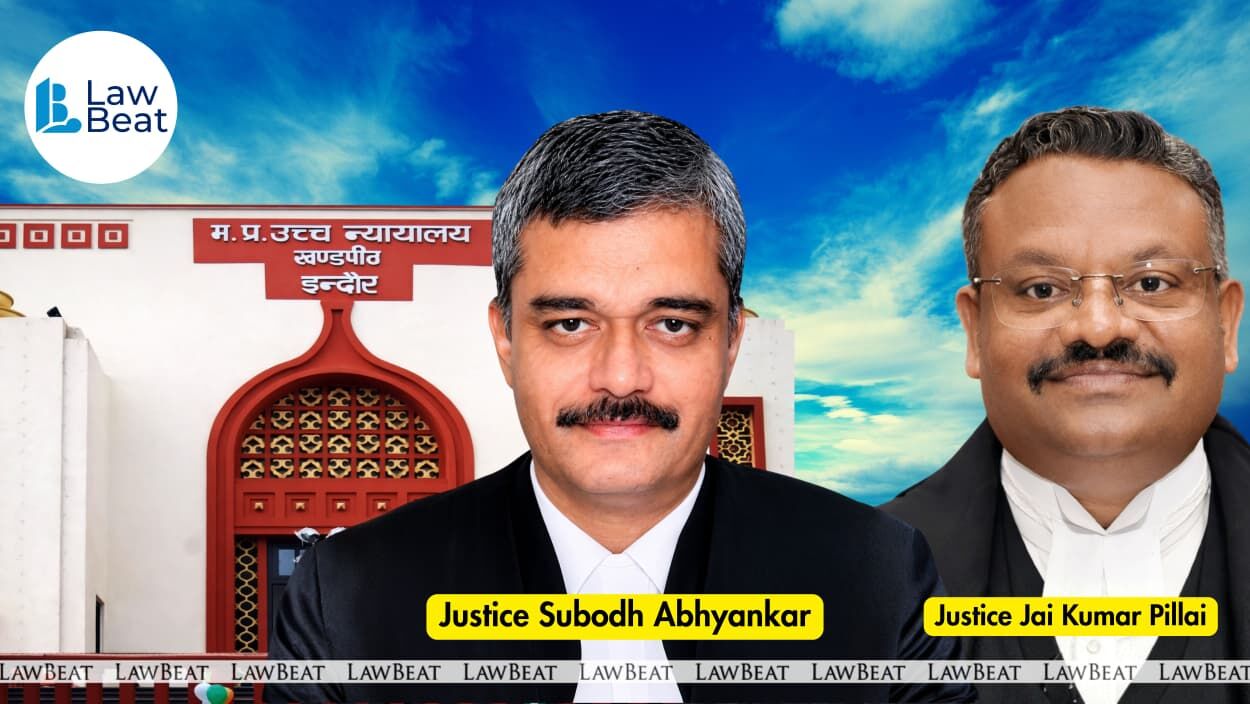
The Madhya Pradesh High Court at Indore, comprising Justice Subodh Abhyankar and Justice Jai Kumar Pillai, partially granted Mishra's petition. The High Court affirmed the Special Judge's decision to reject the closure report, citing the Supreme Court's precedent in *Minu Kumari vs State of Bihar*, which establishes a Magistrate's prerogative to accept, reject, or direct further investigation into a police report. Given the forensic evidence and audio recordings, the High Court concluded that the Special Judge acted within proper jurisdiction by disagreeing with the closure report.
However, the High Court found merit in Mishra's concern regarding the Special Judge's language. It underscored that a "strong and direct finding by a judicial court will pressure the sanctioning authority," and reiterated that granting prosecution sanction under Section 19 of the Act is a "serious administrative duty." Drawing upon the Supreme Court's ruling in *Arun Kumar Aggarwal vs State of M.P.*, where similar judicial remarks were treated as *obiter dictum*, the High Court stated that the Special Judge's finding "should not have been recorded in a manner that sounds like a final judicial command." The bench explicitly instructed that the sanctioning authority must make its decision "independently, without being influenced by the order of the Special Judge." Furthermore, the court clarified that retirement from public service offers no legal immunity against criminal charges for offenses allegedly committed during one's tenure.
Source
How does this affect you?
Get an AI analysis of this article grounded in your jurisdictions, practice areas, and any policy documents you've uploaded to Wansom.
Finish Reading the Full Story and the Expert Analysis.
Get the latest legal & regulatory intelligence in India
Wansom is AI and can make mistakes.