
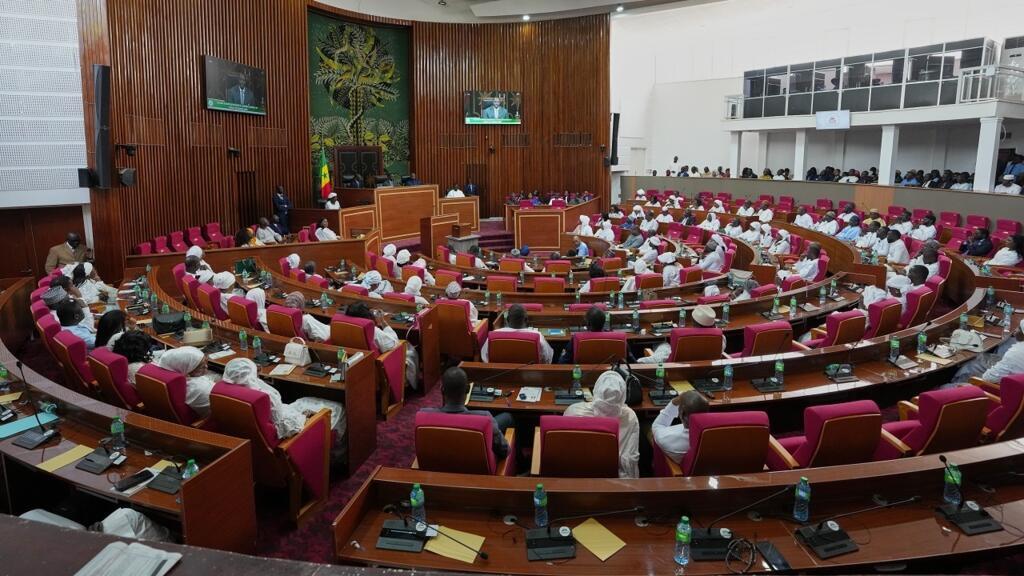
Sénégal: Pastef Blocage LFR 2026 Looms Over Energy Subsidy Reform
Summary
- Pastef, controlling the Assemblée nationale, threatens to block the Loi de finances rectificative (LFR) 2026.
- This political standoff stems from tensions between President Bassirou Diomaye Faye and former Prime Minister Ousmane Sonko.
- The LFR 2026 proposes to increase energy subsidies to 790.3 billion FCFA and reform them towards targeted support.
- The budget also plans to double family security grants to 70 billion FCFA to mitigate the impact of subsidy changes.
- Senegal faces economic challenges including lower growth forecasts and a projected 7.6% GDP budget deficit.
Political Tensions Threaten Senegal's 2026 Budget Review
The passage of Senegal's Loi de finances rectificative (LFR) 2026 faces a significant threat of blockage from Pastef, the political party that currently holds control of the Assemblée nationale. This legislative hurdle is deeply embedded in an ongoing political confrontation between President Bassirou Diomaye Faye and his predecessor as Prime Minister, Ousmane Sonko. The dispute has escalated beyond typical political maneuvering, directly impacting critical national financial legislation.
The proposed LFR 2026, a crucial document for the nation's fiscal health, was formally submitted to parliamentary deputies on September 18. Its primary objective is to rebalance the national budget in response to an unexpected surge in the cost of energy subsidies. The political dynamics surrounding the Pastef blocage LFR 2026 Sénégal underscore a period of heightened tension within the country's leadership, with the legislative process becoming a battleground for broader power struggles.
Senegal's Fiscal Landscape: Energy Subsidies and Social Reforms
At the heart of the LFR 2026 are substantial adjustments to Senegal's energy subsidy framework. The financial burden of supporting energy costs has dramatically increased, with current evaluations placing the required subsidies at 790.3 billion FCFA. This figure represents a significant jump from the initial allocation of 250 billion FCFA in the original finance law, marking an additional 540.3 billion FCFA and exceeding the initially budgeted amount by more than threefold.
In response to this escalating cost, the government is proposing a comprehensive reform of energy subsidies, specifically targeting electricity and fuel. The plan is to transition away from a generalized subsidy system towards a more focused approach, providing support directly to vulnerable households, public transportation services, and other essential economic activities. Concurrently, to mitigate the potential adverse effects of these reforms on the most exposed segments of the population, the budget for family security grants is slated to double, increasing from 35 billion FCFA to 70 billion FCFA.
These budgetary pressures are compounded by a challenging broader economic outlook for Senegal. The nation is contending with downward revisions in growth forecasts, an anticipated decline in both tax revenues and investments, and a projected budget deficit that is expected to reach 7.6% of the Gross Domestic Product. The debate surrounding the budget Sénégal 2026 thus encompasses not only the sheer cost of these vital aids but also their equitable distribution and the difficult budgetary trade-offs that must be made.
Parliamentary Scrutiny and Inter-Party Dialogue
The legislative process for the Loi de finances rectificative 2026 Sénégal has been marked by intense parliamentary debate, focusing on the critical issues of subsidy costs, their allocation, and the necessary fiscal adjustments. This scrutiny intensified following the Prime Minister's public appeal on Monday, October 26, urging Ousmane Sonko to de-escalate the political rhetoric and end what was described as "surenchère."
In a direct response the following Tuesday, Mohamed Ayib Salim Daffé, who leads the Pastef group within the Assemblée nationale, publicly challenged Ahmadou Al Aminou Lô. Daffé called upon Lô to cease "playing hide-and-seek" and to "descend from his pedestal," signaling the deep divisions and personal animosity characterizing the current political climate. This exchange, reported by RFI Afrique, underscores the high stakes involved in the discussions surrounding the LFR, particularly concerning the rising cost of energy and the proposed réforme subventions énergie Sénégal. The Pastef blocage LFR 2026 Sénégal is therefore not merely a procedural matter but a reflection of a profound political struggle.
The Broader Implications for Senegal's Future
The outcome of the Assemblée nationale's vote on the Loi de finances rectificative 2026 Sénégal will significantly shape the government's economic strategy and social protection mechanisms, reflecting the broader political governance of the nation. The successful passage of this revised budget is crucial for Senegal's financial stability, enabling the government to effectively manage public services and address pressing economic challenges. Failure to pass the LFR could lead to significant disruptions in public finance and service delivery.
The proposed réforme subventions énergie Sénégal, moving towards targeted support, represents a pivotal shift with far-reaching consequences for both the national budget and the daily lives of Senegalese citizens. While aiming for fiscal sustainability, its implementation, coupled with the doubling of family security grants, seeks to balance economic necessity with social equity. The ongoing political dispute between President Bassirou Diomaye Faye and Ousmane Sonko, manifesting as the Pastef blocage LFR 2026 Sénégal, thus directly impacts the nation's capacity to enact these vital reforms and manage its budget Sénégal 2026 effectively.
Practical Implications
Lawyers and compliance officers in Senegal should closely monitor the parliamentary debate and potential blockage of the LFR 2026, as its passage or failure will directly impact energy subsidy frameworks, social welfare provisions, and overall budgetary allocations, requiring potential adjustments to client financial planning and compliance strategies related to energy costs and government support programs.
Source
Source: Original reporting via Senego
How does this affect you?
Get an AI analysis of this article grounded in your jurisdictions, practice areas, and any policy documents you've uploaded to Wansom.
Finish Reading the Full Story and the Expert Analysis.
Wansom is AI and can make mistakes.