
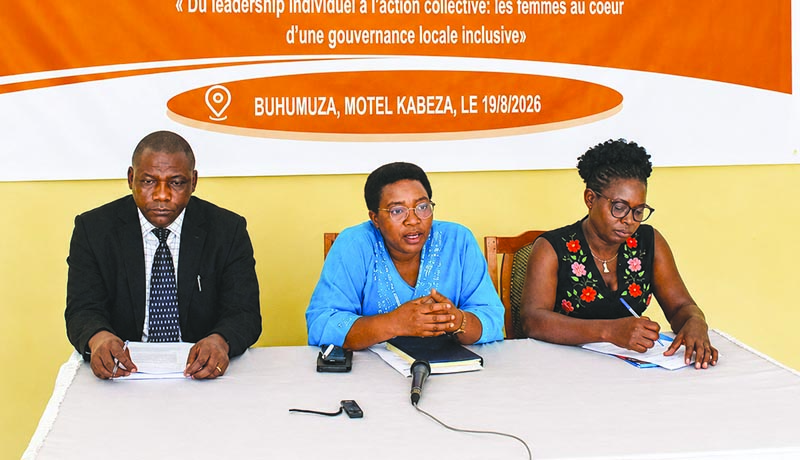
NIMD Burundi: Female Political Leadership Advances Local Governance
Summary
- Buhumuza, Burundi's only province led by a woman, hosted the sixth 'Débats-Café' session on female political leadership and inclusive local governance.
- The Netherlands Institute for Multiparty Democracy (NIMD) organized the event as part of its Arpog project.
- The Arpog project is implemented by NIMD in a consortium with Afrabu and other partners, receiving third-party funding.
- Financial support for the project is provided by the European Union.
- The initiative aims to strengthen women leaders to enable them to secure their positions in local decision-making bodies without waiting to be co-opted.
Key Event Bolsters Female Leadership in Buhumuza
The overarching objective of the Arpog project, and by extension the 'Débats-Café' sessions, is to fortify women leaders within Burundi.
The province of Buhumuza, notable as the sole Burundian province currently under female leadership, recently hosted a significant gathering focused on advancing women's roles in public life. This region provided the backdrop for the sixth installment of the 'Débats-Café' series, an initiative specifically designed to explore female political leadership and foster inclusive local governance. The event underscored the ongoing efforts to empower women within Burundian local administration.
Organized by the Netherlands Institute for Multiparty Democracy (NIMD), the session brought together stakeholders to discuss strategies for enhancing women's participation in decision-making processes. The choice of Buhumuza as the venue for this particular session highlights its unique position within Burundi's political landscape, offering a tangible example of female leadership at the provincial level. This focus on Buhumuza local governance women aligns with broader objectives of promoting gender equality across the nation.
The 'Débats-Café' series serves as a crucial platform for dialogue and capacity building, aiming to equip women with the necessary tools and confidence to assert their influence in local politics. The discussions held during the sixth session contributed to a growing body of knowledge and experience regarding the challenges and opportunities for women aspiring to leadership roles in Burundi. Such initiatives are vital for fostering a more representative and equitable governance structure.
Strategic Project Drives Empowerment
The recent 'Débats-Café' session forms an integral component of the broader Arpog project, an ambitious undertaking spearheaded by NIMD. This project is executed through a collaborative consortium that includes Afrabu and various other partners, all working towards common goals of democratic strengthening and inclusive governance. The Arpog project's implementation strategy involves a system of third-party funding, ensuring a wide reach and diverse engagement across different sectors.
Crucially, the financial backbone for the Arpog project is provided by the European Union, signaling a significant international commitment to supporting democratic development and gender equality in Burundi. This EU funding Burundi governance initiative underscores the recognition of the importance of robust local institutions and the active participation of all citizens, particularly women, in shaping their communities. The involvement of such prominent international and local entities highlights the strategic importance placed on this work.
The overarching objective of the Arpog project, and by extension the 'Débats-Café' sessions, is to fortify women leaders within Burundi. The program is specifically designed to empower these leaders to proactively secure their positions within local decision-making bodies. This approach emphasizes self-agency, encouraging women to actively 'conquer their place' rather than passively awaiting co-optation into existing structures, thereby promoting genuine and impactful NIMD Burundi female political leadership.
Advancing Women in Burundian Local Politics
The emphasis on women actively conquering their place in local decision-making bodies, rather than waiting to be co-opted, represents a pivotal shift in strategy for promoting gender equality in governance. This proactive stance aims to dismantle traditional barriers and foster an environment where women can genuinely influence policy and administrative outcomes. The initiatives supported by NIMD and its partners are designed to cultivate a new generation of women in Burundian local politics who are confident, capable, and assertive in their pursuit of leadership roles.
By strengthening women leaders, the Arpog project seeks to create a more balanced and representative political landscape at the local level. This not only benefits women directly but also enhances the quality and inclusivity of governance for all citizens. Diverse perspectives, often brought by female leaders, can lead to more comprehensive and equitable solutions to community challenges, impacting everything from resource allocation to social programs.
Ultimately, the work being done in provinces like Buhumuza, through projects like Arpog and the 'Débats-Café' series, contributes significantly to the broader goal of inclusive governance. It serves as a testament to the ongoing commitment to ensuring that women are not just participants, but active architects of their local political futures, driving meaningful change from the ground up.
Practical Implications
This development signals a continued focus on gender equality and inclusive governance within Burundian local administration, potentially impacting future policy frameworks, funding allocations for development projects, and advocacy strategies for NGOs working in this space.
Source
Source: Original reporting via {source}
How does this affect you?
Get an AI analysis of this article grounded in your jurisdictions, practice areas, and any policy documents you've uploaded to Wansom.
Finish Reading the Full Story and the Expert Analysis.
Wansom is AI and can make mistakes.