
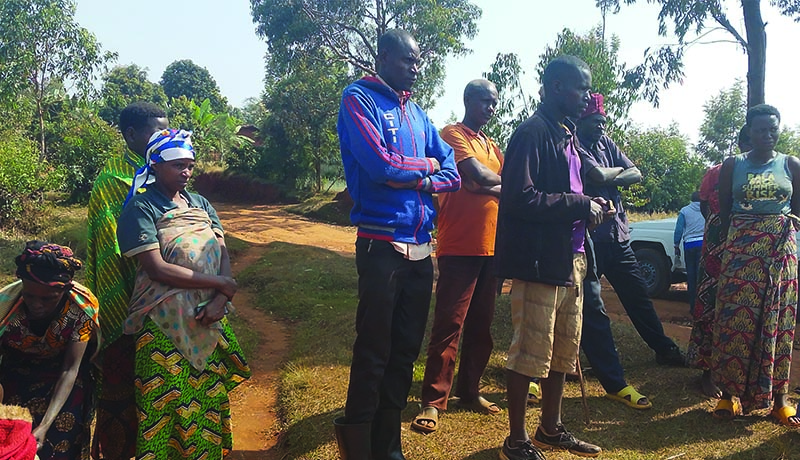
Burundi Mwaro Ngara: Residents Voice Media Hate Speech Concerns
Summary
- Residents on Ngara hill in Burundi's Mwaro commune are deeply concerned about media spreading hate messages.
- They believe words can either unite communities or revive past divisions in their society.
- The community unequivocally states that any media propagating hate has no place.
- This sentiment highlights the significant responsibility of media in a society marked by historical wounds.
Public Outcry Over Divisive Media
Any media outlet that actively propagates messages of hatred has no legitimate place within their society.
Residents in Burundi's Mwaro commune, specifically on Ngara hill, have voiced significant concerns regarding the role of media in their society. Their testimonies collectively highlight a deep-seated apprehension that words, particularly those disseminated through public platforms, possess the power to either foster unity or exacerbate existing divisions within communities. This sentiment is particularly acute in a nation still grappling with the lingering scars of past conflicts and societal trauma.
The inhabitants of Ngara hill articulated a clear and unequivocal stance: any media outlet that actively propagates messages of hatred has no legitimate place within their society. This strong public opinion underscores a critical aspect of Burundi media hate speech concerns, suggesting a low tolerance for content perceived as inflammatory or divisive. The community's perspective emphasizes the profound responsibility media organizations bear in shaping public discourse, especially in sensitive post-conflict environments.
This localized but potent expression of discontent from Burundi's Mwaro Ngara region serves as a crucial indicator of public expectations regarding media conduct. It suggests that citizens are not merely passive consumers of information but are acutely aware of the potential for media to either contribute positively to social cohesion or detrimentally to societal fragmentation. The call for media accountability reflects a desire for platforms that prioritize reconciliation and understanding over discord.
The Dual Nature of Media Influence
The observations from Mwaro commune underscore the inherent dual nature of media as a societal force. In a context marked by historical wounds, the words chosen and disseminated by media outlets carry immense weight, capable of either bridging divides or reopening old ones. This perspective is central to understanding the broader Burundi media responsibility, which extends beyond mere reporting to actively considering the social impact of content.
Media, therefore, stands as a double-edged sword; it can be a powerful instrument for education, reconciliation, and democratic dialogue, or it can be weaponized to spread animosity and deepen societal rifts. The residents' testimonies serve as a stark reminder that in fragile societies, the potential for messages de haine médias to cause harm is significantly elevated. This places a unique burden on journalists and media owners to exercise extreme caution and ethical judgment in their editorial processes.
This critical assessment of media's role highlights why Burundi media hate speech concerns are not merely abstract legal issues but deeply felt community grievances. The public's demand for responsible media reflects an understanding that press freedom, while vital, must be balanced with a profound commitment to social harmony and the prevention of incitement to hatred. The perceived failure of any outlet to uphold this balance can lead to significant public distrust and calls for intervention.
Implications for Media Operations and Regulation
The strong public sentiment expressed by residents on Ngara hill carries significant implications for Burundi media regulation hate speech and the operational frameworks of media organizations. Such widespread community concern can often precede increased scrutiny from authorities or calls for more stringent regulatory measures. Media entities operating in Burundi should therefore recognize this heightened public sensitivity as a potential precursor to future policy shifts or enforcement actions.
For media organizations, this means that merely adhering to existing legal frameworks might not be sufficient to maintain public trust and avoid criticism. There is an implicit expectation for media to proactively engage in self-regulation and uphold high ethical standards, particularly concerning content that could be interpreted as divisive or hateful. The concept of Burundi press freedom hate speech is thus framed within a societal expectation that such freedom is exercised responsibly, without undermining social cohesion.
Lawyers advising media organizations in Burundi should note the heightened public sensitivity and potential for increased scrutiny or future regulatory measures concerning hate speech, necessitating a review of content policies and editorial guidelines to mitigate risks. This proactive approach is crucial not only for legal compliance but also for safeguarding the reputation and long-term viability of media institutions in a society deeply affected by its past. The public's clear rejection of media that propagates hate underscores the urgent need for robust internal controls and a strong commitment to ethical journalism.
Practical Implications
Lawyers advising media organizations in Burundi should note the heightened public sensitivity and potential for increased scrutiny or future regulatory measures concerning hate speech, necessitating a review of content policies and editorial guidelines to mitigate risks.
Source
Source: Original reporting via {source}
How does this affect you?
Get an AI analysis of this article grounded in your jurisdictions, practice areas, and any policy documents you've uploaded to Wansom.
Finish Reading the Full Story and the Expert Analysis.
Wansom is AI and can make mistakes.