
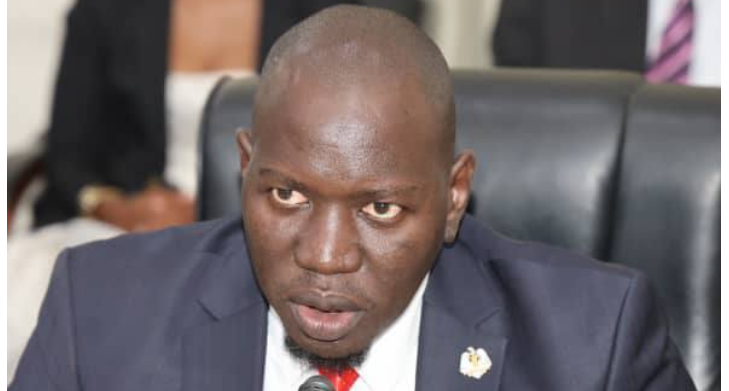
National Alliance Splits Kornelio Kon Ngu Over Presidential Bid
Summary
- The National Alliance of Political Parties has split into rival factions over the leadership of Kornelio Kon Ngu following his declaration to run for president in the 2026 South Sudan elections.
- Eight member parties withdrew confidence in Kon Ngu, accusing him of rule violations, unilateral decisions, and misusing alliance-allocated positions.
- Kon Ngu's faction maintains his legitimacy, while his allies assert he is the alliance's endorsed presidential candidate, despite claims to the contrary.
- The opposing faction has called for President Kiir to revoke Kon Ngu's appointment as third deputy speaker of the Transitional National Legislative Assembly, a position held under the 2018 peace agreement.
- This internal dispute threatens to deepen divisions within the coalition and highlights challenges to the 2018 peace agreement's power-sharing ahead of the upcoming South Sudan 2026 elections.
Leadership Crisis Grips National Alliance
Such leadership disputes highlight the critical need for robust internal governance frameworks and clear candidate endorsement procedures within political parties to prevent or effectively manage disagreements that could destabilize the fragile peace process.
The National Alliance of Political Parties (NA) is grappling with a significant internal division following its leader, Kornelio Kon Ngu, declaring his intention to run for president in the upcoming South Sudan 2026 elections. This announcement, coupled with his criticism of the ruling Sudan People's Liberation Movement (SPLM), has triggered a deep rift within the coalition. Eight member parties of the National Alliance of Political Parties publicly withdrew their confidence in Kon Ngu as chairman, accusing him of violating the alliance's established rules, making unilateral decisions, and failing to consult with member organizations.
Kon Ngu's faction, however, has vehemently rejected these claims, asserting that he remains the legitimate chairman and that the dissenting parties do not represent the recognized leadership of the alliance. This internal power struggle emerges as political entities across South Sudan intensify their preparations for the planned December 22, 2026 elections, threatening to exacerbate existing divisions within the coalition. Paulino Lukudu Obede, who chairs the United South Sudan Party and also serves as deputy governor of Central Equatoria state, formally announced the withdrawal of confidence during a press conference held in Juba, speaking on behalf of what he identified as the alliance's Leadership Council.
Allegations of Misconduct and Endorsement Disputes
The faction opposing Kornelio Kon Ngu has leveled several serious accusations against him. They claim he made critical decisions without consulting the National Alliance's Leadership Council and that he exploited positions allocated to the alliance to benefit members of his own party, the National United Democratic Front (NUDF), which he also leads. Furthermore, allegations include that government positions designated for the alliance were instead given to individuals with no affiliation to member parties, including relatives and associates, with some appointments reportedly involving payments.
The dispute extends to Kon Ngu's presidential aspirations. While he announced his bid at a recent alliance summit, the opposing group insists he was never formally endorsed as the alliance's presidential candidate, thus arguing he cannot represent the grouping in the race. This stance was directly challenged by Richard Valent Omwony, the alliance's secretary-general and a known ally of Kon Ngu, who affirmed that Kon Ngu is indeed their chosen candidate for the presidency. The dissenting parties also criticized Kon Ngu for calling for the resignation of National Elections Commission Chairperson Abednego Akol and for characterizing the SPLM as a military movement rather than a political party, emphasizing that the Political Parties Council South Sudan is responsible for determining the status of registered political parties.
Implications for South Sudan's Political Stability
The escalating internal conflict within the National Alliance of Political Parties carries significant implications for the broader political landscape of South Sudan, particularly in the lead-up to the 2026 elections. The alliance is a component of the Other Political Parties (OPP) grouping, which is a key part of the power-sharing arrangements established under the 2018 peace agreement South Sudan. Such leadership disputes highlight the critical need for robust internal governance frameworks and clear candidate endorsement procedures within political parties to prevent or effectively manage disagreements that could destabilize the fragile peace process.
The faction opposing Kon Ngu has gone further, urging President Salva Kiir to revoke Kon Ngu's appointment as third deputy speaker of the Transitional National Legislative Assembly, a position he holds under the 2018 peace agreement's power-sharing provisions. They argue that his continued presence in this role could fuel political tensions. The dissenting parties have also declared that any correspondence or political stance issued by Kon Ngu should no longer be considered representative of the National Alliance. Additionally, they announced the dismissal of several recently admitted parties, including the National Renaissance Party and the Social Progressive Party, on the grounds that they were not signatories to the foundational 2018 peace agreement. The withdrawal of confidence in Kon Ngu was formally endorsed by eight party officials representing various member parties, including Juma Saeed Wajro of the South Sudan National Party and Jaech Chuol Gai of the South Sudan Democratic Party.
Practical Implications
Lawyers advising political parties in South Sudan should assess internal governance frameworks and candidate endorsement procedures to prevent or manage leadership disputes, which could destabilize the 2018 peace agreement's power-sharing and the upcoming 2026 elections.
Source
How does this affect you?
Get an AI analysis of this article grounded in your jurisdictions, practice areas, and any policy documents you've uploaded to Wansom.
Finish Reading the Full Story and the Expert Analysis.
Wansom is AI and can make mistakes.