
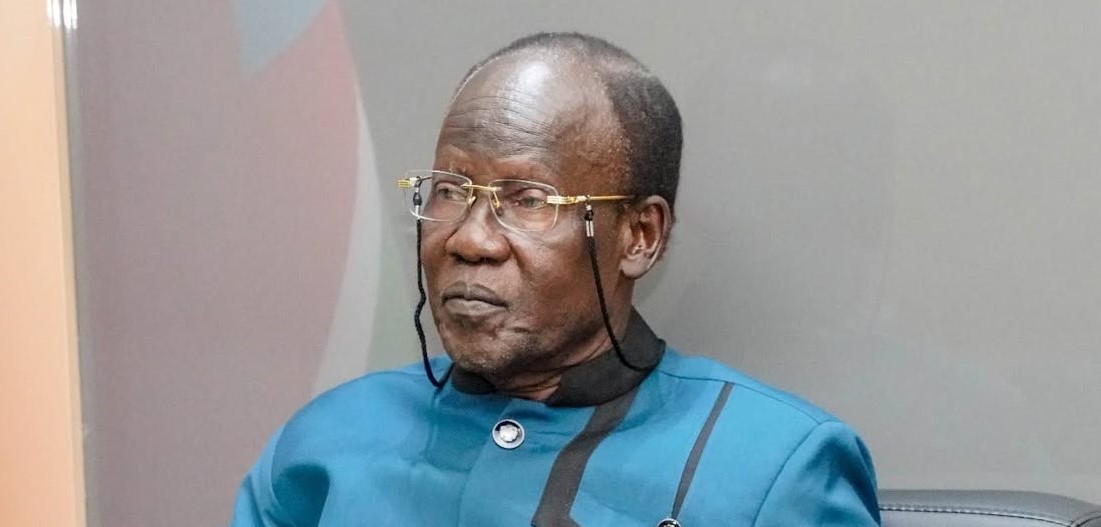
VP Igga: Calls For Shilluk Land Dispute Resolution In Upper Nile
Summary
- South Sudan's Vice President James Wani Igga supports the Shilluk community's demand for resolution of land and boundary disputes in Upper Nile State.
- Wani Igga stated that these disputes have caused over a decade of conflict, displacement, and disruption to essential services for the Shilluk people.
- He called for a "radical solution" to the land issues, urging the government and General Johnson Olony to collaborate.
- The Vice President noted that the 2015 creation of 32 states intensified existing territorial and administrative boundary conflicts, but South Sudan has since reverted to 10 states and three administrative areas as of February 2020.
- General Johnson Olony, honored by the Shilluk community, pledged to help restore their standing and confirmed reconciliation with key national figures.
VP Calls for 'Radical Solution'
The core grievance of the Shilluk tribe, he stated, revolves around the demarcation of their lands and boundaries in relation to neighboring communities.
South Sudan's Vice President James Wani Igga has publicly endorsed the Shilluk community's urgent appeal for the government to address long-standing land and boundary disputes within Upper Nile State. Speaking at a ceremony in Juba honoring General Johnson Olony, a prominent Shilluk military figure, Wani Igga acknowledged these issues as a primary driver of conflict and displacement in the region. He affirmed his agreement with the Shilluk people's demand for clarity regarding their territorial claims.
Overseeing the economic cluster, Vice President Igga highlighted the severe impact of over a decade of conflict on the Shilluk population in Upper Nile. He noted that fighting has severely disrupted essential services, including education and healthcare, and undermined livelihoods. The core grievance of the Shilluk tribe, he stated, revolves around the demarcation of their lands and boundaries in relation to neighboring communities.
In a direct call to action, Wani Igga urged General Olony and the government to collaborate on finding what he termed a “radical solution” to the persistent land and boundary disputes affecting Shilluk areas. He emphasized the necessity for South Sudanese leaders to convene and resolve these deeply entrenched problems, which he views as fundamental causes of instability.
Decades of Conflict and Displacement
The Vice President further elaborated on the devastating human cost of the protracted conflict in Upper Nile, describing how years of fighting have led to the mass displacement of Shilluk people from their ancestral territories. This displacement, he warned, has significantly undermined the stability and integrity of the traditional Shilluk Kingdom, which relies on its people remaining settled within its domain. Wani Igga lamented the senseless bloodshed that has occurred in the region over the past decade.
The conflict's repercussions extend to critical social services, with schools remaining closed in affected areas, preventing children from accessing education. He also pointed to the tragic consequence of women dying during childbirth due to the lack of access to hospitals, illustrating the profound impact of the fighting on the Shilluk community's well-being. Wani Igga underscored the importance of the government actively listening to the grievances of both communities and armed groups to understand and address the root causes of the ongoing strife.
Historical Roots of Boundary Tensions
Land disputes and competing claims over territory have historically been a significant source of tension across South Sudan, with administrative boundaries frequently contested by various communities and political actors. Vice President Igga specifically pointed to the 2015 creation of 32 states as a policy decision that inadvertently intensified these existing disputes over territory and administrative demarcations. While this administrative restructuring exacerbated the issue, leading to increased friction and conflict, South Sudan has since reverted to 10 states and three administrative areas as of February 2020. He asserted that land and boundaries are often catalysts for conflict in any nation.
His remarks underscore the complex interplay between historical land claims, political decisions, and the resulting instability, highlighting the need for comprehensive Upper Nile land disputes reform to address these deep-seated issues effectively. The ongoing challenges related to South Sudan administrative boundaries law continue to fuel community grievances.
General Olony's Commitment to Community
The ceremony where Vice President Igga spoke was organized by the Shilluk community, under the leadership of King Kwongo Dak Padiet, to honor General Johnson Olony. Olony expressed profound gratitude for the community's unwavering support throughout his military career, acknowledging that their backing had strengthened him. He spoke of his efforts to bring children from various locations, noting that some had perished in places he could not even name.
General Olony emphasized his non-discriminatory approach, stating that he does not differentiate between individuals from different Shilluk clans. He expressed pride in being known by his mother's name, a testament to his deep community ties. Olony articulated his desire to leverage his return to Juba to help restore the standing of the Shilluk community. He also sought to reassure his supporters about the security situation in Juba, confirming that reconciliation had been achieved with President Salva Kiir Mayardit, Tut Gatluak, King Kwongo Dak Padiet, and Joakino, asserting that Juba belongs to all South Sudanese and security is the responsibility of the army.
Practical Implications
Lawyers and compliance officers should closely monitor proposed 'radical solutions' to land and administrative boundary disputes in South Sudan's Upper Nile State, as these could lead to significant policy changes affecting property rights, investment security, and community relations for clients operating in or considering ventures in the region.
Source
How does this affect you?
Get an AI analysis of this article grounded in your jurisdictions, practice areas, and any policy documents you've uploaded to Wansom.
Finish Reading the Full Story and the Expert Analysis.
Wansom is AI and can make mistakes.