
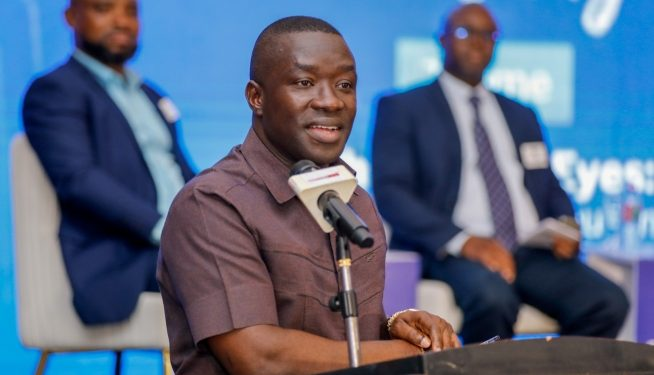
NACOC Ghana: Mandatory Inclusion in Port Inspection Team Advocated
Summary
- Alexander Twum-Barimah, Deputy Director-General of NACOC, called for the Commission's inclusion in Ghana's port inspection teams.
- He argued that NACOC's specialized mandate is crucial for detecting and preventing narcotics trafficking, especially as containers are often loaded off-site.
- Twum-Barimah highlighted that other agencies involved in port inspections lack the specific authority to apprehend narcotics.
- NACOC has spent the last two years addressing institutional gaps and integrating into Ghana's security architecture, including rectifying its omission from the 2020 Security and Intelligence Agencies Act.
- This push signifies a strengthened approach to Ghana's anti-narcotics enforcement and port security measures.
Call for Enhanced Port Security
The call for NACOC's integral role in the Ghana port inspection team, coupled with the Commission's recent institutional strengthening, signals a significant enhancement in Ghana's anti-narcotics enforcement capabilities.
Alexander Twum-Barimah, the Deputy Director-General of the Narcotics Control Commission (NACOC), recently advocated for the Commission's mandatory inclusion in teams responsible for inspecting cargo containers at Ghana's ports. Speaking on JoyNews’ Newsfile on Saturday, September 26, 2026, Mr. Twum-Barimah emphasized that NACOC's participation is crucial for bolstering efforts to detect and prevent narcotics trafficking. His remarks follow a series of recent drug busts and growing calls for more robust measures to curb Ghana's use as a transit hub for illicit drugs.
He highlighted that containers are frequently loaded away from the port premises before being transported into the country's maritime facilities, making comprehensive oversight essential. Mr. Twum-Barimah questioned the rationale behind limiting the number of agencies involved in port inspections, particularly when excluding the very institution specifically tasked with combating narcotics. He posed a rhetorical query, asking why there isn't a greater interest in ensuring the cleanliness of all contents within containers departing Ghana's jurisdiction.
The Mandate for Narcotics Control
While acknowledging that restricting the number of agencies might aim to streamline trade operations, Mr. Twum-Barimah firmly asserted that narcotics control must remain a paramount concern. He argued that the Narcotics Control Commission Ghana possesses a unique mandate that other agencies involved in port inspections, such as the Food and Drugs Authority (FDA), Ghana Standards Authority (GSA), or Customs, do not share regarding the apprehension of illicit drugs. Therefore, he contended, NACOC's presence is indispensable.
The Deputy Director-General further proposed that even in scenarios where authorities opt for a single, unified inspection team to optimize port efficiency, NACOC should still be the primary representative. This insistence underscores the specialized expertise and legal authority that the Commission brings to the critical task of Ghana drug trafficking prevention, particularly in safeguarding the nation's entry and exit points against the flow of contraband.
Strengthening NACOC's Institutional Framework
Mr. Twum-Barimah also shed light on significant internal reforms undertaken by NACOC to address historical institutional deficiencies. Over the past two years, the Commission has diligently worked to fortify its organizational standing and ensure its proper integration into Ghana’s broader security and intelligence architecture. He noted that upon assuming office, he inherited an institution plagued by gaps that had previously undermined its effectiveness in narcotics control.
Historically, NACOC had been excluded from vital security structures, including regional and district security councils. Furthermore, despite its critical mandate, the Commission was deliberately omitted from the framework established by Ghana’s Security and Intelligence Agencies Act, which was enacted in 2020. Mr. Twum-Barimah confirmed that these long-standing issues have since been rectified, signaling a strengthened operational capacity for the Narcotics Control Commission Ghana.
Implications for Ghana's Port Security
The call for NACOC's integral role in the Ghana port inspection team, coupled with the Commission's recent institutional strengthening, signals a significant enhancement in Ghana's anti-narcotics enforcement capabilities. This development underscores a proactive approach to Ghana port security measures, aiming to prevent the nation from being exploited as a transit point for illicit drugs Ghana ports. The emphasis on NACOC's specialized mandate suggests a more targeted and effective strategy for interdicting contraband.
This renewed focus on comprehensive oversight at ports, driven by the Narcotics Control Commission Ghana, implies a heightened level of scrutiny for all cargo movements. The integration of NACOC into inspection teams, as advocated by Alexander Twum-Barimah, is a critical step towards a more secure and compliant trade environment, reinforcing the nation's commitment to Ghana drug trafficking prevention and international security standards.
Practical Implications
This development signals a strengthening of Ghana's anti-narcotics enforcement at ports. Legal and compliance teams advising clients on import/export or logistics in Ghana should review their supply chain due diligence and compliance protocols to mitigate risks associated with heightened scrutiny and potential delays from enhanced inspections.
Source
How does this affect you?
Get an AI analysis of this article grounded in your jurisdictions, practice areas, and any policy documents you've uploaded to Wansom.
Finish Reading the Full Story and the Expert Analysis.
Get the latest legal & regulatory intelligence in Ghana
Wansom is AI and can make mistakes.