
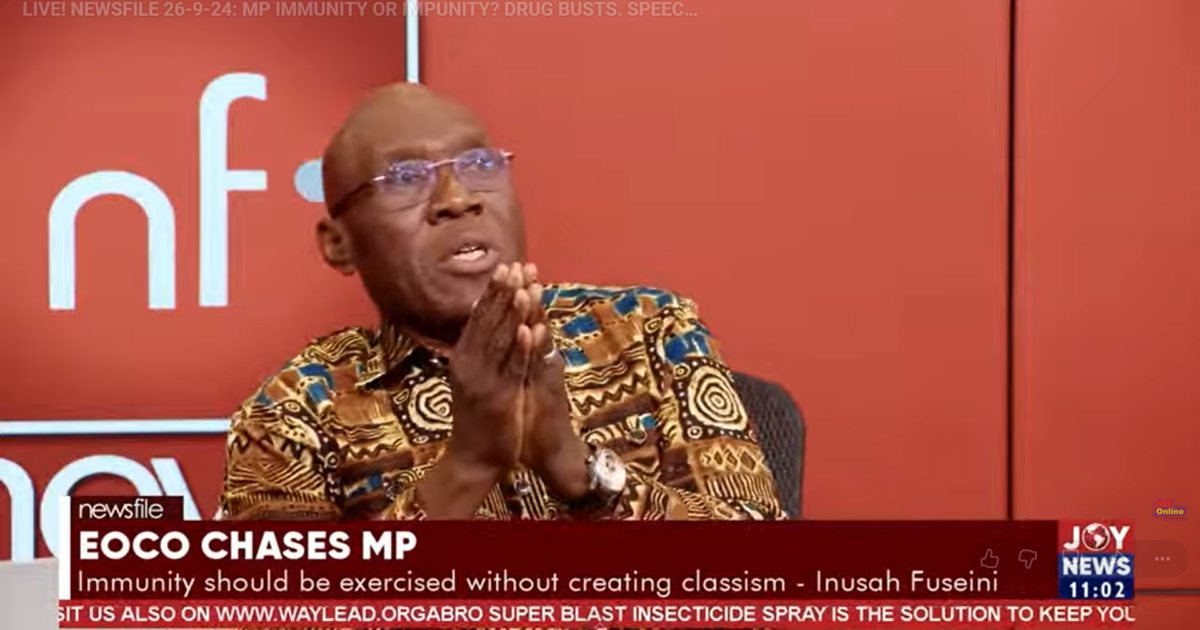
Inusah Fuseini: Ghana Cocaine Parliamentary Probe "Useless Waste Of Time"
Summary
- Former Tamale Central MP Inusah Fuseini expressed "zero trust" in Parliament's ability to conduct a useful inquiry into a recent cocaine seizure linked to Ghana.
- He argued that a parliamentary probe would be a "useless waste of time" due to Parliament's perceived inability to insulate itself from partisan political considerations.
- His comments follow the Minority's call for a parliamentary investigation after French customs seized nearly 3.9 tonnes of cocaine from a container shipped from Ghana at the port of Dunkirk.
- The Speaker of Parliament has recalled MPs for a sitting on September 29, 2026, to address the issue.
- Dr. John Osae-Kwapong of CDD-Ghana also doubted the inquiry's effectiveness, citing a history of parliamentary probes yielding no meaningful results.
Calls for a Probe Amidst High-Profile Seizure
The outcome of this investigative choice, and the perceived integrity of the process, will inevitably influence Ghana's international standing and could potentially impact future regulatory scrutiny on trade and logistics originating from the region.
The recent discovery of a substantial quantity of cocaine originating from Ghana has ignited a contentious debate regarding the most effective investigative approach. French customs officials intercepted nearly 3.9 tonnes of the illicit substance at the port of Dunkirk, found within a container that had been shipped from Ghana. This significant Ghana cocaine seizure Dunkirk immediately prompted the Minority political faction to demand a comprehensive parliamentary inquiry into the matter.
In response to this call for legislative oversight, the Speaker of Parliament has taken the step of recalling Members of Parliament from their recess, scheduling a sitting for Tuesday, September 29, 2026. This move sets the stage for a potential parliamentary investigation, yet it has simultaneously brought to light deep-seated skepticism about the efficacy and impartiality of such a process, particularly from prominent political figures. The central question now revolves around the integrity and outcome of any official investigation.
Deep-Seated Distrust in Legislative Oversight
Former Tamale Central Member of Parliament, Inusah Fuseini, has voiced profound reservations regarding the proposed parliamentary probe into the cocaine seizure. He unequivocally stated his "zero trust" in Parliament's capacity to conduct a meaningful inquiry, dismissing the idea as a "useless waste of time." Fuseini's skepticism stems from his belief that the legislative body has consistently failed to demonstrate its ability to remain insulated from partisan political considerations when addressing critical national issues.
This sentiment is not isolated. Dr. John Osae-Kwapong, a respected fellow at the Centre for Democratic Development (CDD-Ghana), echoed similar doubts during a discussion on JoyNews’ Newsfile. He expressed concern that parliamentary inquiries often lead to no tangible outcomes, fostering a public perception that such processes are largely unproductive. This widespread apprehension about Inusah Fuseini parliamentary oversight effectiveness underscores a broader institutional distrust concerning the legislature's role in high-stakes criminal investigations, particularly those touching upon sensitive matters like drug trafficking.
Advocating for Intelligence-Led Investigations
Instead of a parliamentary inquiry, Inusah Fuseini firmly advocates for the involvement of intelligence agencies to investigate the Ghana drug trafficking operation. He contends that these specialized bodies are better equipped to handle the complexities of such a case, suggesting they possess the necessary tools and expertise to uncover the truth without succumbing to political interference. His stance highlights a preference for an intelligence-led probe over a legislative one, emphasizing the need for an investigation that is both thorough and impartial.
The debate surrounding the Inusah Fuseini Ghana cocaine parliamentary probe therefore crystallizes around two distinct investigative philosophies: one favoring the transparency and public accountability of parliamentary oversight, and the other prioritizing the discreet, specialized capabilities of intelligence services. The choice between these paths carries significant weight for the perceived integrity and ultimate success of the investigation into the large-scale cocaine seizure.
Broader Implications for Governance and Crime Fighting
The ongoing discussion surrounding the appropriate investigative body for the recent cocaine seizure underscores significant political challenges and institutional distrust impacting high-profile criminal investigations in Ghana. The effectiveness of a parliamentary inquiry Ghana cocaine, as opposed to an intelligence-led approach, is a critical point of contention. This internal debate reflects broader concerns about the nation's commitment to combating organized crime and its ability to deliver credible outcomes in sensitive cases.
The outcome of this investigative choice, and the perceived integrity of the process, will inevitably influence Ghana's international standing and could potentially impact future regulatory scrutiny on trade and logistics originating from the region. The public and international community will be closely watching to see whether the chosen path can genuinely establish what happened and hold those responsible accountable, thereby reinforcing confidence in Ghana's governance and its fight against illicit activities.
Practical Implications
This article highlights the significant political challenges and institutional distrust impacting high-profile criminal investigations in Ghana. Lawyers and compliance officers should note the debate over the effectiveness of parliamentary oversight versus intelligence-led probes, as the chosen investigative path and its perceived integrity will reflect on Ghana's commitment to combating organized crime and could influence future regulatory scrutiny on trade and logistics from the region.
Source
How does this affect you?
Get an AI analysis of this article grounded in your jurisdictions, practice areas, and any policy documents you've uploaded to Wansom.
Finish Reading the Full Story and the Expert Analysis.
Get the latest legal & regulatory intelligence in Ghana
Wansom is AI and can make mistakes.