
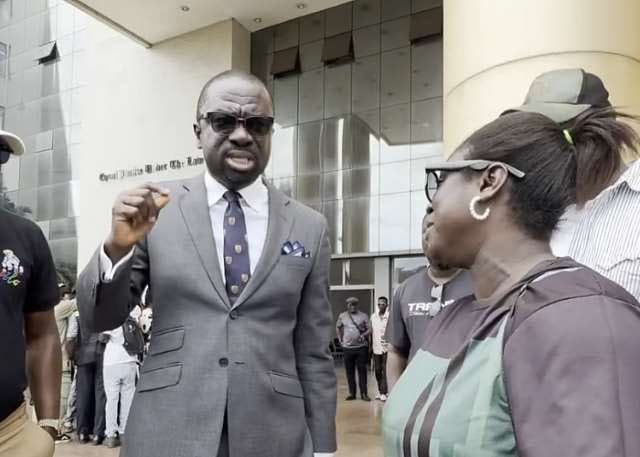
EOCO Attempted Arrest Baffour Awuah Ghana: MP Challenges Authority
Summary
- Ghana's Economic and Organised Crime Office (EOCO) recently attempted to arrest Manhyia South MP Nana Agyei Baffour Awuah.
- EOCO claims the attempted arrest was due to the MP's failure to honor two invitations issued in February 2026.
- The MP disputes this, stating the invitations related to the senior partner of his former law firm.
- The incident occurred while the MP was present in Parliament, raising questions about parliamentary immunity and procedural protocols.
- The case highlights a conflict between EOCO's enforcement powers and the accountability of high-profile individuals in Ghana.
Controversial Attempted Arrest of Ghanaian MP
This case highlights the potential for friction when investigative bodies like the Economic and Organised Crime Office Ghana exercise their enforcement powers, particularly when targeting high-profile individuals such as Members of Parliament.
Ghana's political and legal landscape was recently stirred by a dramatic incident involving the Economic and Organised Crime Office (EOCO) and a sitting Member of Parliament. On a recent Wednesday, the investigative body reportedly attempted to arrest Nana Agyei Baffour Awuah, the Manhyia South MP, an event characterized by observers as resembling a high-stakes, fast-paced confrontation within the legislative chambers. This EOCO attempted arrest of Baffour Awuah in Ghana has ignited significant debate regarding the powers of state institutions and the privileges afforded to elected officials.
According to EOCO, their attempt to apprehend the legislator stemmed from his alleged failure to respond to two formal invitations. These invitations, EOCO claims, were issued in February 2026, a detail that has added a layer of intrigue to the unfolding situation. The agency's position suggests a clear procedural basis for their actions, indicating that the MP had not complied with their requests for engagement.
However, the Manhyia South MP, Nana Agyei Baffour Awuah, has strongly contested EOCO's narrative. He maintains that the invitations in question were not directed at him personally but rather pertained to the senior partner of his former law firm. This fundamental disagreement over the recipient and nature of the invitations lies at the heart of the current dispute, setting the stage for a potential legal and procedural showdown. The fact that the attempted arrest occurred while the MP was present in Parliament further complicates the matter, raising questions about the appropriate protocols for engaging with lawmakers.
Disputed Accounts and Legal Context
The conflicting accounts from EOCO and Nana Agyei Baffour Awuah underscore the need for a thorough examination of the evidence. The resolution of this dispute, as suggested by commentators, will likely hinge on the presentation of relevant documents, correspondence, and a definitive interpretation of the law. This case highlights the potential for friction when investigative bodies like the Economic and Organised Crime Office Ghana exercise their enforcement powers, particularly when targeting high-profile individuals such as Members of Parliament.
The incident brings into sharp focus the delicate balance between the investigative mandate of agencies like EOCO and the concept of Ghana parliamentary immunity arrest. While the source does not detail the specifics of parliamentary immunity, the location of the attempted arrest — within Parliament — inherently raises questions about the scope and application of such protections. The MP's presence in the legislative building at the time of the attempted apprehension has led to speculation about his intentions, with some questioning why he would be in Parliament if he were genuinely prepared to cooperate with EOCO.
This scenario presents a critical test for the clarity of EOCO enforcement powers Ghana and the established legal frameworks governing interactions with MPs. The outcome could set important precedents for how future investigations involving lawmakers are conducted, influencing the procedural guidelines for both state agencies and parliamentary members. The precise nature of the invitations and the MP's alleged non-compliance will be crucial in determining the legitimacy of EOCO's actions and the validity of the MP's defense.
Broader Questions on Accountability and Immunity
The unfolding events surrounding Nana Agyei Baffour Awuah and EOCO have sparked broader discussions about accountability within Ghana's political class. The incident serves as a stark reminder that the pursuit of accountability can manifest in unexpected and sometimes confrontational ways, particularly when it involves individuals in positions of power. This case is not merely about a single attempted arrest but rather about the systemic challenges inherent in ensuring that all citizens, including elected officials, are subject to the rule of law.
For legal practitioners and the public alike, this situation underscores the importance of understanding the boundaries of Ghana MP legal accountability. The resolution of this matter will likely provide valuable insights into the practical application of parliamentary privileges versus the investigative authority of bodies like EOCO. It highlights the ongoing need for clear legal interpretations to guide the actions of both state institutions and individuals, especially when there are conflicting claims regarding procedural adherence.
Ultimately, the dispute between Nana Agyei Baffour Awuah and EOCO leaves several critical questions unanswered, prompting a call for the legal system to provide definitive clarity. The precise details of the invitations, the reasons for the MP's alleged non-compliance, and the legal implications of the attempted arrest within parliamentary precincts will all contribute to shaping future discourse on governance, enforcement, and the rule of law in Ghana.
Practical Implications
This case highlights potential legal and procedural challenges when investigative bodies like EOCO seek to question or arrest high-profile individuals, particularly Members of Parliament. Lawyers should monitor its resolution for clarity on parliamentary immunity and the scope of EOCO's enforcement powers, which could inform advice for clients under investigation.
Source
Source: Original reporting via GhanaWeb
How does this affect you?
Get an AI analysis of this article grounded in your jurisdictions, practice areas, and any policy documents you've uploaded to Wansom.
Finish Reading the Full Story and the Expert Analysis.
Get the latest legal & regulatory intelligence in Ghana
Wansom is AI and can make mistakes.