
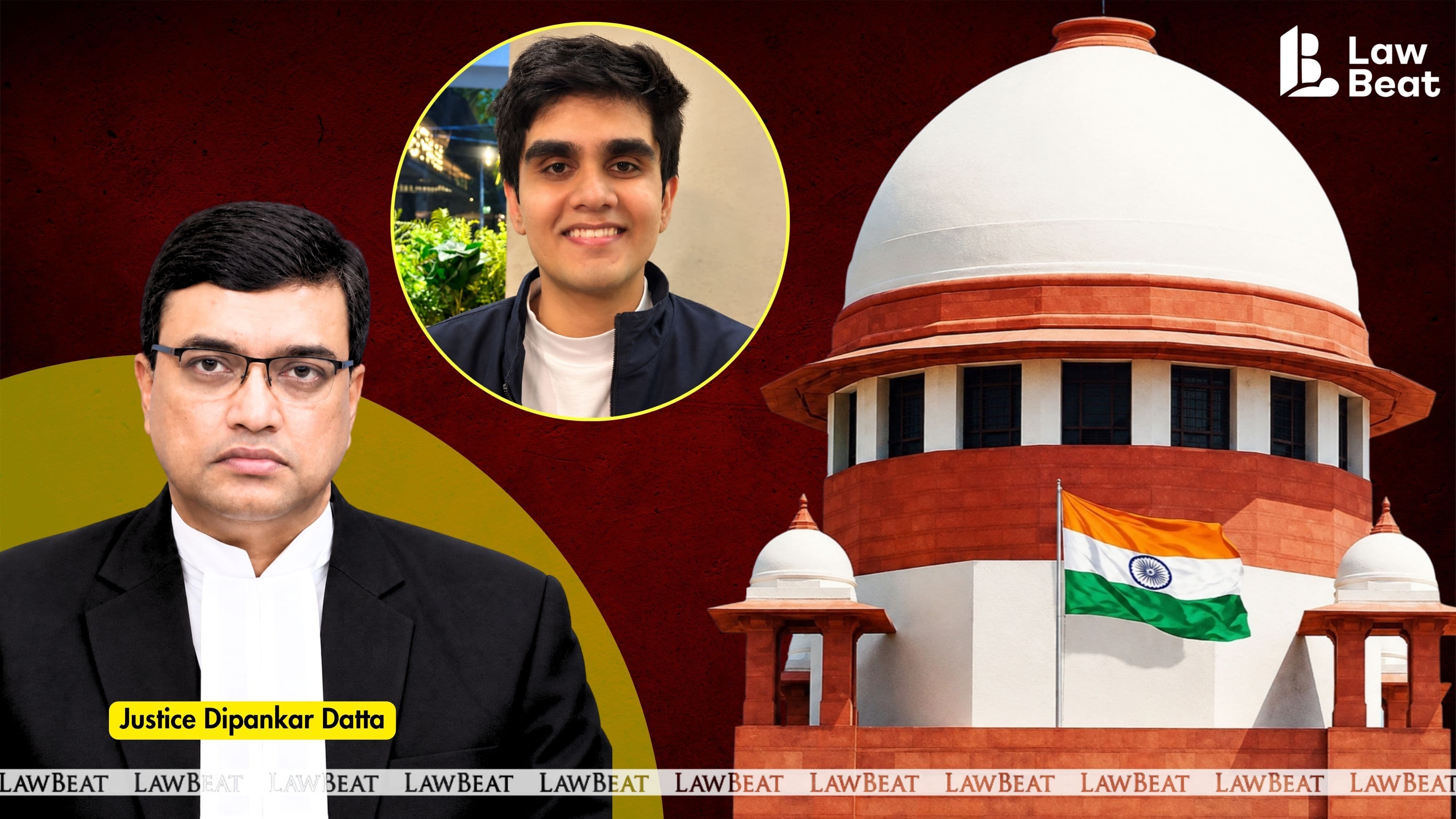
India Supreme Court: Mulla Afroz Preventive Detention Extra-Judicial Confession Quashed
Summary
- The Supreme Court of India quashed the preventive detention order of Mulla Afroz, along with the confirming order and a High Court judgment, in a ruling dated September 29, 2026.
- The Court ruled that an extra-judicial confession cannot be the sole basis for a preventive detention order, requiring authorities to consider broader material.
- Justices Dipankar Datta and Sheel Nagu found the detaining authority illegally exercised its power under the National Security Act by failing to consider appropriate material.
- The Uttar Pradesh government was ordered to pay costs of ₹10 lakh due to the illegal exercise of preventive detention power.
- Justice Dipankar Datta dedicated the judgment to his late law clerk, Ritwik Deswal, who passed away just before his 27th birthday, acknowledging his crucial research assistance.
Supreme Court Overturns Detention Order
The Court ruled that an extra-judicial confession cannot be the sole basis for a preventive detention order, requiring authorities to consider broader material.
In a significant ruling dated September 29, 2026, the Supreme Court of India allowed an appeal by Mulla Afroz, effectively quashing his preventive detention order. The bench, comprising Justices Dipankar Datta and Sheel Nagu, also invalidated the subsequent order that had confirmed Afroz's detention, alongside setting aside the High Court's judgment in the matter. This decision centered on the legality of Afroz's detention, which stemmed from his alleged involvement in the Sambhal violence.
Beyond overturning the detention, the Supreme Court imposed a substantial penalty, directing the Uttar Pradesh government to pay costs amounting to ₹10 lakh. This financial imposition underscores the Court's finding that the detaining authority had acted improperly in exercising its powers under the National Security Act. The case, formally titled Mulla Afroz v. Union of India, establishes a crucial precedent regarding the evidentiary requirements for such detentions.
Clarifying Preventive Detention Standards
The core of the Supreme Court's deliberation revolved around whether an extra-judicial confession could serve as the sole foundation for a preventive detention order. The Court meticulously examined the constitutional and statutory safeguards designed to protect individuals from arbitrary detention. Its definitive conclusion was that an extra-judicial confession, by itself, is insufficient to justify preventive detention.
The ruling clarified that authorities exercising the power of preventive detention must consider a broader spectrum of material and surrounding circumstances. The detaining authority in Mulla Afroz's case was found to have failed in this duty, neglecting to consider appropriate material beyond the confession. Consequently, the Court determined that the power of preventive detention had been exercised illegally, leading to the quashing of the detention order and subsequent related decisions.
A Judge's Poignant Tribute
Justice Dipankar Datta dedicated the judgment in the Mulla Afroz case to his late law clerk-cum-research associate, Ritwik Deswal. This dedication, described by Justice Datta as their "final collaboration," was presented at the outset of the judgment under the heading "In Memoriam." Deswal tragically passed away just four days before what would have been his 27th birthday, which coincided with the day the judgment was dedicated.
In his tribute, Justice Datta reflected on the fragility of human life, noting how often its fleeting nature goes unrecognized. He acknowledged Deswal's invaluable research assistance in preparing the judgment, stating that it bore the "quiet and indelible imprint" of his final work. Justice Datta expressed that Deswal's untimely demise left an "excruciatingly deep void," recalling that even in his final moments, Deswal remained committed to the pursuit of truth and justice. The dedication honored Deswal's integrity, commitment to the law, love for academia, and other admirable qualities of "head and heart."
Implications for Preventive Detention Law
This judgment by the India Supreme Court significantly impacts the application of preventive detention laws, particularly under the National Security Act. By explicitly stating that a preventive detention order cannot rely solely on an extra-judicial confession, the ruling reinforces the need for a comprehensive assessment of all relevant facts and circumstances by detaining authorities. This requirement ensures that constitutional and statutory safeguards against arbitrary detention are rigorously upheld.
The decision serves as a critical reminder to authorities that the power of preventive detention must be exercised with extreme caution and based on a robust evidentiary foundation that extends beyond a single, potentially unreliable, piece of evidence. The imposition of costs on the Uttar Pradesh government further underscores the judiciary's commitment to holding authorities accountable for illegal exercises of this extraordinary power, thereby strengthening protections for individual liberties.
Practical Implications
This Supreme Court ruling clarifies that preventive detention orders in India cannot rely solely on extra-judicial confessions, requiring authorities to consider broader material. Lawyers and compliance officers must scrutinize the evidentiary basis of any preventive detention order, especially where confessions are central, to ensure it meets constitutional and statutory safeguards and to advise clients on potential challenges.
Source
Source: Original reporting via Live Law
How does this affect you?
Get an AI analysis of this article grounded in your jurisdictions, practice areas, and any policy documents you've uploaded to Wansom.
Finish Reading the Full Story and the Expert Analysis.
Get the latest legal & regulatory intelligence in India
Wansom is AI and can make mistakes.