
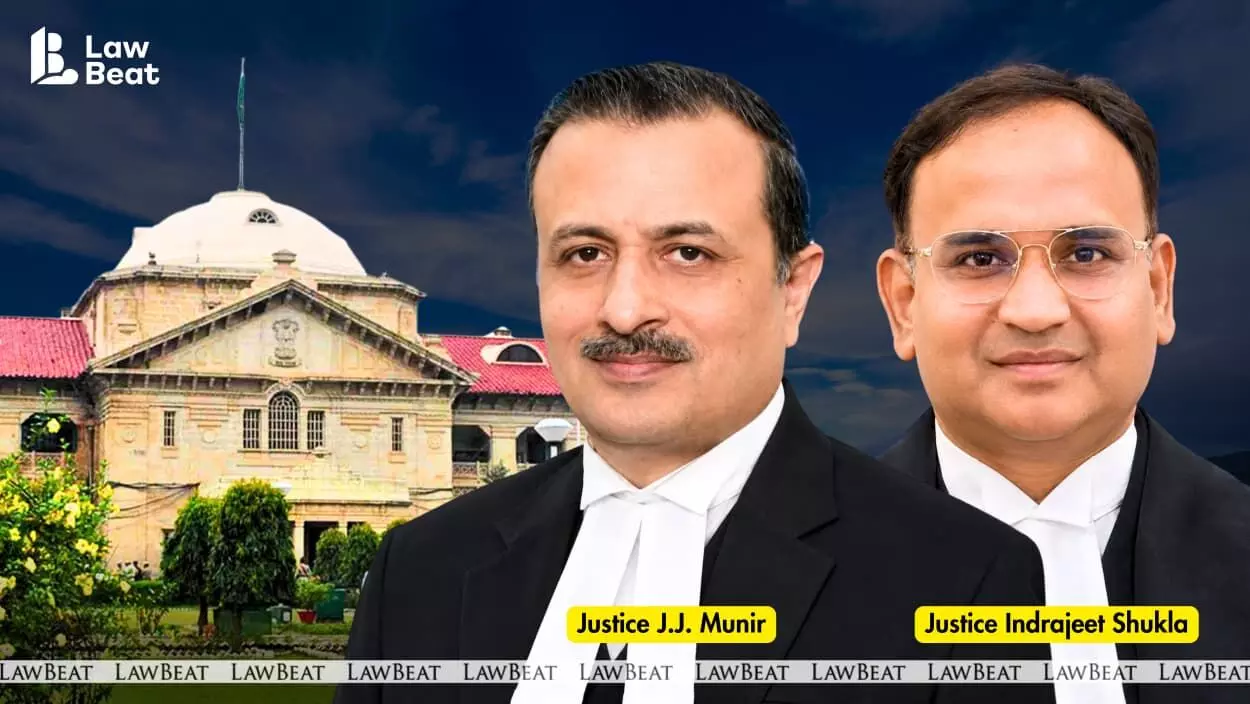
Allahabad HC: DM Lacks Jurisdiction in Vehicle Repossession Cases
Summary
- The Allahabad High Court ordered the return of a vehicle allegedly seized at gunpoint by agents of HDB Financial Services Limited.
- The court stated that citizens should approach civil courts for civil disputes, rather than District Magistrates, whose perceived omnipotence is a colonial legacy.
- Justices J.J. Munir and Indrajeet Shukla presided over the case, emphasizing the limited legal power of District Magistrates in such matters.
- The finance company's defense, linking the loan to the petitioner's brother and an arbitration award, was found by the court to not apply to the petitioner's specific vehicle.
- The ruling clarifies that competent civil courts are the appropriate forum for disputes involving vehicle repossession and loan defaults.
The Dispute Over Vehicle Repossession
The Allahabad High Court underscored that citizens of independent India must abandon the outdated, colonial-era perception of District Magistrates as omnipotent authorities, instead directing civil disputes to the appropriate civil courts for redress.
The Allahabad High Court recently addressed a petition filed by Sadab Ahmad concerning the alleged forceful seizure of his goods carrier. Ahmad claimed that on August 9, 2026, while driving his vehicle in Chandauli, he was intercepted by agents representing HDB Financial Services Limited. These individuals reportedly threatened him at gunpoint, forcibly took possession of the vehicle, and compelled him to sign a repossession inventory.
Ahmad had acquired the vehicle in December 2023 through a loan from HDB Financial Services, structured for repayment in 45 monthly installments of Rs. 64,059 each. He asserted that he had already paid 31 installments and that his loan account was in good standing at the time of the alleged seizure. Following the incident, Ahmad made a representation to the finance company's regional business head, filed a written report at Police Station Ramnagar in District Varanasi on August 29, 2026, and also sought intervention from the District Magistrate of Azamgarh.
Finance Company's Defense and Court's Findings
HDB Financial Services Limited countered Ahmad's claims, stating that the vehicle repossession was executed in accordance with the loan agreement. The company argued that Sadab Ahmad's loan account was interconnected with a separate loan taken by his brother, Shoaib Ahmad, for another commercial vehicle. They alleged that Shoaib had consistently defaulted on his repayments, and that the two loan accounts were mutually secured.
Furthermore, the finance company cited an arbitration award dated January 14, 2026, which had been issued against both Shoaib and Sadab, jointly and severally. However, the Allahabad High Court, presided over by Justices J.J. Munir and Indrajeet Shukla, critically noted that the arbitration proceedings and any interim directives for repossession specifically pertained to Shoaib's vehicle, not Sadab's. The court found no evidence that proceedings had been initiated against Sadab's vehicle.
Clarifying District Magistrate Jurisdiction
In its ruling, the Allahabad High Court underscored that citizens of independent India must abandon the outdated, colonial-era perception of District Magistrates as omnipotent authorities, instead directing civil disputes to the appropriate civil courts for redress. The court observed that this enduring perception leads individuals to approach District Magistrates even for matters that clearly fall within the purview of civil court jurisdiction, such as vehicle repossession or loan defaults.
The division bench, comprising Justices J.J. Munir and Indrajeet Shukla, explicitly stated that the District Magistrate's image as the most powerful figure in a district is a vestige of British rule. The court emphasized that in the specific case of Sadab Ahmad, the petitioner ought to have sought relief from a competent civil court rather than expecting the District Magistrate to intervene. Legally, the District Magistrate possessed limited power to act in such a civil dispute.
The Importance of Proper Legal Recourse
The High Court stressed that the competent civil judge in the district was the appropriate authority to address the petitioner's concerns regarding the alleged illegal seizure. This ruling serves as a crucial clarification on the limited powers of the District Magistrate in civil matters, particularly those involving alleged illegal seizures or loan defaults, which are inherently civil disputes.
Ultimately, the court ordered the return of Sadab Ahmad's vehicle, reinforcing the principle that proper jurisdictional recourse is essential for effective legal redress. This decision highlights the imperative for citizens to understand and utilize the established judicial framework for civil grievances, rather than relying on an outdated understanding of administrative authority.
Practical Implications
Lawyers and compliance officers should advise clients that civil disputes, even those involving alleged illegal seizures or loan defaults, must be directed to competent civil courts rather than seeking intervention from the District Magistrate. This ruling clarifies the limited powers of the DM in such matters, emphasizing the importance of proper jurisdictional recourse for effective legal redress.
Source
How does this affect you?
Get an AI analysis of this article grounded in your jurisdictions, practice areas, and any policy documents you've uploaded to Wansom.
Finish Reading the Full Story and the Expert Analysis.
Get the latest legal & regulatory intelligence in India
Wansom is AI and can make mistakes.