
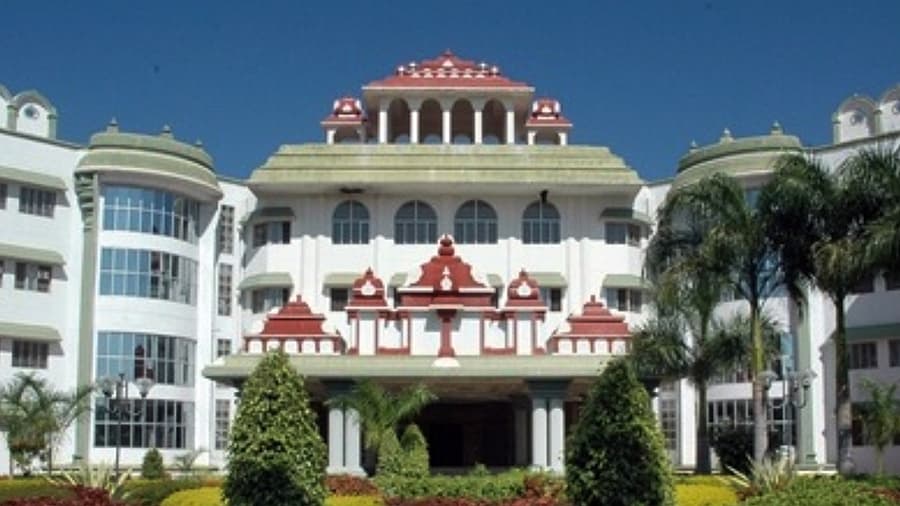
Madras High Court: Questions Brahmin OBC Conversion for Benefits
Summary
- The Madras High Court expressed surprise over a claim that Brahmins could gain OBC status by converting to Christianity and joining the Church of South India.
- A Division Bench of Justices GR Swaminathan and MD Sumathi stated that such a possibility would necessitate a "serious re-think" of the existing system.
- The claim was made during a challenge by G Kodeeswaran against the constitutional validity of reservation benefits for Christian communities and converts in Tamil Nadu.
- Kodeeswaran, a Kallar community member, argued that the backwardness of these groups lacked empirical justification and allowed forward-caste individuals to claim OBC status through conversion.
- The case, Kodeeswaran Vs State, scrutinizes the Tamil Nadu reservation framework regarding religious conversion and OBC benefits.
Court Expresses Surprise Over OBC Status Claim
The Court underscored that if this assertion proved accurate, it would undeniably warrant a "serious re-think" of the policy.
The Madras High Court recently voiced its astonishment regarding a contention that individuals from the Brahmin community could potentially access Other Backward Classes (OBC) reservation benefits by converting to Christianity and subsequently joining the Church of South India (CSI). This assertion, made within the context of Tamil Nadu's existing reservation framework, prompted a significant reaction from the judicial bench.
During proceedings for the case of Kodeeswaran Vs State, a Division Bench comprising Justices GR Swaminathan and MD Sumathi indicated that if such a possibility were indeed substantiated, it would necessitate a thorough re-evaluation of the current system. The judges specifically noted that the petitioner's counsel had "startled" them with the claim that a Brahmin, upon conversion and affiliation with the CSI denomination, could attain OBC status under the prevailing statutory provisions. The Court underscored that if this assertion proved accurate, it would undeniably warrant a "serious re-think" of the policy.
Challenge to Reservation Framework
The surprising submission emerged during a hearing concerning a petition that contests the constitutional validity of specific provisions in Tamil Nadu law. These provisions grant Backward Class (BC) and Most Backward Class (MBC) status to various Christian communities and Christian converts within the state. The petitioner, G Kodeeswaran, who identifies as a member of the Kallar community and is an applicant for the TNPSC examination, initiated this legal challenge.
Kodeeswaran's plea specifically targets the reservation benefits extended to Christian communities and converts under the state's legal framework. His central argument posits that the backwardness attributed to these groups lacks adequate empirical justification. Furthermore, he contended that the current system allows even individuals from forward castes to claim OBC status simply by undergoing baptism and becoming members of the Church of South India, thereby exploiting the Tamil Nadu reservation framework.
Implications for Reservation Policy
The Madras High Court's expressed surprise and call for a "serious re-think" highlight potential vulnerabilities or unintended consequences within the state's reservation policies, particularly concerning religious conversion and OBC reservation benefits Christianity. The judicial observation suggests that the court perceives a significant anomaly if a forward-caste individual, such as a Brahmin, can alter their social classification to gain reservation advantages solely through religious conversion to the Church of South India.
This development could lead to increased scrutiny of how OBC status is determined for converts and the criteria used to define backwardness among Christian communities in Tamil Nadu. The outcome of Kodeeswaran Vs State and the court's subsequent deliberations could have far-reaching implications for the state's reservation system, potentially prompting legislative or policy adjustments to address the concerns raised about the Madras High Court Brahmin OBC conversion scenario.
Practical Implications
Lawyers advising on reservation benefits in Tamil Nadu should monitor this case closely, as the Madras High Court's expressed surprise signals potential future challenges or a 'serious re-think' of existing policies regarding religious conversion and OBC status, particularly for Christian converts.
Source
How does this affect you?
Get an AI analysis of this article grounded in your jurisdictions, practice areas, and any policy documents you've uploaded to Wansom.
Finish Reading the Full Story and the Expert Analysis.
Get the latest legal & regulatory intelligence in India
Wansom is AI and can make mistakes.