
MP High Court: PIL Seeks New Rules to Tackle Litigation Pendency
Summary
- A Public Interest Litigation has been filed before the Madhya Pradesh High Court to address civil litigation pendency.
- The petition seeks to enforce a 2011 Supreme Court ruling on realistic costs, mesne profits, and early scrutiny of pleadings.
- Advocates Anand Chawla and Vidya Sankar Mishra highlight issues like routine, unreasoned adjournments and prevalent false pleadings.
- The PIL argues that the non-implementation of existing legal frameworks contributes to prolonged disputes and inadequate compensation for successful parties.
- The High Court's Principal Seat at Jabalpur is examining the matter, which could lead to significant procedural reforms.
PIL Seeks to Streamline Civil Litigation in MP
The petition highlights how routine, unreasoned adjournments and the prevalence of false pleadings, despite existing procedural safeguards, undermine the efficiency of the judicial system and prolong civil litigation.
A significant Public Interest Litigation (PIL) has been lodged before the Principal Seat of the Madhya Pradesh High Court in Jabalpur, aiming to tackle the persistent issue of civil litigation pendency. Filed by two practicing advocates, Anand Chawla and Vidya Sankar Mishra, the petition seeks judicial directives for the formulation of new rules that would enforce a decade-old Supreme Court ruling. This 2011 judgment, specifically in the case of Ram Rameshwar Devi & others v. Nirmala Devi and others, focused on the importance of realistic costs, appropriate mesne profits, and early scrutiny of pleadings in civil disputes.
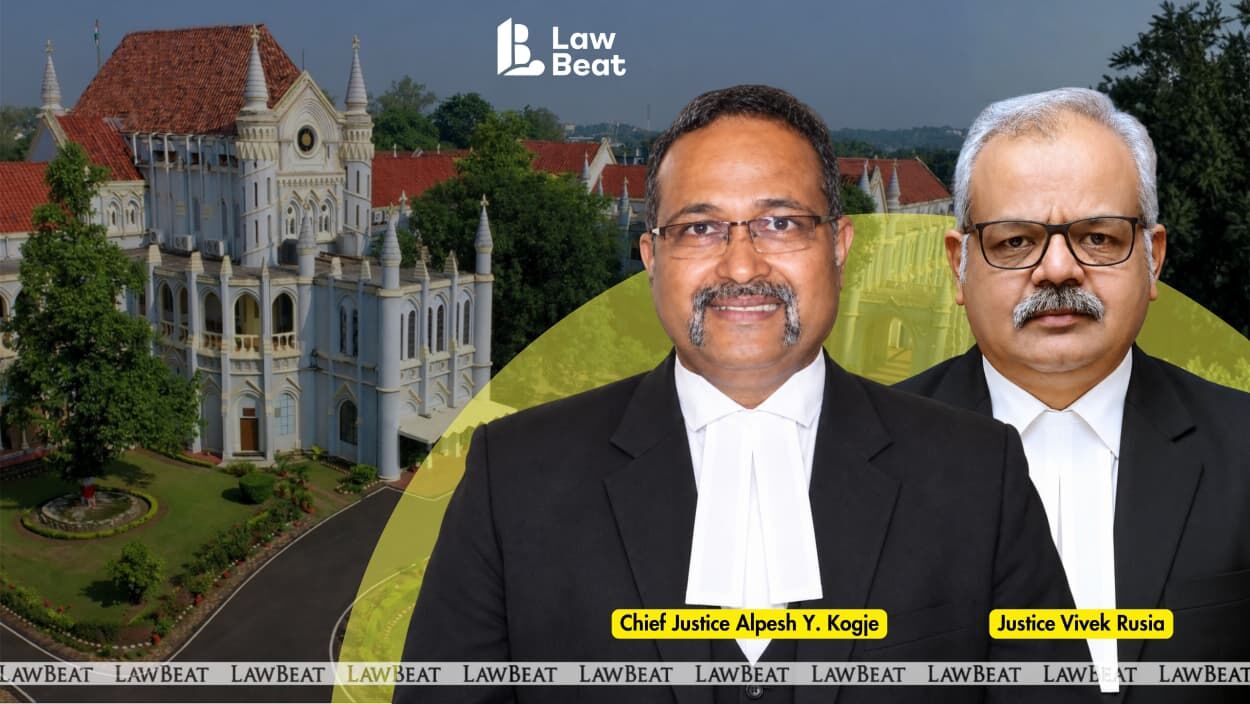
The petitioners, who regularly practice before both district courts and the High Court, contend that the Supreme Court's directives have largely gone unimplemented across Madhya Pradesh. Their PIL, submitted under Article 226 of the Constitution, was heard by a Division Bench comprising Chief Justice Alpesh Y. Kogje and Justice Vivek Rusia, with Senior Advocate Ashok Lalwani representing the petitioners. The core objective is to compel the state's judicial system to adopt stricter measures against practices that contribute to prolonged legal battles.
The petition specifically targets several procedural shortcomings. It highlights the routine granting of multiple adjournments in interlocutory applications without adequate justification, a practice it argues contravenes the amended Order XVII Rule 1 of the Civil Procedure Code (CPC). Furthermore, the PIL addresses the prevalence of false pleadings and blunt denials of claims, despite the safeguard provided by the amended Order VI CPC, which mandates an affidavit in support of pleadings. These issues, the petitioners argue, significantly impede the timely resolution of civil cases.
Unimplemented Supreme Court Mandates and Procedural Lapses
Central to the PIL's argument is the assertion that the 2011 Supreme Court ruling in Ram Rameshwar Devi provides a robust framework for addressing litigation delays, yet its principles remain largely unapplied. The Supreme Court had emphasized that litigants approaching courts with 'unclean hands' should not receive relief and that false claims ought to be prosecuted. Specifically, paragraph 52 of that ruling underscored that pleadings form the 'foundation of claims' and obligated trial courts to meticulously scrutinize them, employing early discovery, document production, and interrogatories to clarify issues.
The petitioners illustrate the impact of these procedural lapses by noting that interlocutory applications typically consume nine to ten months for resolution. When a single suit involves three or four such applications, a civil judge's standard three-year tenure at a particular station often concludes before the substantive case is decided. Regarding false pleadings, the petition cites a specific instance where a trial court initially sentenced an individual to three years' imprisonment for filing a false affidavit, only for a sessions judge to commute this sentence to a fine of Rs 30,000 on appeal, a document annexed to the petition.
Despite repeated representations made to the High Court's Registrar General and Registrar (Vigilance), including one dated June 1, 2013, the petitioners claim no subsequent action has been taken. They further state their unawareness of any litigant being prosecuted for false pleadings or any lawyer facing misconduct complaints due to repeated adjournments, underscoring a perceived lack of enforcement mechanisms within the system.
The Economic Impact of Delayed Justice
The PIL also brings to the forefront the financial implications of prolonged litigation, particularly concerning mesne profits. In landlord-tenant and other property disputes, mesne profits are legally due from the date a lease is terminated. However, the petition points out that these profits are frequently awarded only from the date of the trial court's judgment, leaving the ultimately successful party without compensation for the intervening period. This practice effectively removes any mechanism to adequately compensate the rightful party for the delay and loss of use of property.
During the hearing, Senior Advocate Lalwani informed the bench that, in his two decades of practice, the Madhya Pradesh High Court had rarely granted mesne profits, with only one or two exceptions, despite the clear directive from the 2011 Supreme Court ruling. He argued that the consistent award of realistic costs and mesne profits, calculated from the correct commencement date, would serve as a powerful deterrent, discouraging litigants from deliberately prolonging suits. This would incentivize quicker resolutions and discourage frivolous or dilatory tactics.
Chief Justice Kogje inquired whether other High Courts in India or international jurisdictions routinely directed the losing party to bear the full litigation costs. Senior Advocate Lalwani conceded he was unaware of such a practice in other Indian High Courts, though he noted the principle exists under the Arbitration Act. He did, however, cite an example from an English landlord-tenant dispute, resolved within three days, where the losing party was ordered to cover the winning party's travel and hotel expenses, highlighting a potential model for more comprehensive cost recovery.
Practical Implications
Lawyers practicing civil litigation in Madhya Pradesh should closely monitor this PIL, as its success could lead to stricter enforcement of rules against false pleadings and frequent adjournments, and potentially higher awards for realistic costs and mesne profits. This would necessitate a review of litigation strategies, client advice on potential costs and risks, and a greater emphasis on meticulous pleading and evidence presentation to avoid adverse outcomes.
Source
How does this affect you?
Get an AI analysis of this article grounded in your jurisdictions, practice areas, and any policy documents you've uploaded to Wansom.
Finish Reading the Full Story and the Expert Analysis.
Get the latest legal & regulatory intelligence in India
Wansom is AI and can make mistakes.