
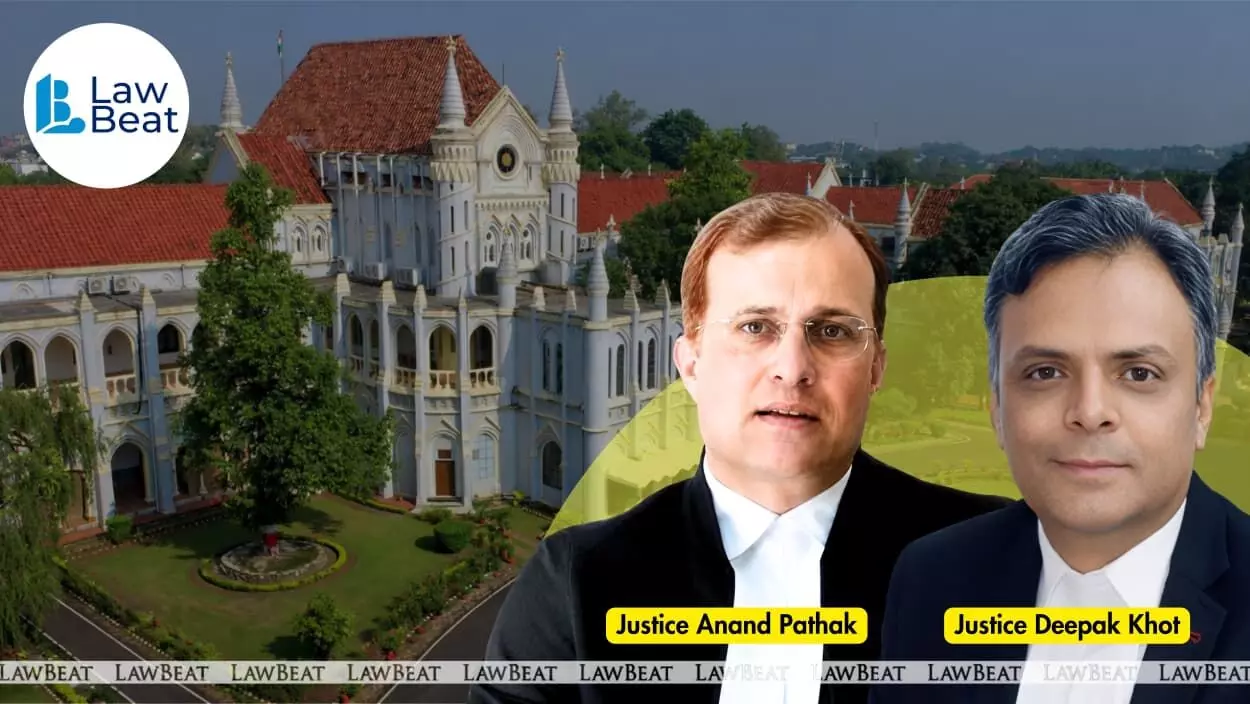
MP High Court: Inconclusive Forensic Report Bribery Probe Ordered
Summary
- The MP High Court dismissed an ASI's plea against a trial court order for fresh voice samples in a bribery case.
- The court ruled that an inconclusive forensic report, especially one citing insufficient data or deliberate disguise, cannot justify closing a bribery investigation.
- The case involved ASI Sanjay Sisodiya, accused of demanding a bribe, where an initial trap failed and voice samples were deemed inappropriate by the forensic lab.
- The High Court affirmed that courts can direct further investigation and fresh voice samples, even if the initial evidence collection was flawed.
- The ruling cited Supreme Court precedents, clarifying that giving a voice sample does not violate the right against self-incrimination under Article 20(3).
The Bribery Allegation and Failed Trap
It firmly establishes that an inconclusive forensic report, especially one hampered by inadequate or manipulated evidence, cannot be the sole basis for police to close a bribery probe.
The Madhya Pradesh High Court recently upheld a lower court's decision to reject a police closure report in a bribery investigation involving Assistant Sub-Inspector Sanjay Sisodiya. The case originated from a complaint filed by Karan Gurjar, who alleged that his landlord had fraudulently vacated his hotel premises, leading to an initial First Information Report (FIR) under Section 420 of the Indian Penal Code (now Section 318(4) of the Bharatiya Nyaya Sanhita, 2023). Sisodiya, assigned to investigate this matter, was subsequently accused by Gurjar of demanding a bribe of Rs 30,000 to conduct the probe.
To substantiate his claim, Gurjar approached the Deputy Superintendent of Police, who provided him with a Sony digital voice recorder to capture the alleged demand. Head Constable Brijbihari Pandey accompanied Gurjar as a shadow witness. On the same day, Gurjar filed a second complaint, stating that the ASI had instructed him to bring Rs 10,000 as illegal gratification. This led to the registration of an FIR under Section 7 of the Prevention of Corruption Act, 1988, identified as Crime No. 82/2024. Despite multiple attempts, the planned trap failed as Sisodiya was not present at the police station on two or three occasions. Following this, voice samples were forwarded to the Regional Forensic Science Laboratory (RFSL) in Bhopal for analysis.
Inconclusive Report and Judicial Scrutiny
A closure report, numbered 2/2025 and dated March 12, 2026, was subsequently filed by the police. This report asserted that the transcript of the recorded conversation revealed no direct or indirect demand for a bribe. Crucially, it also noted that the RFSL had provided no definitive opinion on the voice samples, citing a "want of suitable speech data." However, the Special Judge (Prevention of Corruption Act) in Bhopal, in an order dated July 22, 2026, rejected this closure report and mandated further investigation, including the collection of fresh voice samples from Sisodiya.
Sisodiya challenged this directive before a Division Bench of Justice Anand Pathak and Justice Deepak Khot at the MP High Court. The High Court affirmed the trial court's decision, emphasizing that an inconclusive forensic report, particularly one attributed to insufficient or inappropriate data, cannot serve as a legitimate basis to terminate a bribery investigation. The court observed that the RFSL had not concluded that the voices did not match, but rather indicated a significant variation in the speaker's voice, suggesting a deliberate attempt at disguise. The bench further commented that the initial sample sent to the FSL was "inappropriate and insufficient to form an opinion," and that a closure report built on such evidence does not conclusively demonstrate that no offense was committed. The court also remarked on the investigator's responsibility to conduct the probe "honestly and carefully."
Legal Arguments and Precedents
During the High Court proceedings, Senior Advocate Anil Khare, representing Sisodiya alongside Advocate Priyank Agrawal, contended that ordering fresh voice sampling constituted a "roving inquiry" and violated Article 20(3) of the Constitution, which protects individuals against self-incrimination. The defense also highlighted the failure of the trap, the absence of any recovery, and the complainant's lack of objection to the closure report, arguing that even a voice match would not definitively prove a demand for a bribe. Conversely, Advocate Abhinav Shrivastava, appearing for the State, argued that courts are not bound by police closure reports and possess the authority to direct further investigation. He asserted that providing a voice sample does not infringe upon Article 20(3) and that the complainant's acquiescence to the closure report does not restrict the court's powers.
The High Court, referencing the Supreme Court's pronouncements in cases such as Abhinandan Jha v. Dinesh Mishra, Ramswaroop Soni v. State of M.P., and Vinay Tyagi v. Irshad Ali, reiterated that a magistrate holds the discretion to accept a closure report, take cognizance despite it, or order further investigation if dissatisfied with the findings. Regarding the self-incrimination argument, the bench recalled the Supreme Court's ruling in Ritesh Sinha v. State of U.P., which clarified the position on voice samples. The court also noted that the transcript itself, on its face, suggested the commission of an offense, and that the Explanation to Section 7 of the Prevention of Corruption Act encompasses even an attempt to receive gratification.
Why It Matters
This ruling by the MP High Court underscores the judiciary's robust oversight role in criminal investigations, particularly in cases involving allegations of corruption. It firmly establishes that an inconclusive forensic report, especially one hampered by inadequate or manipulated evidence, cannot be the sole basis for police to close a bribery probe. The court's directive for fresh voice samples, despite initial collection issues, reinforces the principle that courts can compel further investigative steps to ensure justice, even when initial efforts by law enforcement are deemed insufficient or flawed.
Furthermore, the decision clarifies the scope of Article 20(3) concerning voice samples in India, aligning with established Supreme Court precedents. It serves as a critical reminder to investigating agencies of their obligation to conduct thorough and honest inquiries, and that judicial scrutiny can extend to the quality and completeness of evidence presented in closure reports. The court's emphasis on the prima facie disclosure of an offense, even from an incomplete transcript, highlights its commitment to preventing premature termination of corruption cases based on procedural deficiencies or ambiguous forensic findings.
Practical Implications
Lawyers defending clients in corruption cases should note that an inconclusive forensic report alone is insufficient to justify closing an investigation, and courts retain the power to direct further investigative steps, including fresh voice samples, even if initial evidence collection was flawed or the trap failed. This ruling reinforces the judiciary's oversight on police closure reports and the scope of Article 20(3) protections regarding voice samples.
Source
Source: Original reporting via Live Law
How does this affect you?
Get an AI analysis of this article grounded in your jurisdictions, practice areas, and any policy documents you've uploaded to Wansom.
Wansom is AI and can make mistakes.