
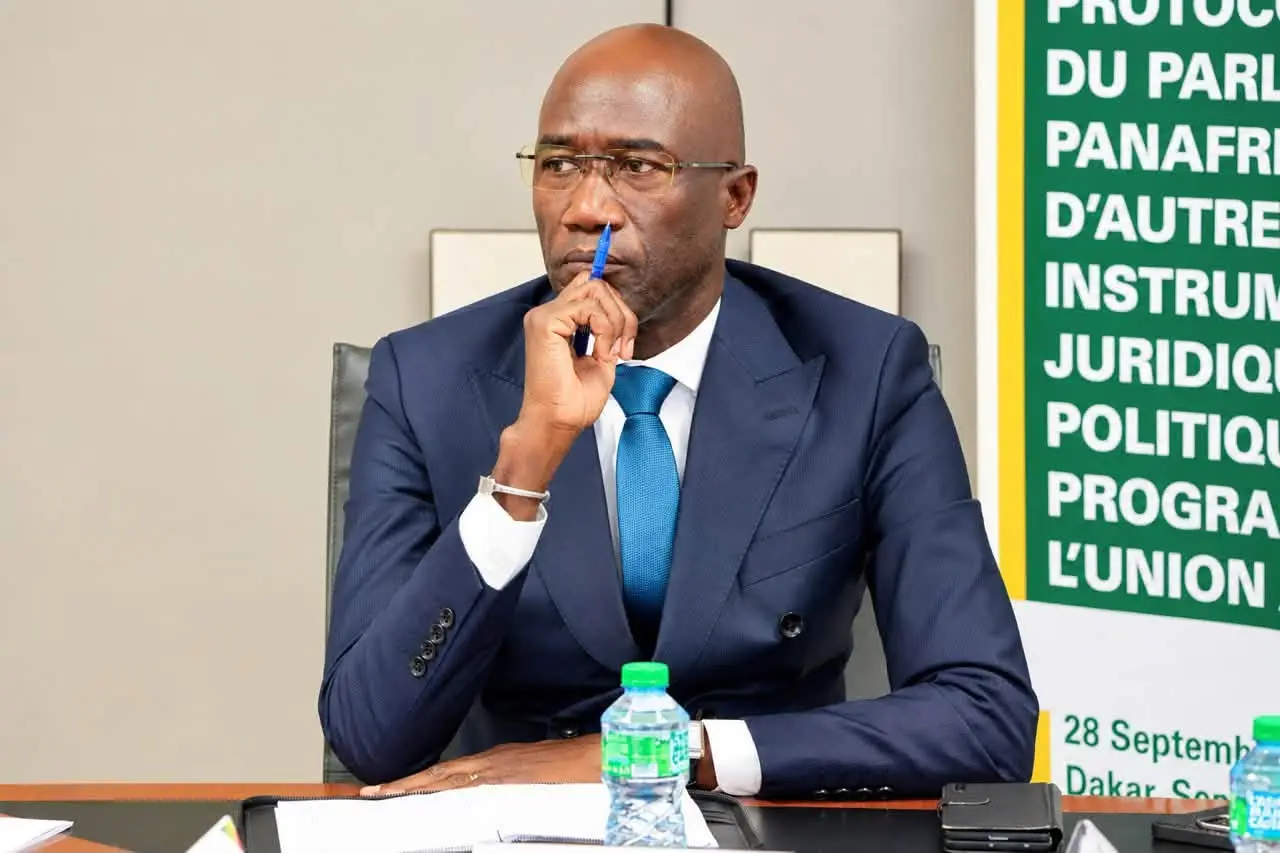
Moussa Sarr: Justice Sénégal 2027 Budget Up 6.2% to 85.76 Billion FCFA
Summary
- The Senegalese Ministry of Justice's 2027 budget proposal includes 85.76 billion FCFA in payment credits, marking a 6.2% increase from 2026.
- Minister Moussa Sarr emphasized the need for greater resources for his department during the budget presentation to parliamentary commissions.
- Significant allocations include 32.54 billion FCFA for Judicial Justice and 9.22 billion FCFA for judicial child protection, which saw a 13.2% increase.
- Dematerialization of judicial procedures remains a key priority, with 1.15 billion FCFA earmarked for 2027 and the eJustice platform initiating pilot programs.
- The 2026 review highlighted 3,595 presidential pardons, 243 conditional releases, and 7,049 detainees receiving training or apprenticeship placements.
Overview of the 2027 Justice Budget
The Ministry of Justice's commitment to digital transformation is evident with 1.15 billion FCFA allocated for the dematerialization of procedures in 2027, signaling a significant shift in how legal processes will be conducted.
Senegal's Ministry of Justice, under the leadership of Minister Moussa Sarr, has put forth a proposed budget for 2027 that outlines 85.76 billion FCFA in payment credits. This figure represents a notable increase of 5.03 billion FCFA, or 6.2%, compared to the 80.73 billion FCFA initially allocated in the 2026 finance law. The comprehensive budget plan, which also includes 93.25 billion FCFA in engagement authorizations, was presented by Minister Sarr to the parliamentary finance and law commissions.
During his address to the parliamentarians, Minister Moussa Sarr underscored the critical need for enhanced financial backing for his department. He explicitly stated that the Ministry of Justice requires additional resources to effectively fulfill its mandate. This plea for increased funding for the Justice sector in Sénégal highlights the government's ongoing efforts to strengthen the judicial system and its operations as outlined in the 2027 budget, particularly concerning the crédits paiement Justice 2027.
Key Budgetary Allocations and Trends
An analysis of the proposed 2027 budget for the Justice sector reveals distinct shifts in expenditure categories. Personnel costs are slated to account for 46.6% of the total envelope, reflecting an increase of 1.49 billion FCFA. Spending on goods and services is projected to rise by 14.3 billion FCFA, constituting 35.6% of the budget, primarily due to a reclassification of certain items from Title 4 to Title 3. Investments are set at 13.8%, with current transfers making up the remaining 4.1%.
Further examination of program-specific allocations shows varied trajectories. Judicial Justice is designated 32.54 billion FCFA. Conversely, the Administration Pénitentiaire, responsible for correctional facilities, will see its allocation decrease by 5.4% to 29.24 billion FCFA, impacting the overall financement administration pénitentiaire Sénégal. Within the provisions for incarcerated individuals, 6.27 billion FCFA is earmarked for food, alongside 1.14 billion FCFA for health services. A significant positive trend is observed in judicial child protection, which is set to receive 9.22 billion FCFA, marking a 13.2% increase. In contrast, the budget for the steering and oversight program will experience a 7.5% reduction, settling at 13.44 billion FCFA.
Advancing Digital Justice
A central pillar of the Ministry of Justice's strategy for 2027 involves the continued prioritization of dematerialization initiatives for judicial procedures. A sum of 1.15 billion FCFA has been allocated for this purpose in the upcoming year, forming part of a larger 10.7 billion FCFA investment planned for the period spanning 2025 to 2029. This substantial commitment underscores the government's drive towards modernizing the legal framework, particularly in the budget dématérialisation procédures judiciaires Sénégal.
The practical implementation of this digital transformation is already underway, with the eJustice platform having launched dematerialization efforts in several pilot jurisdictions on September 10. This move is expected to streamline court interactions and procedural requirements, significantly impacting legal professionals in Senegal. The Ministry of Justice's commitment to digital transformation is evident with 1.15 billion FCFA allocated for the dematerialization of procedures in 2027, signaling a significant shift in how legal processes will be conducted. Furthermore, the projet JUCICOM Sénégal budget is set to receive a 61% increase in its allocation, reinforcing the broader push for technological integration within the justice system. Lawyers in Senegal should closely monitor these developments, as the evolving digital landscape will increasingly shape their practice.
2026 Performance and Impact
Minister Moussa Sarr also provided an overview of the Ministry's performance for the year 2026, highlighting several key achievements. The report indicated that 3,595 presidential pardons were granted, alongside 243 conditional releases and 918 reductions of sentence. These figures reflect ongoing efforts in correctional management and rehabilitation.
In the realm of inmate welfare and reintegration, the 2026 review noted that 7,049 detainees participated in training programs or were placed in apprenticeships. Additionally, local justice houses played a crucial role in community legal services, successfully processing 15,533 cases throughout the year. This comprehensive review underscores the multifaceted activities undertaken by the ministère Justice Sénégal beyond its budgetary allocations.
Practical Implications
Lawyers in Senegal should monitor the progress of the eJustice platform and other dematerialization initiatives, as these digital transformations will increasingly impact procedural requirements and court interactions. Shifts in budget allocation, such as increased funding for judicial child protection, may also signal evolving priorities in enforcement and resource deployment relevant to specific practice areas.
Source
Source: Original reporting via dakar92
How does this affect you?
Get an AI analysis of this article grounded in your jurisdictions, practice areas, and any policy documents you've uploaded to Wansom.
Finish Reading the Full Story and the Expert Analysis.
Get the latest legal & regulatory intelligence in Senegal
Wansom is AI and can make mistakes.