
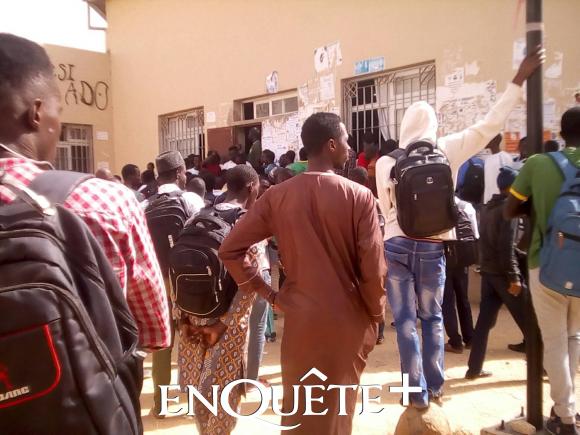
Sénégal: UCAD Bourses Impayées After Budget Rejection
Summary
- Students at UCAD are concerned about potential non-payment of scholarships due to the rejection of national finance bills.
- The budgetary deadlock is feared to impact higher education and student allocations, which are typically 40,000 or 60,000 FCFA.
- Students criticize both political factions in parliament and urge for dialogue to resolve the budget crisis.
- A similar delay in scholarship payments in 2014 led to clashes between students and police, resulting in a student's death.
- The current situation highlights the risk of financial instability and social unrest stemming from the parliamentary standoff over the budget.
Escalating Concerns at UCAD
The current fears surrounding the paiement bourses étudiants UCAD are not without historical precedent, adding a layer of gravity to the situation.
Students at the Université Cheikh Anta Diop de Dakar (UCAD) are expressing significant apprehension regarding the timely disbursement of their scholarships. This anxiety follows the recent rejection of the rectifying finance bill for 2026 and the initial finance bill for 2027, creating a climate of uncertainty around the UCAD bourses impayées rejet budgétaire. While no official confirmation of non-payment has been made, the students fear that the ongoing budgetary deadlock will severely impact the higher education sector and their crucial financial allocations.
Borgo Sy, a student enrolled in the faculty of letters and human sciences, characterized the current state of affairs as "abnormal." She underscored the vital role of the national budget in supporting various active sectors of society, suggesting that students could become collateral damage in the political struggle between opposition and ruling party deputies. This sentiment is echoed by many, who are already grappling with the challenges posed by existing allocations, which typically range from 40,000 to 60,000 FCFA.
Parliamentary Deadlock and Budgetary Impasse
The core of the current apprehension lies in the Sénégal rejet lois de finances, which has led to a significant blocage budgétaire enseignement supérieur Sénégal. This parliamentary impasse has prompted calls from students for deputies to engage in constructive dialogue to resolve the escalating crise parlementaire Sénégal budget. Djim Samb, another student, acknowledged the opposition's role in demonstrating Senegal's democratic maturity by challenging the ruling power, yet he simultaneously urged the ruling party to initiate negotiations to break the stalemate.
The rejection of these critical budget texts has drawn sharp criticism from students across the political spectrum. Karamba Mendy and Mamadou Lamine Diédhiou, both law students, voiced their disapproval of both political factions, emphasizing the urgent need for a resolution. Mendy specifically pointed to "grey areas" within the submitted legislative proposals, advocating for enhanced oversight of special funds. Diédhiou, for his part, stressed the fundamental importance of maintaining governmental accountability and control over its actions.
Echoes of Past Instability
The current fears surrounding the paiement bourses étudiants UCAD are not without historical precedent, adding a layer of gravity to the situation. A delay in scholarship payments in 2014 notoriously triggered violent confrontations between students and police forces. Tragically, these clashes resulted in the death of student Bassirou Fall, a stark reminder of the potential for social unrest when student financial support is disrupted.
Following the 2014 incident, the then-Minister of Higher Education took steps to mitigate future issues by ensuring that scholarship funds were directly deposited into 62,500 individual bank accounts. This historical context highlights the sensitivity surrounding student stipends and the potential for financial instability to quickly escalate into broader societal challenges, particularly within the higher education system.
Broader Implications for Public Services
The ongoing UCAD bourses impayées rejet budgétaire scenario extends beyond the immediate concerns of students, signaling potential wider ramifications for public services and contractual obligations across Senegal. A prolonged budgetary impasse could lead to financial instability that impacts not only educational institutions but also other sectors reliant on government funding. This situation necessitates a proactive approach to risk assessment and contingency planning for any entity involved in public sector contracts or services.
The inability to pass essential finance bills creates an environment where critical public services could face disruptions, and contractual payments, including those for scholarships, could be jeopardized. The historical record demonstrates that such financial uncertainties can quickly translate into social unrest, underscoring the importance of political actors finding common ground to ensure the continuity of government functions and the stability of the nation's public institutions.
Practical Implications
Lawyers advising educational institutions or public sector entities in Senegal should monitor the parliamentary dispute over budget laws, as continued deadlock could lead to financial instability, affecting public services, contractual payments like scholarships, and potentially triggering social unrest, requiring proactive risk assessment and contingency planning.
Source
Source: Original reporting via EnQuête+
How does this affect you?
Get an AI analysis of this article grounded in your jurisdictions, practice areas, and any policy documents you've uploaded to Wansom.
Finish Reading the Full Story and the Expert Analysis.
Get the latest legal & regulatory intelligence in Senegal
Wansom is AI and can make mistakes.