
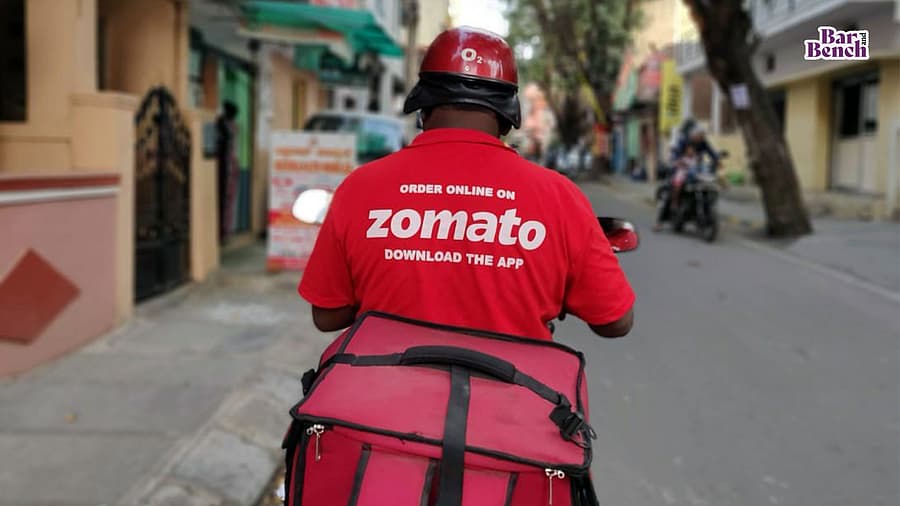
Manoj Kumar v Zomato Consumer Order: Delhi Commission Fines Zomato ₹8,250
Summary
- A Delhi consumer commission ordered Zomato to pay Manoj Kumar over ₹8,250.61 for unilaterally cancelling two food orders.
- The award includes a refund for the ₹250.61 orders, ₹5,000 for mental agony, and ₹3,000 for litigation costs.
- Manoj Kumar, a Zomato Gold customer, had two of five orders for a family birthday celebration cancelled in August 2024.
- Zomato claimed Mr. Kumar was unreachable, but the commission found this unsubstantiated given three other successful deliveries.
- The commission ruled Zomato committed a 'Deficiency in Service' by failing to deliver and illegally deducting cancellation charges from a premium customer.
Zomato Ordered to Compensate Customer for Unilateral Order Cancellation
This ruling underscores the significant liability e-commerce platforms face for 'deficiency in service,' particularly when unilaterally cancelling orders and refusing refunds, even for premium customers.
A Delhi consumer disputes redressal commission has directed Zomato to pay a customer, Manoj Kumar, over ₹8,250.61 following the unilateral cancellation of two food orders. The orders, collectively valued at ₹250.61, were placed for a family birthday celebration, leading to a significant award against the online food delivery platform.
The commission's order mandates Zomato to refund the original amount of the cancelled orders, along with applicable interest. Additionally, the platform must pay ₹5,000 as compensation to Mr. Kumar for the mental agony, harassment, and humiliation he experienced. A further ₹3,000 has been awarded to cover litigation costs incurred by the complainant in the case of Manoj Kumar v Zomato Private Limited.
Details of the Online Food Delivery Refund Dispute
The dispute originated in August 2024 when Manoj Kumar, a Zomato Gold customer, placed five distinct food orders through the platform for his niece's birthday celebration. While three of these orders were successfully delivered, two orders, valued at ₹146.73 and ₹103.88 respectively, were ultimately not delivered to the customer.
Mr. Kumar asserted that Zomato cancelled these two orders on the premise that his phone was “not reachable.” He further alleged that the company subsequently refused to refund the amounts for the undelivered items, instead citing and deducting cancellation charges. This refusal to refund for a Zomato food order cancellation formed a central point of contention in the complaint.
Commission Finds 'Deficiency in Service' by Zomato
The Delhi consumer disputes commission, comprising President Sanjay Kumar and Members Nipur Chandna and Rajesh, issued its decisive order on May 11, 2026. The commission was unconvinced by Zomato's defense that Mr. Kumar was unreachable, noting that three other orders had been successfully delivered to the very same address during the identical period of time.
The commission highlighted that as a 'Gold' member, the complainant was entitled to prioritized service. It concluded that Zomato not only failed to deliver the food but also illegally deducted 'cancellation charges,' thereby constituting a gross 'Deficiency in Service.' This finding is critical for understanding consumer protection platform liability in the e-commerce sector.
Broader Implications for E-commerce Platforms in India
This ruling in Manoj Kumar v Zomato Private Limited sets a significant precedent for consumer protection against e-commerce platforms in India. It reinforces the principle that online service providers can be held liable for 'deficiency in service e-commerce India' when they unilaterally cancel orders and subsequently refuse to issue refunds, particularly when their stated reasons are found to be unsubstantiated.
The decision underscores the responsibility of platforms like Zomato to ensure reliable service delivery and fair refund practices, especially for their premium customers. It signals a clear message to the online food delivery sector and broader e-commerce landscape regarding accountability for service failures and the importance of transparent and equitable cancellation and refund policies.
Practical Implications
This ruling sets a precedent for consumer protection against e-commerce platforms, emphasizing liability for 'deficiency in service' in cases of unilateral order cancellations and refusal to refund. Lawyers advising online platforms should review their cancellation and refund policies to ensure compliance and mitigate litigation risk, while consumer lawyers can cite this decision to pursue similar claims for compensation.
Source
How does this affect you?
Get an AI analysis of this article grounded in your jurisdictions, practice areas, and any policy documents you've uploaded to Wansom.
Finish Reading the Full Story and the Expert Analysis.
Wansom is AI and can make mistakes.