
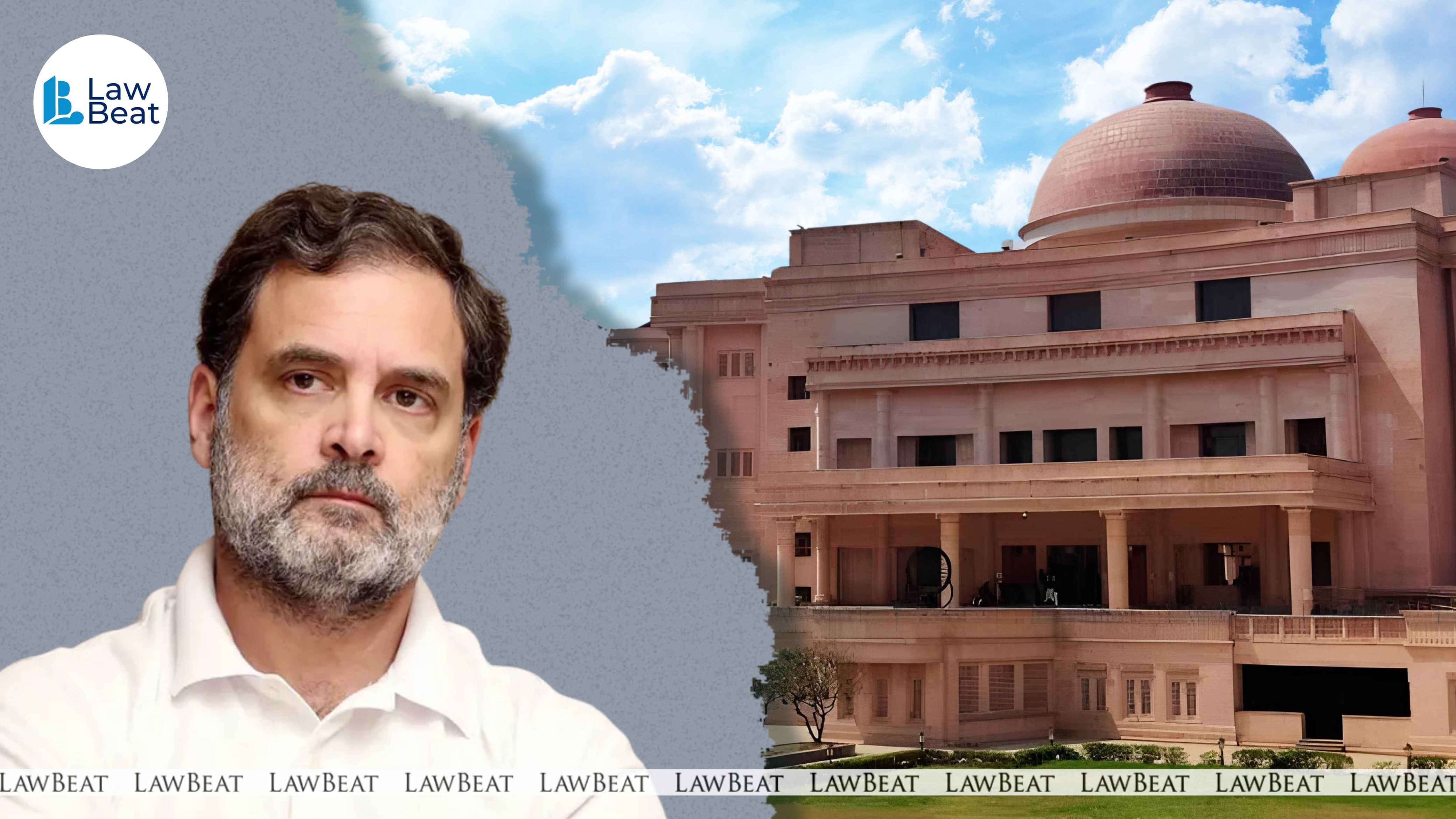
Allahabad High Court: Rahul Gandhi British Citizenship Plea Withdrawn
Summary
- The Allahabad High Court allowed the withdrawal of a petition challenging Rahul Gandhi's Indian citizenship due to a lack of evidence.
- Petitioners alleged Gandhi was a British national, citing his purported role in a UK-based company, M/s Backops Limited.
- The court found no documentary proof to support claims of Gandhi's British nationality or his alleged declarations.
- Previous petitions on the same issue were directed to the Central Government under Section 9(2) of the Citizenship Act, 1955.
- Justices Shekhar B Saraf and Abdhesh Kumar Chaudhary presided over the case, noting the petitioners' inability to substantiate their "attractive" but baseless claims.
Court Allows Withdrawal of Citizenship Challenge
The court emphasized that despite the 'very attractive' nature and 'far reaching consequences' of the allegations, the petitioners could not present a single document to substantiate their factual basis.
The Allahabad High Court, specifically its Lucknow Bench, recently permitted the withdrawal of a petition that contested the Indian citizenship of prominent Congress leader Rahul Gandhi. This decision, issued by a division bench comprising Justices Shekhar B Saraf and Abdhesh Kumar Chaudhary on August 31, came after the petitioners, Ashok Pandey and Rajneesh Kumar Singh, were unable to furnish any documentary evidence to support their claims. The petition had sought a writ of quo warranto against Mr. Gandhi, whom they identified as "Rahul Gandhi @ Raul Vinci," asserting that he was not an Indian national but rather a citizen of Great Britain. This challenge to Rahul Gandhi's British citizenship in the Allahabad HC was ultimately withdrawn due to a fundamental lack of proof.
The core of the petitioners' argument revolved around a UK-based entity, M/s Backops Limited, which they alleged was incorporated on August 21, 2003, at the Companies House, Britain's Registrar of Companies. They contended that Mr. Gandhi was listed as both a director and a significant shareholder in this firm and had, in that capacity, declared himself to be a British national. The petitioners argued that if these assertions were true, Mr. Gandhi would be ineligible to maintain his Indian citizenship or to contest elections for a Lok Sabha seat, such as the one he currently holds from Raebareli. However, the Allahabad High Court citizenship plea withdrawal underscored the absence of any concrete basis for these serious allegations.
Evidentiary Shortcomings Undermine Claims
Despite the "very attractive" nature of the claim and its "far reaching consequences," as observed by the court, the petitioners' case faltered entirely on the absence of substantiating evidence. When pressed by the bench to provide proof, the petitioners could not produce a single document related to the company's formation, records from the British Registrar of Companies, or any declaration indicating that Mr. Gandhi had ever identified himself as a British citizen. The only piece of documentation presented was an alleged letter from the University of Cambridge concerning the academic pursuits of an individual named "Raul Vinci."
The court explicitly stated that this solitary document failed to corroborate any of the specific allegations put forth in the petition. This critical lack of concrete evidence directly led to the Allahabad High Court's decision to allow the petition's withdrawal, highlighting the stringent evidentiary requirements for challenging a public figure's nationality. The court's insistence on tangible proof demonstrated a clear stance against unsubstantiated claims, particularly those with significant political ramifications.
Legal Precedent and Procedural History
The court also took note of the extensive history of similar challenges brought by the same petitioners concerning Mr. Gandhi's citizenship. The issue of his alleged loss of Indian citizenship had previously been raised in petitions filed in both 2015 and 2019. In the 2015 proceedings, a coordinate bench had dismissed the plea, clarifying that the appropriate legal recourse for such a grievance lay with the Central Government, specifically under Section 9(2) of the Citizenship Act, 1955. This established a clear procedural channel for addressing such claims.
During the 2019 proceedings, the court acknowledged that a representation dated December 15, 2015, regarding this matter was already pending before the Central Government. The petitioners were then granted the liberty to file a fresh representation, which they did on May 3, 2019, with its receipt subsequently acknowledged by the Central Government on June 29, 2019. The court expressed skepticism about entertaining the latest petition, given that identical prayers had been made in at least four prior writ petitions and the core citizenship issue remained under consideration by the Central Government, as per the established process under the Citizenship Act 1955 Section 9(2). Furthermore, the petitioners had approached various authorities during the 2024 general elections, and another Public Interest Litigation (PIL) seeking similar relief was also withdrawn with the same directive to approach the competent authority under Section 9(2).
Implications for Citizenship Challenges in India
This ruling by the Allahabad High Court reinforces the critical importance of concrete evidence when making serious allegations, particularly those challenging the citizenship of a public figure. The court's consistent directive for petitioners to pursue remedies through the Central Government under Section 9(2) of the Citizenship Act, 1955, underscores the proper legal and administrative channels for addressing such complex nationality disputes in India. The repeated attempts to challenge Rahul Gandhi's citizenship, culminating in the withdrawal of this latest plea due to a complete absence of proof, highlight the judiciary's role in preventing the misuse of legal processes for unsubstantiated claims.
The court's decision also implicitly cautions against relying on speculative information or unverified declarations, as demonstrated by the rejection of the "Raul Vinci" Cambridge letter as insufficient evidence. Another related PIL, which sought a writ of quo warranto on a different ground pertaining to Mr. Gandhi’s conviction in a defamation case, was also dismissed after the Supreme Court stayed the conviction, further illustrating the judiciary's focus on the merits and procedural correctness of each claim. This outcome firmly establishes that claims of foreign nationality, especially against prominent individuals, require rigorous substantiation rather than mere assertion.
Practical Implications
This ruling reinforces the high evidentiary bar for challenging a public figure's citizenship, particularly when alleging foreign nationality. Lawyers advising on electoral law or citizenship disputes should note the Allahabad High Court's insistence on concrete proof and the proper procedural channels (e.g., Central Government under Section 9(2) of the Citizenship Act) for such claims, rather than relying on unsubstantiated allegations.
Source
How does this affect you?
Get an AI analysis of this article grounded in your jurisdictions, practice areas, and any policy documents you've uploaded to Wansom.
Finish Reading the Full Story and the Expert Analysis.
Wansom is AI and can make mistakes.