
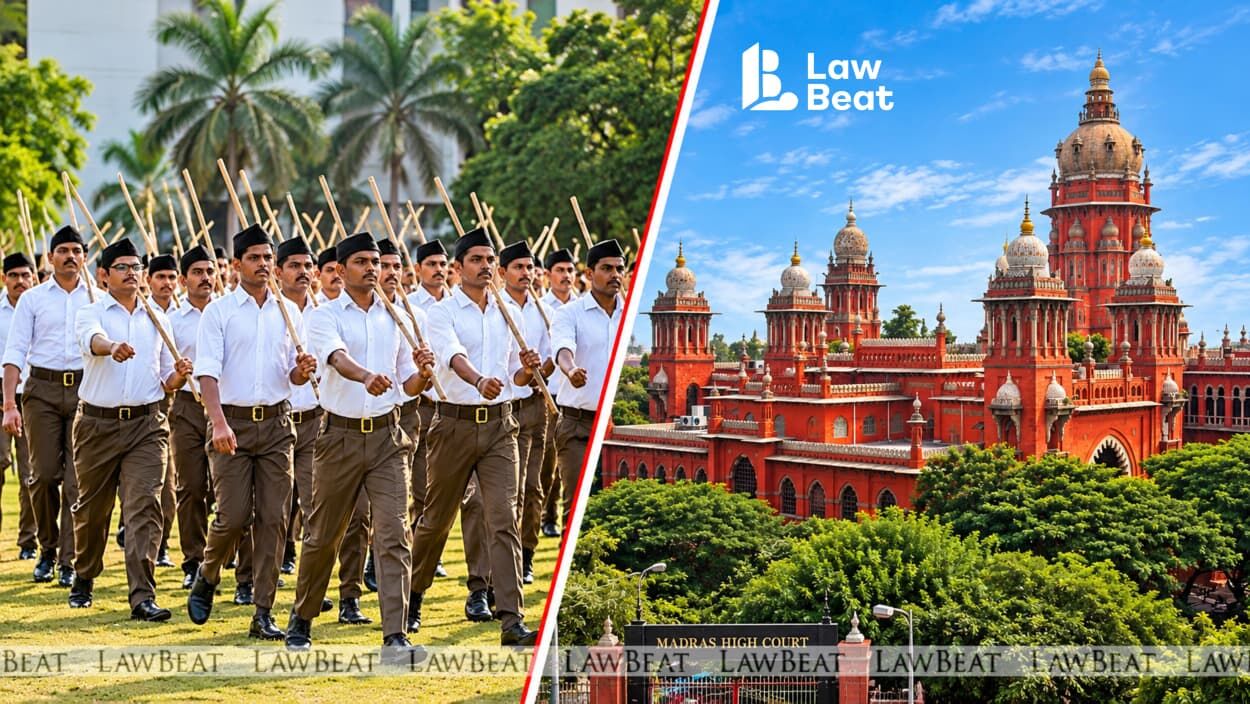
Madras High Court: Questions Tamil Nadu's RSS March Refusal
Summary
- The Madras High Court questioned the Tamil Nadu government's repeated refusal to permit Rashtriya Swayamsevak Sangh (RSS) route marches, noting the organization is forced to seek annual judicial intervention.
- Justice V Lakshminarayanan observed that the state's denials appear to be a blanket refusal against all processions, not just the RSS, leading to unnecessary litigation.
- The court dismissed the state's justifications, such as un-notified locations and police burden, demanding evidence of actual violence linked to RSS marches rather than general 'law and order' concerns.
- Previous court rulings had established guidelines for RSS marches, with the court in 22024 emphasizing police duty to protect and not use law and order as a routine excuse for denial.
- The judge suggested that if the state is fundamentally opposed to protests, it should ban them outright, rather than engaging in arbitrary permit denials that undermine freedom of assembly.
High Court Questions State's Stance on Processions
The court noted that such blanket refusals compel organizations into unnecessary litigation, treating citizens seeking to protest as adversaries.
The Madras High Court recently scrutinized the Tamil Nadu government's persistent refusal to grant permission for the annual Rashtriya Swayamsevak Sangh (RSS) route marches. During a hearing, Justice V Lakshminarayanan addressed a petition filed by RSS member VG Jagadeesan, who sought a directive for police to consider his request for marches on specific dates, including October 18, October 25, November 1, or any other suitable day. The proposed event involves participants marching in uniform, accompanied by a musical band, culminating in a public meeting.
The court expressed significant concern regarding the state's consistent denials, noting that the RSS has been compelled to seek judicial intervention annually to conduct its founding day celebrations, which typically fall on Vijayadashami. Justice Lakshminarayanan highlighted the incongruity of denying permission in Tamil Nadu when the organization has been permitted to march even in regions like Jammu and Kashmir, which have faced terrorism-related challenges. The judge questioned why the Tamil Nadu police repeatedly refuse such requests, leading to recurring litigation.
Recurring Denials and Judicial Precedent
This is not a new issue for the Madras High Court, which has previously issued detailed guidelines for RSS route marches. Despite these established directives, permission was denied in 22024, forcing the organization to return to court. In that instance, the court had allowed the march, emphasizing the police's duty to protect both the public and organizers, and explicitly stating that 'law and order' concerns should not serve as a routine excuse for denial. The court had also anticipated future compliance with judicial orders, without the invention of 'new and fanciful reasons' for rejection.
Senior Advocate NL Rajah, representing the petitioner, informed the court that the police consistently reject the RSS's requests citing potential law and order problems. He also raised a broader concern, pointing out that while well-resourced groups like the RSS can afford to pursue legal remedies, smaller organizations often lack the means to challenge arbitrary public procession permit denial, effectively leaving them without recourse. The Advocate General Vijay Narayan, defending the state, argued that permission was denied because the RSS intended to hold the march and public meeting in a location not designated for such gatherings. He also cited the strain on police resources during the festive season and potential inconvenience to shoppers.
Implications for Freedom of Assembly
The court was unconvinced by the state's arguments, questioning what had fundamentally changed in 2026 to justify a different approach, especially given that the RSS receives judicial relief every year. When the state referenced prior criminal cases, the judge specifically requested evidence of actual incidents of violence directly linked to past RSS marches. The court went further, suggesting that the current Tamil Nadu government appears to oppose all processions, regardless of the organizing entity, citing examples like the Dravidar Kazhagam. This indicates a systemic issue of public procession permit denial, rather than a specific concern with the RSS.
The court noted that such blanket refusals compel organizations into unnecessary litigation, treating citizens seeking to protest as adversaries. Justice Lakshminarayanan remarked orally that 'This government is against any procession,' and observed that this reluctance to permit marches transcends administrations, stating, 'Whichever government is coming up, they’re rejecting.' The judge pointedly suggested that if the state is determined to refuse permission for protests, it should simply enact a law banning marches altogether, questioning the rationale behind creating 'unnecessary litigation' and inviting 'adverse publicity.' The court has now directed the petitioner's counsel to meet with State Public Prosecutor John Sathyan to work towards a resolution, underscoring the judiciary's role in upholding freedom of assembly in India.
Practical Implications
This ruling reinforces that authorities cannot issue blanket refusals for public processions based on generic 'law and order' concerns. Lawyers advising organizations on freedom of assembly and protest rights should note this judicial scrutiny, as it strengthens the grounds for challenging arbitrary permit denials and compels authorities to provide specific, justifiable reasons.
Source
Source: Original reporting via Live Law
How does this affect you?
Get an AI analysis of this article grounded in your jurisdictions, practice areas, and any policy documents you've uploaded to Wansom.
Finish Reading the Full Story and the Expert Analysis.
Get the latest legal & regulatory intelligence in India
Wansom is AI and can make mistakes.