
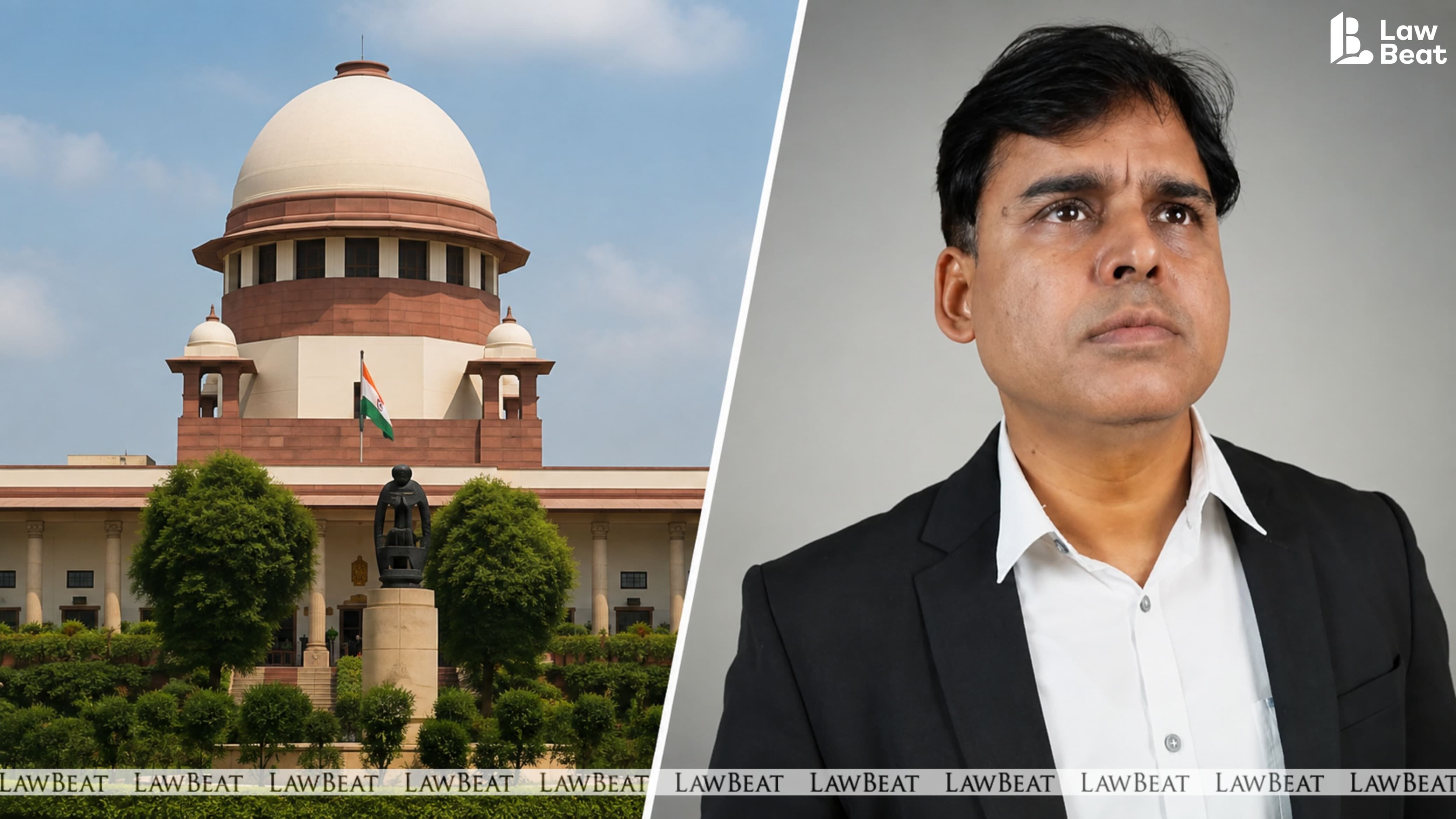
Supreme Court: Quashes Ghaziabad Police X Data Notice for Abhishek Upadhyaya
Summary
- The Supreme Court quashed a Ghaziabad Police notice to X seeking journalist Abhishek Upadhyay's digital records.
- Police had requested Upadhyay's X account data from June 1, 2026, under Section 94 of the Bharatiya Nagarik Suraksha Sanhita.
- Justice Bagchi deemed the request for data three months prior to the alleged road rage incident an "overkill."
- Upadhyay argued that disclosing his digital footprint would expose his journalistic sources.
- The Court ruled that any data obtained from the quashed notice cannot be used against the petitioner.
What Happened
This ruling by the Supreme Court provides a significant precedent for challenging broad police data requests to social media platforms, particularly when they impinge on journalistic freedom and source protection.
The Supreme Court of India recently intervened in a case involving journalist Abhishek Upadhyay, quashing a notice issued by the Ghaziabad Police to X (formerly Twitter) that sought his digital records. This significant decision came amidst an ongoing investigation into a road rage incident where Upadhyay is an accused. The Ghaziabad Police's Crime Branch Investigation Unit had dispatched a notice, dated August 22, 2026, to X's legal department in San Francisco, California. This notice specifically requested Upadhyay's "digital footprint" from his X account, @upadhyayabhii, covering a period starting June 1, 2026.
Upadhyay, who operates the independent news portal "Top Secret," faces an FIR (No. 678/2026) registered on August 18 at the Indirapuram Police Station in Ghaziabad, relating to an alleged road rage incident near Shipra Mall. However, the journalist contends that this case is fabricated. He alleges that the charges are a retaliatory measure for his investigative reporting on purported corruption and irregularities within Uttar Pradesh, including a story he broke concerning alleged "Ram Mandir donations theft."
Legal Context and Upadhyay's Challenge
Upadhyay initially approached the Supreme Court of India by filing a writ petition under Article 32 of the Constitution. His plea sought the quashing of the Ghaziabad FIR and protection from arrest, asserting the case was a fabrication designed to impede his journalistic work. In an earlier proceeding on August 25, the Supreme Court granted him interim relief by staying his arrest. The Court also directed the police to provide Upadhyay with a copy of the registered FIR, enabling him to pursue appropriate remedies at the Allahabad High Court. The Ghaziabad Police Commissioner was subsequently tasked with submitting a compliance report regarding the FIR's provision by the next hearing date.
The police notice to X, which the Supreme Court ultimately quashed, was issued under Section 94 of the Bharatiya Nagarik Suraksha Sanhita (BNSS). Upadhyay argued before the Court that the disclosure of his digital information could potentially expose individuals who had communicated with him in connection with his journalistic endeavors, thereby subjecting his sources to harassment. The FIR itself, No. 678/2026, cites provisions from the Bharatiya Nyaya Sanhita, 2023, the SC/ST (Prevention of Atrocities) Act, 1989, and the Information Technology Act, though Upadhyay's petition highlighted discrepancies in the sections mentioned across different parts of the FIR record.
The Supreme Court's Reasoning
During the proceedings, a bench comprising CJI Surya Kant, Justice Joymalya Bagchi, and Justice V Mohana had agreed to hear Upadhyay's writ petition challenging the FIR. Justice Bagchi specifically voiced concerns regarding the Uttar Pradesh Police's request for details from Upadhyay's X account. The Justice characterized the demand for data spanning three months prior to the alleged road rage incident as an "overkill," indicating an excessive and disproportionate scope.
The Supreme Court's definitive order declared that the notice issued by local police to X was "hereby quashed." Furthermore, the Court explicitly mandated that "any information taken pursuant thereto or otherwise shall not be utilized against petitioner." This ruling reinforced the Court's earlier directive against any coercive action being taken against Upadhyay, while also stipulating his continued cooperation with the ongoing investigation. The bench concluded by stating, "That being so, the order is made absolute," solidifying the protection for the journalist's digital records.
Why It Matters
This ruling by the Supreme Court provides a significant precedent for challenging broad police data requests to social media platforms, particularly when they impinge on journalistic freedom and source protection. The Court's characterization of the Ghaziabad Police X data request as an "overkill" underscores the judiciary's commitment to scrutinizing the proportionality of such demands. It reinforces the principle that law enforcement agencies cannot indiscriminately seek extensive digital records, especially when the relevance to the alleged offense is tenuous or overly broad, as was the case with the request for data three months prior to the incident.
The decision offers crucial support for journalist digital records protection in India, potentially safeguarding confidential sources and investigative processes. By quashing a notice issued under Bharatiya Nagarik Suraksha Sanhita Section 94, the Supreme Court has set a benchmark for how such provisions should be applied, emphasizing the need for precision and justification in data disclosure demands. This outcome is particularly vital for journalists like Abhishek Upadhyay, who often rely on digital communications for their work and face potential harassment or exposure of sources through wide-ranging police inquiries.
Practical Implications
This ruling provides a significant precedent for challenging broad police data requests to social media platforms, particularly when they impinge on journalistic freedom and source protection. Lawyers representing journalists or digital platforms should leverage this decision to resist 'overkill' data demands, especially those made under Section 94 of BNSS, and to ensure due process and proportionality in investigations.
Source
How does this affect you?
Get an AI analysis of this article grounded in your jurisdictions, practice areas, and any policy documents you've uploaded to Wansom.
Finish Reading the Full Story and the Expert Analysis.
Get the latest legal & regulatory intelligence in India
Wansom is AI and can make mistakes.