
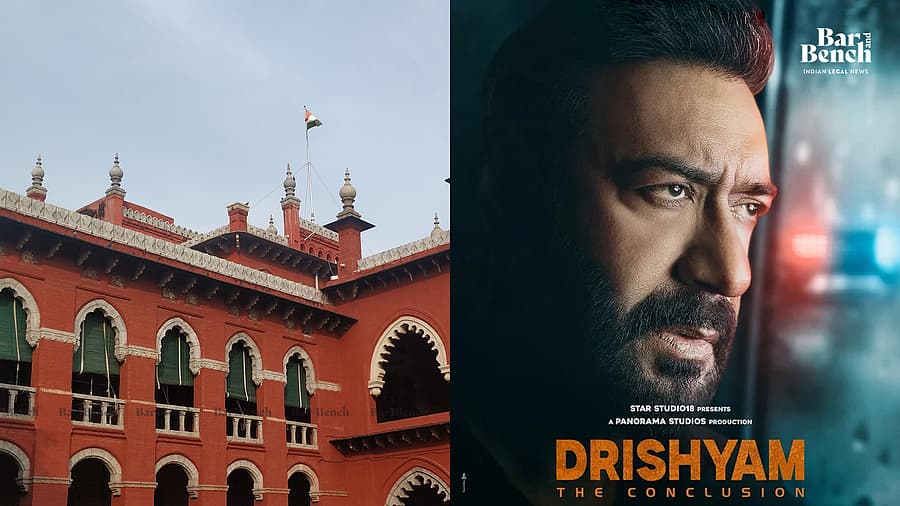
Madras High Court: Drishyam Injunction Denied, Res Judicata Applies
Summary
- The Madras High Court refused to block the release of Ajay Devgn's Drishyam: The Conclusion on OTT platforms.
- Rajkumar Theatres' application for an interim injunction, claiming Hindi remake rights, was dismissed by Justice PB Balaji.
- The court found that Rajkumar Theatres failed to establish a prima facie case of copyright infringement.
- A prior dismissal on merits of a Section 9 Arbitration Act application for the same relief operated as res judicata.
- This ruling prevents parties from seeking identical interim relief in a civil suit after an earlier Section 9 dismissal on merits.
What Happened
The clear pronouncement by Justice PB Balaji regarding the preclusive effect of a Section 9 Arbitration Act dismissal on merits serves as a critical precedent.
The Madras High Court recently declined to prevent the distribution and exhibition of the Hindi feature film, Drishyam: The Conclusion, starring Ajay Devgn and Tabu. This decision specifically allowed for the film's release on various Over-The-Top (OTT) platforms, despite an ongoing copyright dispute concerning the remake rights of the popular Drishyam franchise. The ruling emerged from a case titled Rajkumar Theatres Vs Wide Angle.
Justice PB Balaji presided over the matter, ultimately dismissing an application for an interim injunction. This application had been brought forward by Rajkumar Theatres Private Limited, a company asserting that it possessed the exclusive rights to produce Hindi remakes of the original Malayalam Drishyam film and its subsequent installments. The court's refusal means that the film, Drishyam: The Conclusion, can proceed with its planned exploitation and distribution without judicial restraint.
Legal Rationale for Dismissal
In its detailed assessment, the Madras High Court determined that Rajkumar Theatres had not successfully demonstrated a prima facie case of copyright infringement. This finding was a crucial element in the dismissal of their plea for an interim injunction. However, a more significant legal principle underpinned the court's final decision, particularly concerning the request for interim relief.
Justice PB Balaji highlighted that a prior application, seeking similar interim measures under Section 9 of the Arbitration and Conciliation Act, had already been dismissed on its merits. The court firmly established that, following this earlier adverse ruling, Rajkumar Theatres was precluded from seeking the identical interim relief through a civil suit. The principle of res judicata, which prevents the re-litigation of issues already decided, was deemed applicable, effectively barring any renewed attempt to secure the same temporary injunction. The court emphasized that if a Section 9 application's requested relief has been decided on its merits, then res judicata explicitly operates against the applicant from pressing for the very same relief again.
Genesis of the Copyright Claim
The complex legal battle over the Drishyam franchise originates from a series of contractual agreements pertaining to the Hindi remake rights of the acclaimed Malayalam film. The original Drishyam, a cinematic success, first premiered in 2013, setting the stage for its subsequent adaptations and sequels. Rajkumar Theatres Private Limited based its claim on these agreements, contending that they held the legitimate rights to adapt the Malayalam original and its follow-ups into the Hindi language.
Specifically, a December 2013 agreement formed a central part of the contractual history surrounding the Hindi remake rights. It was within this intricate web of agreements that the current copyright dispute, leading to the interim injunction copyright Drishyam application, took root. The court's decision, therefore, not only addressed the immediate request for an injunction but also touched upon the long-standing claims over the intellectual property rights associated with the popular film series.
Broader Legal Significance
This ruling by the Madras High Court carries substantial weight for legal practitioners, particularly concerning interim relief applications under the Arbitration and Conciliation Act. The clear pronouncement by Justice PB Balaji regarding the preclusive effect of a Section 9 Arbitration Act dismissal on merits serves as a critical precedent. It underscores that an adverse decision on the substance of an interim relief request in an arbitration context can operate as res judicata, preventing the same party from pursuing identical relief in a subsequent civil suit.
Lawyers must now meticulously prepare their Section 9 applications, understanding that a dismissal on merits could effectively close off other legal avenues for seeking the same interim measures. This Madras High Court Drishyam res judicata ruling clarifies that such decisions are not merely procedural but carry substantive finality regarding the specific relief sought. The judgment thus significantly impacts litigation strategy for interim measures, compelling parties to treat initial applications with the utmost diligence and foresight, as an unfavorable outcome could permanently bar future attempts to secure the same protection.
Practical Implications
This ruling clarifies that a dismissal on merits of an interim relief application under Section 9 of the Arbitration and Conciliation Act will operate as res judicata, barring a subsequent identical claim for interim relief in a civil suit. Lawyers should therefore meticulously prepare Section 9 applications, understanding that an adverse decision on merits can preclude future attempts to seek the same relief through other legal avenues, impacting litigation strategy for interim measures.
Source
How does this affect you?
Get an AI analysis of this article grounded in your jurisdictions, practice areas, and any policy documents you've uploaded to Wansom.
Finish Reading the Full Story and the Expert Analysis.
Get the latest legal & regulatory intelligence in India
Wansom is AI and can make mistakes.