
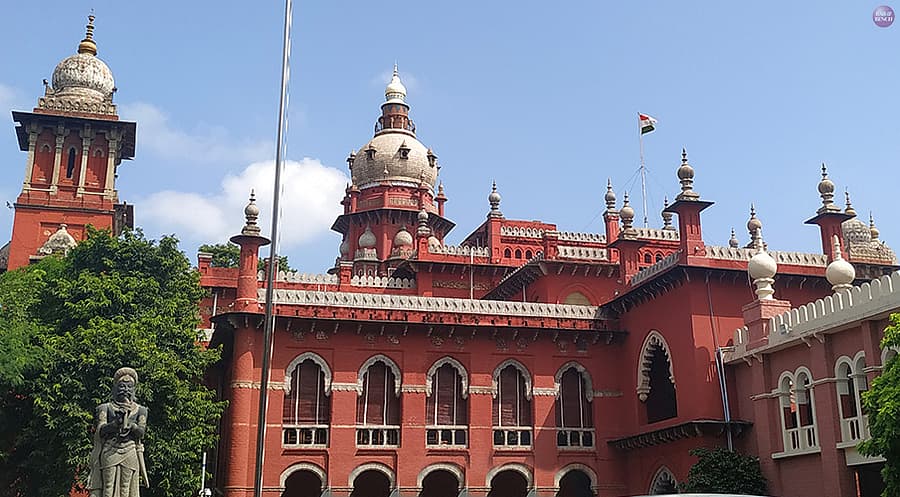
Madras High Court: Non-Jains Cannot Claim Jain Deity Trademark
Summary
- The Madras High Court ruled that individuals outside the Jain community cannot legitimately claim honest adoption of a Jain deity's name as a trademark.
- Justice PB Balaji issued an interim injunction against AJ and Sons, finding their use of the SNE NAKODA mark dishonest and not bona fide.
- The case involved Kailash Chand Surana of Kalptaru Enterprise, who alleged trademark infringement by Shiv Mangal Singh of AJ and Sons for identical hardware products.
- Surana, whose business has used NAKODA-related marks since 2017, traced the SNE NAKODA origin to a 2007 partnership firm.
Court Upholds Religious Affiliation in Trademark Dispute
The judgment highlighted that a trader's connection to the religious community associated with a deity's name is a fundamental factor in assessing the honesty and good faith behind a trademark's adoption.
The Madras High Court recently established a significant precedent concerning the use of religious names in commerce, ruling that individuals not affiliated with the Jain community cannot assert honest adoption of a Jain deity's name as a trademark. This decision, delivered by Justice PB Balaji on November 13, granted an interim injunction in the case of Kailash Chand Surana Vs Shiv Mangal, favoring Chennai-based Kalptaru Enterprise. The court found that Bengaluru-based AJ and Sons had engaged in trademark infringement and passing off.
The core of the ruling centered on the defendant's use of the mark SNE NAKODA. The court explicitly stated that this adoption was not only dishonest but also lacked bona fide intent. This judgment underscores a crucial aspect of trademark law in India, particularly when religious or cultural terms are involved, setting a clear boundary for commercial entities seeking to leverage such names without a genuine connection.
Background of the Commercial Conflict
The dispute originated from a commercial suit initiated by Kailash Chand Surana, the sole proprietor of Kalptaru Enterprise. Surana, whose business has manufacturing and selling metal screws since 2017, holds several registered trademarks, including NAKODA PROPLUS and PRO NAKODA. He contended that the mark SNE NAKODA, central to the infringement claim, derived its name from an earlier partnership firm, Sree Nakoda Enterprises, which was established in 2007.
The plaintiff argued that Shiv Mangal Singh, proprietor of AJ and Sons, subsequently adopted the mark SNE NAKODA FASTENING SYSTEM for products identical to Surana's hardware offerings. This adoption, according to Surana, was causing confusion among customers in the marketplace. The legal action sought to prevent this alleged SNE NAKODA trademark infringement and protect Kalptaru Enterprise's established brand identity.
Judicial Scrutiny of Bona Fide Adoption
Justice PB Balaji's reasoning in the Madras High Court Jain deity trademark case was particularly incisive regarding the concept of bona fide adoption. The court observed that while "NAKODA" is a descriptive term referring to a Jain god, the respondent, Shiv Mangal Singh, did not belong to the Jain community. This lack of religious affiliation was critical to the court's determination that Singh could not honestly claim to have adopted the NAKODA mark.
The judgment highlighted that a trader's connection to the religious community associated with a deity's name is a fundamental factor in assessing the honesty and good faith behind a trademark's adoption. This interpretation suggests that merely identifying a descriptive religious term is insufficient for bona fide use if the adopter lacks a genuine link to that religious context, thereby influencing the landscape of Jain deity name trademark India.
Broader Implications for Religious Trademarks
This ruling by the Madras High Court carries significant implications for trademark law, especially concerning religious symbols and names. It establishes a precedent that the honest adoption of a trademark involving a religious deity's name is contingent on the applicant's affiliation with that religious community. For businesses and legal practitioners, this means that seeking to register or defend such marks will likely require demonstrating a genuine connection to the religious origin, or risk challenges based on a lack of bona fide use.
The decision in Kailash Chand Surana Vs Shiv Mangal reinforces the idea that cultural and religious sensitivities must be considered when commercial entities choose their brand names. Compliance officers and legal advisors must now audit existing and proposed trademarks for similar religious or cultural sensitivities to mitigate potential infringement risks, ensuring that commercial interests do not inadvertently disrespect or misappropriate religious identities. This judgment by Justice PB Balaji on trademark matters sets a higher bar for what constitutes legitimate and honest adoption in such sensitive areas.
Practical Implications
This ruling establishes a precedent that the honest adoption of a trademark involving a religious deity's name is contingent on the applicant's affiliation with that religious community. Lawyers must advise clients seeking to register or defend such marks to demonstrate a genuine connection to the religious origin, or risk challenges based on lack of bona fide use. Compliance officers should audit existing and proposed trademarks for similar religious or cultural sensitivities to mitigate infringement risks.
Source
How does this affect you?
Get an AI analysis of this article grounded in your jurisdictions, practice areas, and any policy documents you've uploaded to Wansom.
Finish Reading the Full Story and the Expert Analysis.
Get the latest legal & regulatory intelligence in India
Wansom is AI and can make mistakes.