
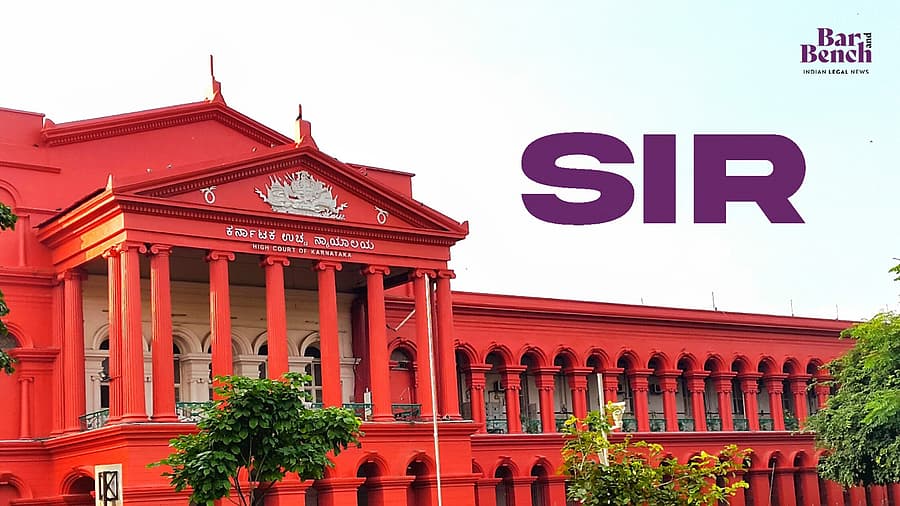
Karnataka High Court: Form 7 Probe Stayed in Voter Deletion Cases
Summary
- The Karnataka High Court has stayed probes in three additional FIRs against ten individuals accused of fraudulently using Form 7 applications to delete Muslim voters.
- This latest order brings the total number of stayed probes related to alleged fraudulent Form 7 applications to five.
- Justice Anant Ramanath Hegde directed the Election Commission of India to provide materials on Form 7 decisions, emphasizing that statutory inquiry under the Registration of Electors Rules, 1960, must precede criminal action.
- The court also deferred the State government's applications to vacate previous interim stay orders from October 9.
- Complaints alleged bulk Form 7 applications with incorrect information, with some specifically targeting Muslim voters, including 778 applications in the Malleshwaram constituency.
Court Halts Further Probes
This judicial emphasis on the ECI's role in verifying applications before criminal action highlights the importance of administrative oversight in maintaining the integrity of electoral rolls.
The Karnataka High Court has recently issued a stay on the investigation into three additional First Information Reports (FIRs) targeting ten individuals. These individuals stand accused of fraudulently utilizing Election Commission of India Form 7 applications with the intent to remove Muslim voters from the state's electoral rolls during the Special Intensive Revision (SIR) process. This latest directive by Justice Anant Ramanath Hegde brings the total number of such stayed probes to five, following an earlier order that paused investigations in two similar cases.
The court's decision underscores a critical procedural aspect in electoral disputes. The allegations center on the submission of bulk Form 7 applications, reportedly containing inaccurate information, aimed at deleting eligible voters. Some complaints specifically highlighted that this alleged fraudulent activity was directed at members of the Muslim community, raising concerns about targeted voter disenfranchisement.
Emphasis on Statutory Inquiry
A key element of the Karnataka High Court's ruling is its directive to the Election Commission of India (ECI). The court has mandated the ECI to present all relevant materials pertaining to the decisions made on the contested Form 7 applications. This instruction is rooted in the observation that the statutory inquiry into the accuracy of these applications, as prescribed by the Registration of Electors Rules, 1960, must be completed before criminal proceedings can advance. This move reinforces the established legal framework for addressing challenges to voter roll entries.
Justice Hegde also deferred a decision on applications filed by the State government, which sought to vacate the interim stay orders previously granted on October 9. These earlier stays were issued in response to petitions from GS Vasantha Lakshmi and Deepak Singh R. The court's stance emphasizes that the administrative process for verifying voter deletion requests, governed by the Registration of Electors Rules, 1960, holds precedence and must be exhausted prior to the initiation of criminal action.
Allegations of Targeted Deletion
The cases prompting the court's intervention originated from multiple complaints detailing alleged attempts to manipulate electoral rolls. These complaints consistently pointed to the filing of numerous Form 7 applications, purportedly with false details, to remove legitimate voters. A significant concern articulated in some of these complaints was that the alleged scheme specifically targeted Muslim voters, aiming to diminish their presence on the electoral rolls.
One particular complaint, concerning the Malleshwaram Assembly constituency, alleged the submission of 778 Form 7 applications across eight distinct polling stations. This substantial volume of applications was reportedly directed at voters belonging to a minority community. Another complaint, originating from the Jayanagar area, also contributed to the broader investigation into these alleged fraudulent activities, further illustrating the scope of the concerns raised.
Implications for Electoral Process
The Karnataka High Court Form 7 probe stay carries significant implications for the conduct of electoral processes and the protection of voter rights. By prioritizing the statutory inquiry under the Registration of Electors Rules, 1960, the court establishes a higher bar for initiating criminal investigations into alleged fraudulent Form 7 applications. This approach ensures that due process is meticulously followed, requiring the Election Commission of India to thoroughly verify such applications before any criminal charges can proceed.
This judicial emphasis on the ECI's role in verifying applications before criminal action highlights the importance of administrative oversight in maintaining the integrity of electoral rolls. It suggests that allegations of voter deletion, particularly those involving Muslim voters electoral rolls, must first undergo a comprehensive review by the electoral authorities. This reinforces the principle that procedural safeguards are paramount in safeguarding democratic participation and preventing politically motivated legal actions.
Practical Implications
Lawyers advising on electoral law or political campaigns should note the Karnataka High Court's reinforcement of statutory inquiry procedures under the Registration of Electors Rules, 1960, for Form 7 applications. This indicates a higher bar for initiating criminal probes related to voter deletion, emphasizing due process and the ECI's role in verifying such applications before criminal action.
Source
How does this affect you?
Get an AI analysis of this article grounded in your jurisdictions, practice areas, and any policy documents you've uploaded to Wansom.
Finish Reading the Full Story and the Expert Analysis.
Get the latest legal & regulatory intelligence in India
Wansom is AI and can make mistakes.