
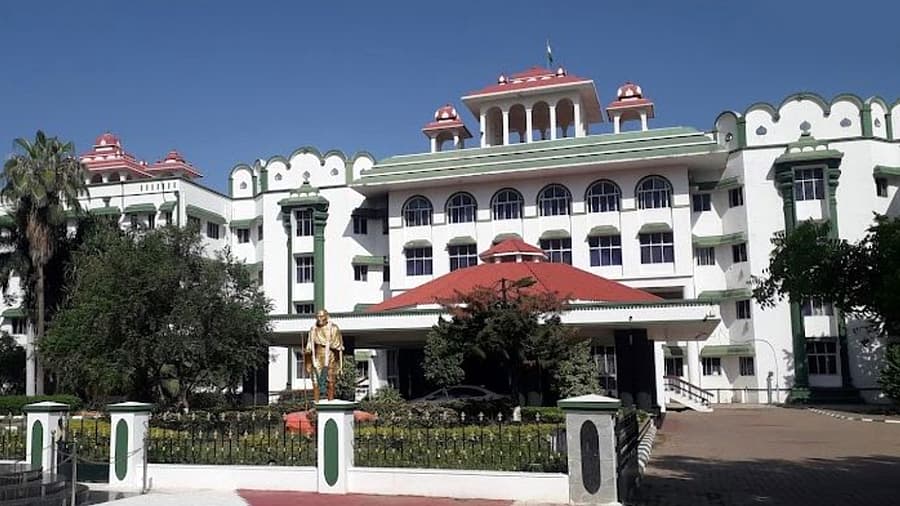
Madras High Court: Caste Street Renaming Upheld, TN Govt. Order Affirmed
Summary
- The Madras High Court upheld the Tamil Nadu government's decision to remove caste-based and derogatory names from public places.
- The ruling dismissed a challenge to a 2025 government order that established guidelines for identifying and renaming such locations.
- Justices CV Karthikeyan and R Sakthivel stated that any confusion from the renaming process would be temporary.
- The court urged the State to identify additional places for renaming, asserting that this action was long overdue.
- The case, S Paramasivam v. State of Tamil Nadu, confirms the state's authority in public place nomenclature reform.
Landmark Ruling on Public Place Renaming
This strong condemnation underscores the judiciary's firm commitment to eradicating discriminatory language from public life, aligning with broader efforts to address derogatory names in public places across India and setting a precedent for future street name change law applications.
The Madras High Court has delivered a significant judgment, affirming the Tamil Nadu government's authority to eliminate caste-based and otherwise offensive names from various public spaces. This encompasses streets, roads, residential areas, and even water bodies. The landmark ruling, stemming from the case of S Paramasivam v. State of Tamil Nadu, saw a division bench dismiss a petition that had sought to challenge the state's comprehensive renaming initiative. This decision provides a robust legal endorsement for the ongoing program aimed at reforming public nomenclature across the state.
The legal challenge specifically targeted a 2025 government order (GO) issued by the Municipal Administration and Water Supply Department. This pivotal order had established detailed guidelines for the identification and subsequent renaming of public places that bore caste-specific or other objectionable designations. By unequivocally upholding this GO, the Madras High Court has not only solidified the legal framework underpinning the Tamil Nadu government's caste name removal program but has also paved the way for its continued and expanded implementation, reinforcing the state's power in public place renaming.
Judicial Stance Against Divisive Nomenclature
The bench, composed of Justices CV Karthikeyan and R Sakthivel, articulated a particularly strong judicial stance against the perpetuation of caste-based names within public areas. The judges emphasized that any temporary confusion potentially arising from the removal of such names would be far outweighed by the long-term societal benefits. They pointedly remarked that true confusion would only persist in the minds of those individuals unwilling to shed caste-based thinking, underscoring the psychological aspect of the renaming effort.
Furthermore, the court highlighted the deeply problematic and often offensive nature of some existing names. It was noted that certain designations were so derogatory that they could not even be uttered within the confines of open court, illustrating the severity of the issue. This strong condemnation underscores the judiciary's firm commitment to eradicating discriminatory language from public life, aligning with broader efforts to address derogatory names in public places across India and setting a precedent for future street name change law applications.
Mandate for Comprehensive State Action
In its definitive ruling, the Madras High Court expressed a clear opinion that the state's proactive measure to rename these public places was an action that should have been undertaken many years prior. This sentiment reflects a profound judicial recognition of the historical burden carried by such names and the urgent necessity of their removal for fostering social progress and equality. The court's pronouncement thus serves as a powerful validation of the government's initiative.
Beyond merely upholding the existing order, the bench issued a forward-looking directive for the State to significantly expand its efforts. It specifically called upon the Tamil Nadu government to identify additional public places that may have been overlooked in previous assessments and to issue a subsequent government order to facilitate their renaming. This instruction signals a comprehensive and ongoing commitment from both the judiciary and the executive to ensure that all public spaces truly reflect inclusive values, further strengthening the Madras High Court caste street renaming upheld principle.
Practical Implications
This ruling confirms the State's authority to rename public places to remove caste-based or derogatory names, setting a precedent for similar initiatives. Lawyers should advise clients, particularly those with property or business interests in Tamil Nadu, to monitor further government orders for potential address changes and ensure compliance with updated official records.
Source
How does this affect you?
Get an AI analysis of this article grounded in your jurisdictions, practice areas, and any policy documents you've uploaded to Wansom.
Finish Reading the Full Story and the Expert Analysis.
Get the latest legal & regulatory intelligence in India
Wansom is AI and can make mistakes.