
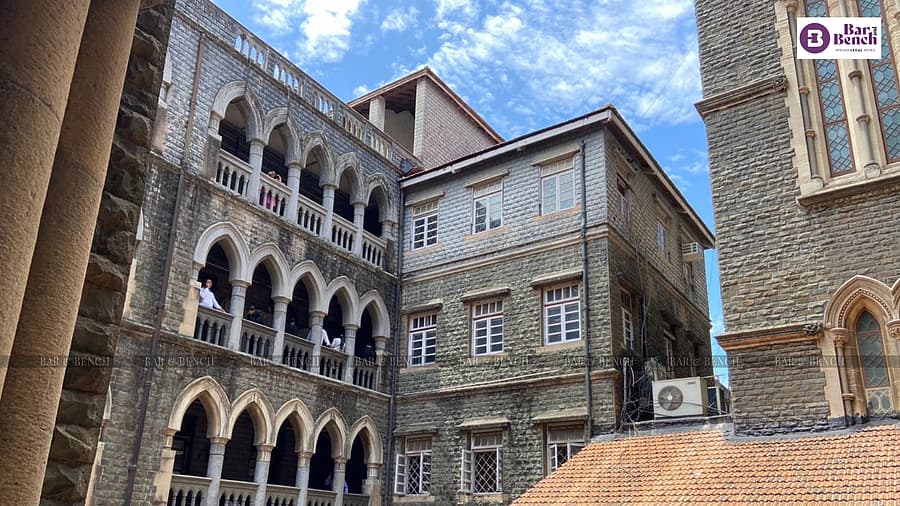
Bombay High Court: EuroChem Tecnimont Appeal Dismissal Upheld
Summary
- The Bombay High Court dismissed an appeal by EuroChem North-West-2 to freeze Tecnimont S.p.A.'s Indian assets.
- This ruling is part of a ₹19,500-crore foreign decree enforcement suit, officially titled "Limited Liability Company Eurochem v. Tecnimont SPA".
- The dispute originated from 2020 contracts for a Russian fertilizer complex, initially mandating London-seated ICC arbitration under English law.
- Sanctions against EuroChem's owner in 2022 led Tecnimont to suspend work, prompting EuroChem to invoke Russia's Arbitrazh Procedural Code after losing an ICC arbitration.
- EuroChem secured a 171.11-billion-rouble decree from the Moscow Commercial Court against Tecnimont and MT Russia in December 2025.
The High Court's Ruling
The Bombay High Court's decision to dismiss the appeal in the "Limited Liability Company Eurochem v. Tecnimont SPA" case underscores the significant hurdles involved in India foreign decree enforcement, especially when international sanctions and conflicting jurisdictional claims are present.
The Bombay High Court recently rejected an appeal lodged by EuroChem North-West-2, a Russian fertilizer manufacturer, which sought to overturn a prior decision denying the freezing of Indian assets belonging to Italian engineering firm Tecnimont S.p.A. This ruling forms part of a larger legal battle concerning the enforcement of a foreign decree valued at ₹19,500 crore. The division bench, comprising Justices Bharati Dangre and Manjusha Deshpande, issued its judgment on October 29, thereby affirming the single-judge's order from June 8 that had initially refused interim relief and dismissed EuroChem's request for a stay.
The case, officially titled "Limited Liability Company Eurochem v. Tecnimont SPA", highlights the complexities involved in cross-border disputes, particularly when significant financial stakes are involved. EuroChem's attempt to secure Tecnimont's assets in India underscores the challenges faced by entities seeking to enforce foreign judgments within the Indian legal framework, especially in the context of international sanctions.
Origins of the Dispute
The underlying conflict traces back to June 2020, when three contracts were executed for the construction of a fertilizer complex situated in Russia’s Leningrad Region. These agreements explicitly mandated that any disputes arising would be resolved through arbitration seated in London, conducted under the rules of the International Chamber of Commerce (ICC) and governed by English law. This contractual arrangement initially provided a clear framework for dispute resolution.
However, the situation became complicated in 2022 following the imposition of sanctions by the European Union and the United Kingdom against Andrey Melnichenko, the beneficial owner of EuroChem. In response to these sanctions, Tecnimont and its Russian subsidiary, MT Russia, ceased their work on the project. EuroChem subsequently terminated the contracts and initiated ICC arbitration proceedings, which spanned a period of three years.
Jurisdictional Shift and Russian Decree
The ICC arbitration did not yield the desired outcome for EuroChem; in July 2025, the company lost a performance bond case in London. Following this setback, EuroChem pursued an alternative legal avenue by invoking Article 248.1 of Russia’s Arbitrazh Procedural Code. This specific article grants Russian commercial courts exclusive jurisdiction over disputes that are related to international sanctions, even allowing them to override existing foreign arbitration agreements if sanctions are deemed to impede access to justice for a party.
Leveraging this provision, EuroChem successfully obtained a decree from the Moscow Commercial Court in December 2025. This decree, valued at 171.11 billion roubles, was issued against both Tecnimont and MT Russia. The shift from an internationally agreed arbitration clause to a domestic Russian court ruling, particularly under the umbrella of sanctions, sets the stage for the intricate enforcement challenges now being navigated in jurisdictions like India.
Implications for Foreign Decree Enforcement
The Bombay High Court's decision to dismiss the appeal in the "Limited Liability Company Eurochem v. Tecnimont SPA" case underscores the significant hurdles involved in India foreign decree enforcement, especially when international sanctions and conflicting jurisdictional claims are present. The refusal to grant an asset freeze India sanctions related to the dispute highlights the cautious approach Indian courts may take in such complex scenarios.
This ruling serves as a crucial precedent for companies operating across borders, particularly those with exposure to Russian entities or in environments impacted by international sanctions. The interplay between contractual arbitration clauses, national laws like the Russia Arbitrazh Procedural Code Article 248.1, and the enforceability of decrees from courts such as the Moscow Commercial Court decree enforcement in third-party jurisdictions like India, creates a multifaceted legal landscape that demands careful consideration from legal practitioners and businesses alike.
Practical Implications
This ruling underscores the challenges in enforcing foreign decrees and freezing assets in India, particularly when international sanctions and conflicting jurisdictional claims (e.g., ICC arbitration vs. Russian Arbitrazh Code) are at play. Lawyers advising clients on international contracts, especially those with Russian entities or in sanctioned environments, should meticulously review dispute resolution clauses and anticipate complex enforcement hurdles in multiple jurisdictions.
Source
How does this affect you?
Get an AI analysis of this article grounded in your jurisdictions, practice areas, and any policy documents you've uploaded to Wansom.
Finish Reading the Full Story and the Expert Analysis.
Get the latest legal & regulatory intelligence in India
Wansom is AI and can make mistakes.