
Supreme Court: Judge Misconduct Inquiry Procedure Clarified
Summary
- The Supreme Court of India clarified the constitutional procedure for initiating inquiries into alleged judicial misconduct.
- The ruling in X v. Lok Sabha interpreted the first proviso to Sections 3(1) and 3(2) of the Judges (Inquiry) Act, 1968.
- This decision outlines the parliamentary authority and essential safeguards governing High Court judge misconduct inquiries.
- The clarification aims to maintain a delicate balance between judicial independence and accountability in India.
A Landmark Clarification
This clarification by the apex court is particularly crucial for maintaining the delicate balance between judicial independence and accountability within the Indian legal system.
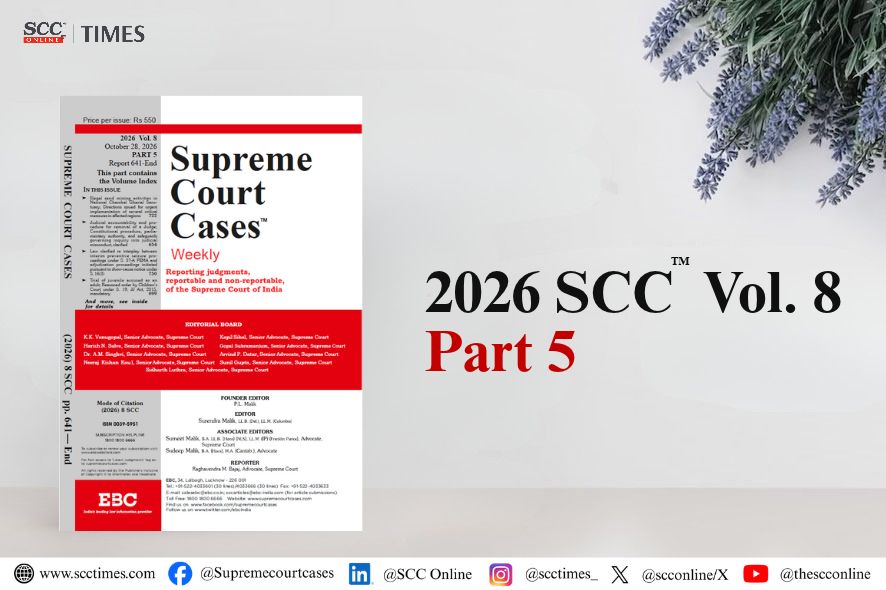
The Supreme Court of India recently delivered a significant ruling that brings much-needed clarity to the intricate process of initiating proceedings against High Court judges accused of misconduct. This pivotal decision, stemming from the case of X v. Lok Sabha, specifically addresses the interpretation of the first proviso to Sections 3(1) and 3(2) of the Judges (Inquiry) Act, 1968. The judgment, recorded as (2026) 8 SCC 654, meticulously outlines the constitutional procedure, parliamentary authority, and essential safeguards that govern inquiries into alleged judicial misconduct in India.
This clarification by the apex court is particularly crucial for maintaining the delicate balance between judicial independence and accountability within the Indian legal system. It provides a definitive framework for how allegations of impropriety against members of the higher judiciary are to be handled, ensuring that due process is followed while upholding the integrity of the judicial office. The ruling underscores the rigorous standards and established protocols that must be adhered to when considering such serious matters, thereby reinforcing public trust in the judiciary.
The Legal and Constitutional Framework
At the heart of this Supreme Court pronouncement lies the Judges (Inquiry) Act, 1968, a foundational piece of legislation designed to establish the procedure for investigating and proving misbehavior or incapacity of a Supreme Court or High Court judge. The specific provisions under scrutiny were Sections 3(1) and 3(2), particularly the first proviso, which deals with the initial steps for initiating an inquiry into alleged misconduct. This Act serves as the primary statutory mechanism for addressing judicial misconduct India, ensuring a structured approach to such sensitive investigations.
The Court's interpretation clarifies the precise scope of parliamentary authority in this context, delineating the roles and responsibilities of legislative bodies in the preliminary stages of a High Court judge inquiry. By elucidating the constitutional procedure, the ruling reinforces the checks and balances inherent in India's democratic framework, ensuring that while judges are held accountable, their independence from undue influence is also protected. This detailed exposition of the legal framework is vital for all stakeholders involved in the process, from the initial complaint to the final determination.
Implications for Judicial Accountability
A central aspect of the X v. Lok Sabha judgment is its emphasis on the safeguards embedded within the inquiry process for Supreme Court judge misconduct inquiry procedure. While the specific case pertained to a High Court judge, the principles articulated by the Supreme Court have broader implications for judicial accountability across the higher judiciary. The Court's clarification ensures that any proceedings initiated against a High Court judge for alleged misconduct adhere to stringent due process requirements, thereby fortifying the integrity of the process.
These safeguards are designed to prevent arbitrary action and to protect judges from frivolous or politically motivated complaints, thereby preserving the sanctity of the judiciary. The ruling meticulously details the parameters within which an inquiry can be launched, reinforcing the principle of constitutional procedure judicial accountability. This comprehensive clarification is expected to streamline the process, making it both robust and transparent, while upholding the dignity and independence of the judicial office. It provides a clear roadmap for future cases involving allegations of judicial impropriety.
Practical Implications
This ruling provides critical clarity on the constitutional and parliamentary framework governing inquiries into alleged judicial misconduct against High Court judges. Lawyers should be aware of these clarified procedures and safeguards, as they define the due process and legal boundaries for initiating and conducting such sensitive proceedings, impacting both judicial independence and accountability.
Source
How does this affect you?
Get an AI analysis of this article grounded in your jurisdictions, practice areas, and any policy documents you've uploaded to Wansom.
Finish Reading the Full Story and the Expert Analysis.
Get the latest legal & regulatory intelligence in India
Wansom is AI and can make mistakes.