
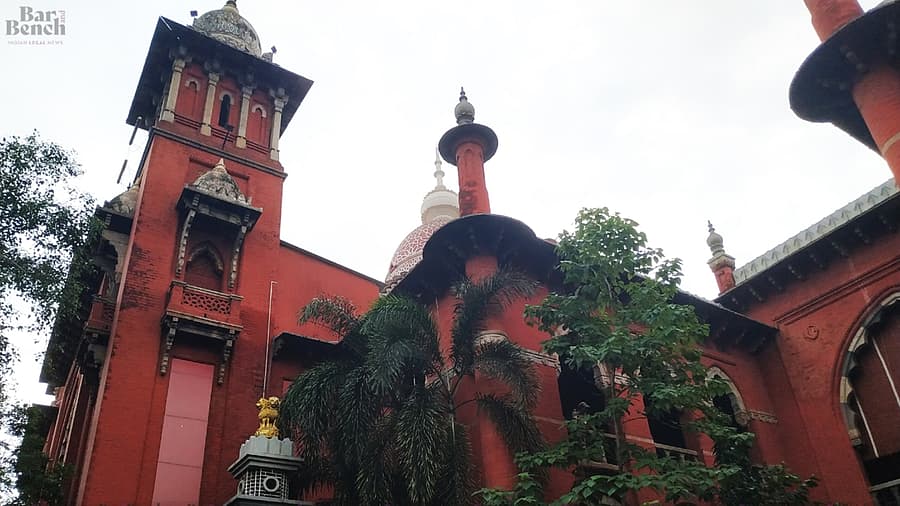
Madras HC: TNRERA Lacks Title Dispute Jurisdiction for Project Registration
Summary
- The Madras High Court ruled that the Tamil Nadu Real Estate Regulatory Authority (TNRERA) cannot adjudicate disputed land title questions during project registration.
- Justice D Bharatha Chakravarthy clarified that TNRERA can still reject registration if a title defect is apparent or an encumbrance prevents it.
- The ruling stemmed from a petition by N Balakrishnan, who challenged TNRERA's registration of a project by S Anandhan on property Balakrishnan claimed to own.
- Anandhan had secured an interim injunction in a pending civil suit against Balakrishnan before applying for RERA registration.
- Balakrishnan had objected to the registration in September 2025 and later discovered the project was registered by TNRERA on April 10, 2026, despite his claims.
Madras High Court Clarifies TNRERA's Jurisdiction on Title Disputes
The Madras High Court has issued a significant ruling, asserting that the Tamil Nadu Real Estate Regulatory Authority (TNRERA) does not possess the authority to resolve contested questions pertaining to land ownership.
The Madras High Court has issued a significant ruling, asserting that the Tamil Nadu Real Estate Regulatory Authority (TNRERA) does not possess the authority to resolve contested questions pertaining to land ownership. This clarification applies specifically when TNRERA is evaluating applications for the registration of real estate projects. The court's decision underscores the limitations of the regulatory body's adjudicatory powers, particularly in complex property disputes.
Justice D Bharatha Chakravarthy, presiding over the matter, delineated the scope of TNRERA's role. While the Authority cannot delve into intricate title disputes, it retains the power to reject a project registration application under certain circumstances. This includes instances where a defect in the promoter's title is overtly apparent from the submitted records, or when the nature of an existing encumbrance on the property clearly precludes registration. This distinction is crucial for understanding the boundaries of TNRERA's oversight in the real estate sector.
The Underlying Property Dispute
The High Court's pronouncement arose from a petition filed by N Balakrishnan, who challenged the registration of a real estate project by TNRERA. Balakrishnan claimed ownership of the property in question, located in Tambaram, asserting that his father had originally purchased the land, which he subsequently inherited. The project, however, was proposed by S Anandhan, who had secured registration from TNRERA.
Prior to the RERA registration, Anandhan had initiated a civil suit against Balakrishnan, seeking an injunction to prevent interference with the property. In this ongoing civil litigation, Anandhan successfully obtained an interim injunction. Despite the pendency of this civil dispute concerning the property's ownership, Anandhan proceeded to submit an application to TNRERA for the registration of his real estate project on the same land.
Objections and Project Registration
N Balakrishnan had formally lodged a detailed objection with TNRERA in September 2025, contesting the project's registration. Initially, Balakrishnan was informed through a Right to Information Act request that no registration had been granted for the project. However, he later discovered that TNRERA had, in fact, registered Anandhan's project on April 10, 2026. This revelation prompted Balakrishnan's petition to the Madras High Court.
Following the registration, Balakrishnan further alleged that construction activities had commenced on the property and that plots within the project were being advertised for sale. These developments highlight the practical implications of TNRERA's decision to register the project despite the ongoing title dispute and Balakrishnan's formal objection, ultimately leading to the High Court's intervention to clarify the Authority's jurisdiction.
Implications for Real Estate Project Registration
This ruling from the Madras High Court provides vital clarity on the scope of TNRERA's adjudicatory powers regarding land title. It firmly establishes that while the Authority plays a crucial role in regulating real estate projects, its mandate does not extend to resolving intricate or disputed questions of property ownership. Such complex matters, the court affirmed, must be addressed and settled by civil courts, which are specifically equipped to handle such litigation.
For real estate developers and property owners in Tamil Nadu, this decision means that securing project registration from TNRERA does not circumvent the need to resolve underlying title disputes through the appropriate judicial channels. The Authority's ability to reject registration for clear title defects remains, but any contested ownership claims require resolution in civil courts before a project can proceed without legal challenge. This distinction is paramount for ensuring legal certainty in real estate transactions and project development.
Practical Implications
Lawyers advising real estate developers or property owners in Tamil Nadu must understand that TNRERA's jurisdiction does not extend to adjudicating complex land title disputes. This ruling clarifies that while TNRERA can reject registration for clear title defects, parties with contested ownership claims must pursue resolution through civil courts, significantly impacting project registration strategies and dispute resolution pathways for real estate projects.
Source
How does this affect you?
Get an AI analysis of this article grounded in your jurisdictions, practice areas, and any policy documents you've uploaded to Wansom.
Finish Reading the Full Story and the Expert Analysis.
Get the latest legal & regulatory intelligence in India
Wansom is AI and can make mistakes.