
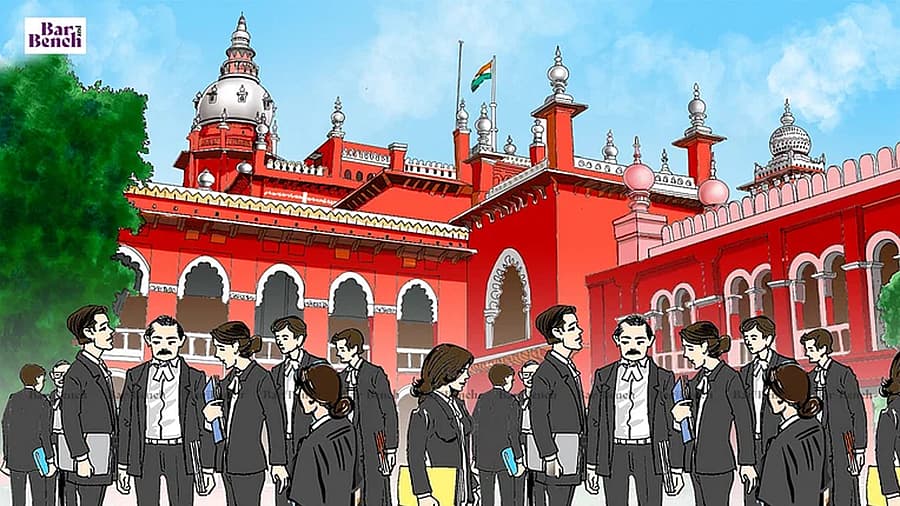
Madras HC Nominates Women Bar Council Tamil Nadu: Velumani, Sundar Appointed
Summary
- The Madras High Court nominated retired Justice VM Velumani and advocate Sudarshana Sundar as two women members to the Bar Council of Tamil Nadu and Puducherry.
- Chief Justice SA Dharmadhikari made these nominations on Monday after consulting with the State Bar Council's elected members.
- This action follows an August 4 Supreme Court order in `Yogamaya MG v Union of India`, which addressed insufficient representation of women advocates in State Bar Councils.
- The Supreme Court's directive empowered High Court Chief Justices to nominate two women members to these regulatory bodies.
- Justice Velumani previously served as a judge of both the Madras and Calcutta High Courts, retiring in April 2024.
Key Appointments to Bar Council
This development signals a concrete step towards enhanced gender diversity within the legal profession's regulatory bodies in India, directly addressing long-standing concerns about inadequate representation.
The Madras High Court recently announced the nomination of retired Justice VM Velumani and advocate Sudarshana Sundar as two women members to be co-opted into the Bar Council of Tamil Nadu and Puducherry. These significant appointments were made on a Monday by Chief Justice SA Dharmadhikari of the Madras High Court, following a consultative process with the elected members of the State Bar Council. The High Court's Registrar General, Deepthi Arivunithi, issued a communication confirming these nominations.
Justice Velumani brings extensive judicial experience to her new role, having previously served as a judge of the Madras High Court. She was subsequently transferred to the Calcutta High Court, from which she retired in April 2024. Her distinguished career in the judiciary underscores the caliber of the nominees selected to enhance the diversity of the legal profession's regulatory body.
Supreme Court's Mandate for Diversity
This move by the Madras High Court directly responds to an August 4 order issued by the Supreme Court of India in the case of `Yogamaya MG v Union of India`, alongside related proceedings. The apex court's directive specifically addressed the critical issue of women advocates' representation within State Bar Councils across the country. Recognizing the inadequate presence of women in these elected bodies that govern the legal profession, the Supreme Court empowered the Chief Justices of the respective High Courts to nominate two women members to their State Bar Councils.
The Supreme Court's mechanism for co-option stipulated that the process must involve consultation with the elected members of the relevant State Bar Councils. This ensures that while diversity is promoted, the existing structure and democratic principles of the councils are respected. The Madras High Court meticulously followed this directive, with the matter being formally placed before the Chief Justice via a letter dated August 21, subsequent to the Supreme Court's instructions. A meeting was then convened on August 24, as directed by the Chief Justice, leading to the finalization of the nominations.
Enhancing Gender Representation in Legal Governance
The nominations of Justice VM Velumani and advocate Sudarshana Sundar represent a tangible step towards fulfilling the Supreme Court's vision of greater gender diversity within the legal profession's regulatory framework. The apex court's intervention underscored a broader concern regarding the insufficient representation of women in the decision-making bodies that shape legal practice and professional conduct. By empowering Chief Justices to directly address this imbalance, the Supreme Court aimed to accelerate the inclusion of diverse perspectives at the highest levels of legal governance.
This development signals a concrete step towards enhanced gender diversity within the legal profession's regulatory bodies in India, directly addressing long-standing concerns about inadequate representation. The co-option of experienced women legal professionals into the Bar Council of Tamil Nadu and Puducherry is expected to bring valuable insights and contribute to more inclusive policy-making and disciplinary approaches within the legal community. It sets a precedent for other State Bar Councils to follow, reinforcing the commitment to equitable representation across the nation's legal landscape.
Practical Implications
This development signals a concrete step towards enhanced gender diversity within the legal profession's regulatory bodies in India, following a Supreme Court directive. Lawyers and compliance officers should note the evolving composition of State Bar Councils, as this may influence future policy decisions, disciplinary approaches, and initiatives related to professional conduct and inclusion.
Source
How does this affect you?
Get an AI analysis of this article grounded in your jurisdictions, practice areas, and any policy documents you've uploaded to Wansom.
Finish Reading the Full Story and the Expert Analysis.
Wansom is AI and can make mistakes.