
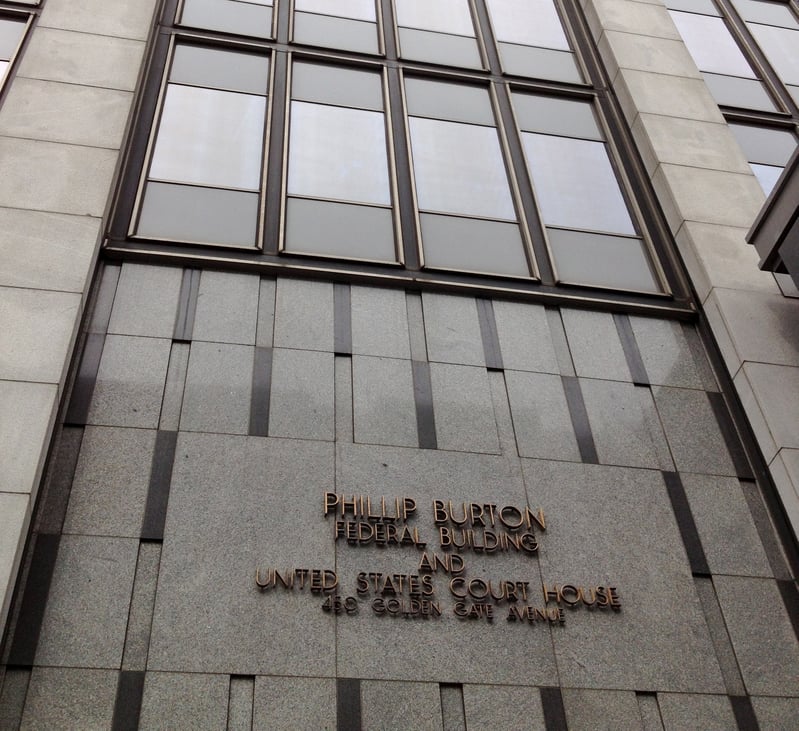
Luke Brugnara: Judge Denies Motion to Strike Unreasonable Delay Prosecution
Summary
- Luke Brugnara's claims of prosecutorial misconduct against Assistant U.S. Attorney Maya Karwande were denied by Judge Maxine M. Chesney.
- Judge Chesney, however, allowed Brugnara's motion to dismiss federal charges due to unreasonable prosecutorial delay to proceed to a hearing on December 2.
- Brugnara accused Karwande of obstructing justice and lying regarding bail hearings and an outstanding San Mateo County warrant.
- Brugnara formally withdrew his pro se status, and attorney Matthew Dirkes was re-appointed as his counsel.
- A request to modify Brugnara's home confinement for daily walks due to medical concerns will be briefed by both parties, with the judge expressing skepticism.
What Transpired in Court
Judge Chesney clarified that while there might be disagreements regarding the findings of bail hearings, Karwande's actions did not constitute a prosecutable crime.
Former San Francisco real estate investor Luke Brugnara recently appeared in federal court, marking his first appearance since his release from pretrial custody. During the proceedings, Brugnara asserted that the federal charges against him, which stem from alleged false loan applications related to pandemic relief programs, ought to be dismissed. He vociferously accused Assistant U.S. Attorney Maya Karwande of prosecutorial misconduct, alleging she obstructed justice and deliberately misled a magistrate judge. These accusations specifically pertained to events following Senior U.S. District Judge Maxine M. Chesney's September 9 order, which stipulated conditions for Brugnara's release.
Brugnara's claims centered on three bail hearings presided over by U.S. Magistrate Judge Lisa J. Cisneros. He contended that Karwande's actions during these hearings, particularly her questioning of the origin of a $50,000 cashier's check intended for his bail, constituted misconduct. Furthermore, Brugnara attributed his extended detention to Karwande, linking it to an outstanding warrant from San Mateo County. This warrant, issued on September 14—the very day Judge Cisneros had ordered his release from federal pretrial custody—was for charges that San Mateo County District Attorney Stephen Wagstaffe stated dated back to November 2025 and involved a potentially fraudulent deed, an issue that had been under investigation for eight months.
Judicial Rulings and Procedural Debates
Senior U.S. District Judge Maxine M. Chesney firmly rejected Luke Brugnara's assertions of prosecutorial misconduct, declining his request to refer Assistant U.S. Attorney Maya Karwande for prosecution. Judge Chesney clarified that while there might be disagreements regarding the findings of bail hearings, Karwande's actions did not constitute a prosecutable crime. However, in a significant procedural development, Judge Chesney also denied the government's motion to strike Brugnara's request for dismissal based on unreasonable delay in prosecution. This decision paves the way for a dedicated hearing on the matter, scheduled for December 2 in the Northern District California court.
During the session, Judge Chesney critically questioned the timeline of the federal case, asking, "What happened between the time he got the loan and the time someone said 'Okay, we are going to say he committed a crime?'" She indicated that if there was a period where the prosecution should have acted sooner, it could potentially impact Brugnara's ability to mount an effective defense. Karwande had attempted to have Brugnara's motion to dismiss for delay thrown out, arguing it was improperly filed pro se despite his representation by attorney Matthew Dirkes of Illovsky Gates & Calia. This argument arose because Brugnara had previously been granted permission to represent himself but later indicated he would relinquish pro se status upon release from jail.
Representation Changes and Bail Conditions
The issue of legal representation saw a resolution during the court appearance. Luke Brugnara clarified his understanding that he was representing himself up until the October 14 hearing. Following repeated inquiries from Judge Chesney, he formally withdrew his pro se request, leading to Matthew Dirkes being re-appointed as his counsel of record. With Dirkes back as his attorney, a new request was put before the court: to modify Brugnara's home confinement conditions to permit him two hours of daily walks, citing medical concerns.
Judge Chesney expressed considerable skepticism regarding this request for altered bail conditions. She recalled Brugnara's past behavior, noting that after a previous release—which occurred despite serious objections—he consistently sought to weaken the conditions he had initially agreed to. "The last time Mr. Brugnara was released, over serious objection, he then came in week after week after week chipping away at the conditions he originally agreed to," she stated, indicating this history would factor into her consideration of any new filings. The judge ultimately decided to allow both parties to submit briefs on the proposed modification before making a ruling. Brugnara, speaking outside the courtroom, reiterated his accusations against Karwande, while the government did not immediately comment. He was indicted on May 2.
Practical Implications
Lawyers should note that while direct prosecutorial misconduct claims may be difficult to substantiate, arguments for dismissal based on unreasonable prosecutorial delay can still be a viable defense strategy, as evidenced by the court setting a hearing on this issue. This case also underscores judicial scrutiny of changes in pro se representation and requests to modify bail conditions.
Source
How does this affect you?
Get an AI analysis of this article grounded in your jurisdictions, practice areas, and any policy documents you've uploaded to Wansom.
Finish Reading the Full Story and the Expert Analysis.
Get the latest legal & regulatory intelligence in United States
Wansom is AI and can make mistakes.