
Kwabenya Court: Denies Bail for 3.9-Tonne Cocaine Ghana
Summary
- The Kwabenya Circuit Court denied bail to six individuals accused in an alleged 3.9-tonne cocaine shipment from Ghana to France.
- Judge Prince Osei Owusu cited concerns about the accused standing trial and potential interference with proceedings as reasons for the denial.
- Among the accused are an alleged exporter, an alleged goods owner, and four Customs officials from the Ghana Revenue Authority (GRA).
- The GRA officials are accused of failing to act on detected anomalies during container scanning at Tema Port before the illicit cargo was cleared for export.
- All six face charges including conspiracy to export narcotic drugs and unlawful exportation of narcotic drugs, with GRA officials also facing abetment allegations.
Judicial Decision and Accusations
The denial of bail by the Kwabenya Court for all six accused, particularly the public officials, signals a stringent approach to serious drug trafficking cases in Ghana.
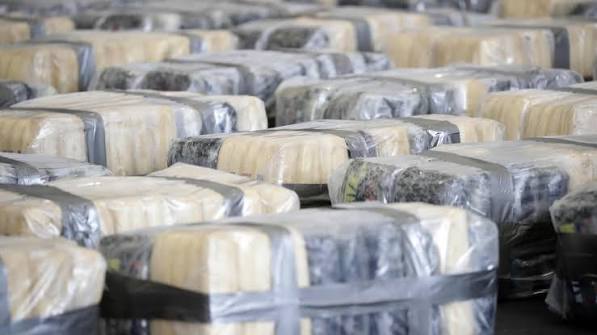
The Kwabenya Circuit Court has decisively denied bail to six individuals implicated in the alleged shipment of approximately 3.9 tonnes of suspected cocaine from Ghana to France. This significant ruling, delivered by His Honour Prince Osei Owusu, mandates the continued detention of all accused parties, underscoring the gravity of the charges they face. The court's decision follows renewed applications for bail, which were ultimately rejected, emphasizing the high bar for bail in serious drug trafficking cases in Ghana.
Among those facing trial is Francis Narh Amanor, identified by prosecutors as the exporter whose name appeared on the containers involved in the illicit consignment. Frank Adu-Boahen is alleged to be the owner of the goods at the center of the investigation. The remaining four accused individuals — Togbe Agbeti, Andrews Tetteh Amponsah, Daniel Laryea, and Helena Akua Denkyi — are all staff members of the Customs Division of the Ghana Revenue Authority (GRA). Their alleged involvement centers on the critical process of scanning the containers at Tema Port, a procedure now under intense scrutiny.
Legal Arguments and Court's Rationale
During the recent hearing, legal representatives for the accused vigorously argued for their clients' release, emphasizing their cooperation with investigators and their stated willingness to appear for trial. Defence lawyers also brought forward concerns regarding the unique health conditions affecting some of the accused, presenting these as additional grounds for granting bail pending the full trial. Despite these arguments, the court remained unpersuaded to grant the Ghana cocaine shipment bail denial.
Justice Prince Osei Owusu articulated his considerations for denying bail, primarily focusing on the potential for the accused to abscond and fail to stand trial, as well as the risk that their release could lead to interference with ongoing proceedings. He explicitly cited the inherent nature of the alleged offense as a compelling factor warranting their continued remand, in line with the Prince Osei Owusu bail ruling. The six individuals are confronting serious charges, including conspiracy to export narcotic drugs and unlawful exportation of narcotic drugs. Furthermore, the four GRA officials face an additional allegation of abetment, highlighting their alleged complicity in facilitating the illicit trade.
Broader Implications and Port Scrutiny
This case has cast a harsh spotlight on the operational integrity of the Customs scanning process at Ghana's Tema Port. Prosecutors contend that the four containers, which were later intercepted in France laden with the suspected cocaine, underwent scan-image analysis prior to their departure from Ghana. Crucially, it is alleged that anomalies were detected during this scanning but were not acted upon, with no further examination initiated before the containers were cleared for export. This alleged oversight forms the basis of the Tema Port customs officials cocaine charges, including GRA officials abetment cocaine.
The denial of bail by the Kwabenya Court for all six accused, particularly the public officials, signals a stringent approach to serious drug trafficking cases in Ghana. It underscores a high judicial bar for bail in such matters, especially when state agents are implicated. The ongoing investigation and trial will undoubtedly intensify scrutiny on export procedures at Tema Port, potentially leading to enhanced compliance measures and posing significant risks for businesses involved in international trade through the facility. The proceedings are set to continue, with the case adjourned until October 20, 2026.
Practical Implications
This ruling sets a precedent for the high bar for bail in serious drug trafficking cases in Ghana, especially those involving public officials. It also signals increased scrutiny on Customs export procedures at Tema Port, highlighting compliance risks for businesses engaged in international trade.
Source
How does this affect you?
Get an AI analysis of this article grounded in your jurisdictions, practice areas, and any policy documents you've uploaded to Wansom.
Finish Reading the Full Story and the Expert Analysis.
Get the latest legal & regulatory intelligence in Ghana
Wansom is AI and can make mistakes.