
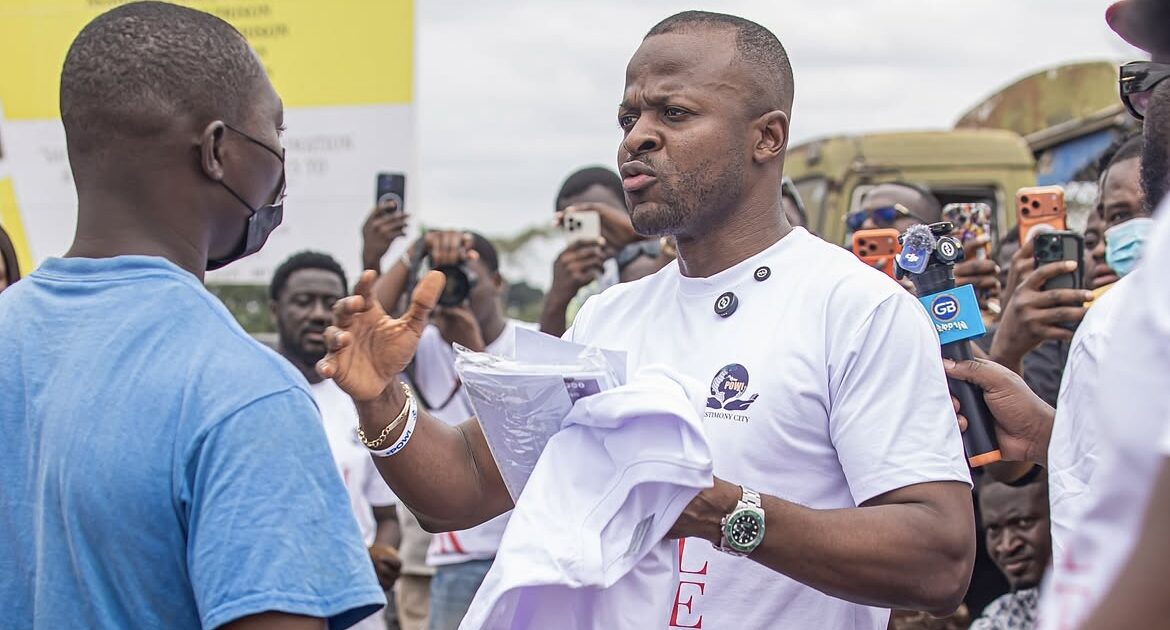
Pastor Daniel Amoateng: Pays Nsawam Inmate Fines, Frees 23
Summary
- Pastor Daniel Amoateng, Head Pastor and Founder of Power of Worship International, secured the release of 23 inmates.
- The inmates were incarcerated at Nsawam Prison in Ghana.
- Their release was facilitated by the payment of their outstanding legal fines.
- Members of his church, known as POWI Nation, supported Pastor Amoateng in this initiative.
- The gesture enabled the inmates to secure their freedom from the correctional facility.
Philanthropic Intervention at Nsawam Prison
The situation at Nsawam Prison, where inmates remained incarcerated solely due to outstanding legal fines, reflects a broader, well-documented issue within Ghana's penal system.
A significant philanthropic effort recently unfolded at Ghana's Nsawam Prison, leading to the freedom of nearly two dozen incarcerated individuals. Pastor Daniel Amoateng, who serves as the Head Pastor and Founder of Power of Worship International, spearheaded this initiative. His intervention directly resulted in the release of 23 inmates who had been held due to their inability to settle outstanding legal fines.
The financial burden preventing these individuals from regaining their liberty was personally addressed by Pastor Amoateng. He facilitated the payment of the requisite legal fines, a critical step that enabled their departure from the correctional facility. This act of benevolence was not undertaken in isolation; members of his congregation, widely recognized as POWI Nation, provided essential support for the endeavor. Their collective contribution underscored a community-driven approach to addressing a persistent challenge within the Ghanaian justice system.
This specific action by Pastor Daniel Amoateng concerning Nsawam inmate fines highlights the direct impact that community leaders and religious organizations can have on the lives of those entangled in the legal system, particularly when financial barriers impede justice. The successful Ghana Nsawam prison release of these individuals demonstrates a tangible outcome of such targeted interventions.
Addressing Outstanding Legal Fines in Ghana
The situation at Nsawam Prison, where inmates remained incarcerated solely due to outstanding legal fines, reflects a broader, well-documented issue within Ghana's penal system. Across the nation, individuals who have been sentenced to pay a fine, often for minor offenses, frequently find themselves serving extended periods of imprisonment simply because they lack the financial means to settle these monetary penalties. This systemic challenge means that incarceration can persist long after a judicial decision has been rendered, transforming a financial penalty into a prolonged deprivation of liberty.
The intervention led by Pastor Daniel Amoateng directly confronted this reality for 23 individuals. His actions underscore the critical role that external support plays in facilitating Ghana outstanding legal fines payments, thereby enabling the release of those who would otherwise remain behind bars. This scenario frequently draws attention from legal aid organizations and human rights advocates, who often highlight the disproportionate impact of such policies on economically vulnerable populations. The inability to afford a fine effectively extends a sentence, raising questions about equitable access to justice.
Such instances of inmate fine payment Ghana initiatives, while commendable, also bring to light the underlying structural issues that contribute to this cycle of incarceration. They serve as a stark reminder of the financial barriers that can prevent individuals from reintegrating into society, even after their primary legal obligations, apart from the fine, may have been met. The release of these inmates, therefore, is not just a story of individual charity but also a window into a wider legal and socio-economic dilemma.
Significance of Community-Led Release Efforts
The recent Ghana Nsawam prison release, facilitated by Pastor Daniel Amoateng and his Power of Worship International Ghana congregation, exemplifies the significant impact that community and religious organizations can have in addressing immediate humanitarian needs within the justice system. While not a systemic reform, such interventions provide crucial relief to individuals trapped in a cycle of incarceration due to financial constraints. The support from POWI Nation members demonstrates a collective commitment to practical compassion, directly translating into freedom for those affected by outstanding legal fines.
This type of direct action, where Pastor Daniel Amoateng Nsawam inmate fines are paid, offers a powerful, albeit temporary, solution to a persistent problem. It highlights the potential for civil society to step in where state mechanisms may fall short in ensuring timely justice. For the 23 individuals released, this gesture means an immediate return to their families and communities, bypassing the often-protracted process of awaiting alternative legal remedies or pro bono assistance.
Ultimately, the successful payment of these Ghana outstanding legal fines by a religious leader and his community serves as a compelling case study. It illustrates how targeted inmate fine payment Ghana efforts can alleviate personal suffering and contribute to a more humane application of justice, even as broader discussions continue regarding comprehensive reforms to address the root causes of fine-related incarceration. The gesture, as described by the pastor, represents a tangible commitment to social welfare and justice.
Practical Implications
This news highlights the persistent issue of individuals remaining incarcerated in Ghana due to outstanding legal fines, a situation that criminal defense lawyers and legal aid groups might leverage for pro bono initiatives or advocacy for systemic fine payment reform.
Source
How does this affect you?
Get an AI analysis of this article grounded in your jurisdictions, practice areas, and any policy documents you've uploaded to Wansom.
Finish Reading the Full Story and the Expert Analysis.
Get the latest legal & regulatory intelligence in Ghana
Wansom is AI and can make mistakes.