
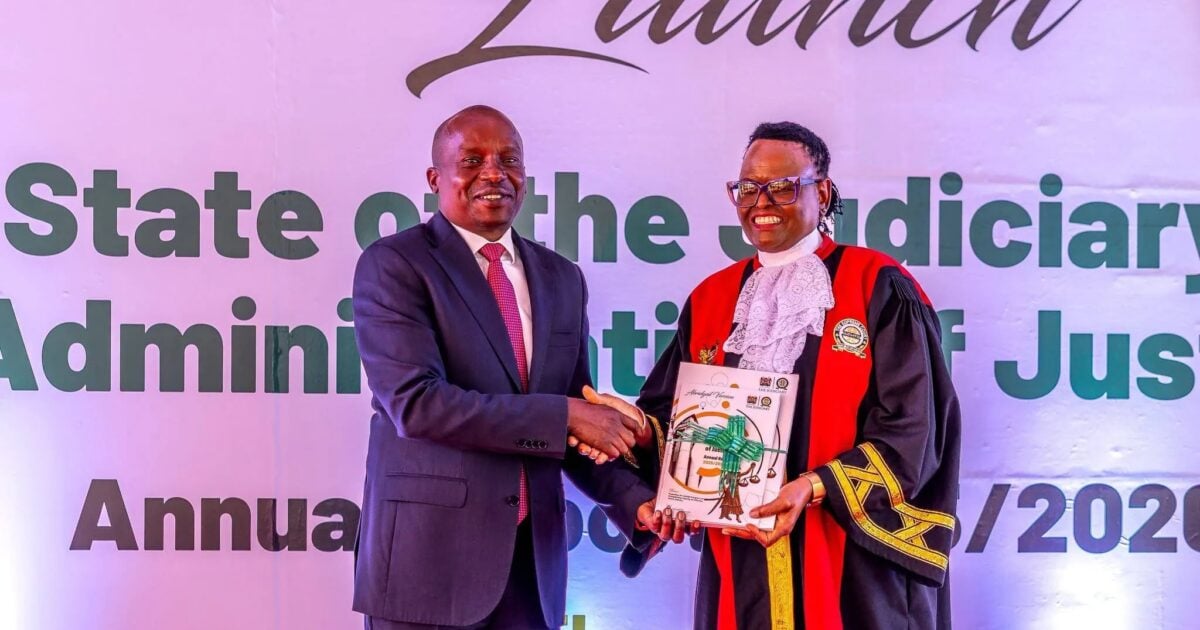
Kindiki Kenya: Judicial Independence Budget Sees Major Increase
Summary
- Deputy President Kithure Kindiki affirmed the government's commitment to judicial independence and reforms, highlighting its importance for democracy and economic growth.
- The Judiciary's budget for the 2026/2027 financial year increased to Sh30.4 billion, alongside the appointment of 53 new judges to boost capacity.
- The Judges Retirement Benefits Act, 2026, was enacted, and title deeds for the Supreme Court precincts and a proposed Kapsabet court were issued.
- The Judicial Performance Improvement Project Phase II, a Sh26 billion World Bank-backed program, is underway to modernize court infrastructure.
- The Judiciary achieved a 103% case clearance rate, resolving 576,702 cases against 561,580 new filings, but Kindiki urged efforts to clear over 341,000 long-pending cases.
Commitment to Judicial Independence and Funding
The government's commitment to a robust and independent judiciary is underscored by significant financial allocations and strategic institutional reforms aimed at bolstering the justice system's capacity and efficiency.
Deputy President Kithure Kindiki recently reiterated the Kenyan government's unwavering dedication to safeguarding the independence of the Judiciary, emphasizing its crucial role in maintaining constitutional democracy, fostering economic growth, and advancing social progress. Speaking in Nairobi at the official launch of the State of the Judiciary and the Administration of Justice Annual Report for the 2025/2026 Financial Year, Kindiki highlighted the administration's recognition of the Judiciary's central function in protecting fundamental rights, resolving disputes, upholding the rule of law, and ensuring governmental authority operates within constitutional boundaries.
The government's commitment to a robust and independent judiciary is underscored by significant financial allocations and strategic institutional reforms aimed at bolstering the justice system's capacity and efficiency. Since President William Ruto assumed office in 2022, the Judiciary has seen its budget substantially increase, reaching Sh30.4 billion for the 2026/2027 financial year, a notable rise from Sh27.15 billion in the preceding fiscal period. This substantial Kenya Judiciary budget increase is intended to support the institution's expanding needs and operational demands.
Further demonstrating this commitment, the government has facilitated the appointment of an additional 53 judges. This expansion of judicial personnel is a direct effort to strengthen the courts' capacity, effectively address existing case backlogs, and enhance the overall efficiency of justice delivery across the nation. These measures collectively aim to create a more responsive and effective judicial system for all Kenyans.
Key Reforms and Infrastructure Development
Beyond budgetary enhancements and new appointments, the government has also advanced crucial legislative and infrastructural reforms. A significant development is the enactment of the Judges Retirement Benefits Act, 2026, which directly addresses long-standing concerns regarding the welfare of retired judges, thereby reinforcing the institution's independence. President Ruto has also responded positively to requests from the Judicial Service Commission, including improvements to judges' retirement benefits and the expedited issuance of title deeds for court premises, a key aspect of Kithure Kindiki judicial reforms.
In a tangible demonstration of this progress, Lands Cabinet Secretary Alice Wahome presented two title deeds on Friday: one for the Supreme Court precincts and another for its parking area. This action resolves years of uncertainty surrounding the ownership of the land housing Kenya's highest court. Additionally, a title deed was handed over for a proposed court in Kapsabet town, signaling ongoing expansion of judicial infrastructure. These Kenya Supreme Court title deeds secure vital assets for the judiciary.
Significant progress is also being made on the Judicial Performance Improvement Project Phase II (JPIP II), a substantial Sh26 billion infrastructure program approved by the Cabinet in June in collaboration with the World Bank. This ambitious project aims to modernize the Supreme Court and Court of Appeal, consolidate infrastructure for tribunals and Judiciary administration, and establish a permanent home for the Kenya Judiciary Academy. These investments are designed to bridge existing infrastructure gaps, improve working conditions, and fortify the Judiciary's institutional capacity, ensuring a more modern and effective justice system.
Addressing Case Backlogs and Future Challenges
The Judiciary has demonstrated improved operational efficiency, evidenced by its case clearance rate. For the second consecutive financial year, the courts successfully resolved more cases than were newly filed. According to the annual report, the Judiciary disposed of 576,702 cases against 561,580 new filings during the period, resulting in an impressive 103 percent case clearance rate. This indicates a positive trend in managing the judicial workload.
Despite these gains, a significant challenge remains: the substantial backlog of older cases. Of the cases resolved, 190,779 had been pending for over one year, with 37,757 cases lingering for more than five years. Deputy President Kindiki urged the Judiciary to intensify efforts to clear the more than 341,000 cases that have been pending for over a year. He cautioned that delays in the administration of justice can erode public confidence and impede economic activity.
Kindiki emphasized that the Judiciary must continue to play its vital role by reducing delays, strengthening commercial dispute resolution mechanisms, and ensuring that justice delivery actively supports economic and social progress. Furthermore, outstanding legislative proposals, including the Kenya Judiciary Academy Bill, and the review of the Small Claims Court, are expected to further streamline judicial processes and enhance access to justice, alongside the Tribunals Bill which has been passed by Parliament and is awaiting presidential assent.
Practical Implications
Lawyers and compliance officers in Kenya should anticipate improved efficiency in the judicial system due to increased budgetary allocations, judicial appointments, and infrastructure development. This could lead to faster case resolution, reduced backlogs, and a more robust environment for dispute resolution, impacting litigation strategies and timelines.
Source
How does this affect you?
Get an AI analysis of this article grounded in your jurisdictions, practice areas, and any policy documents you've uploaded to Wansom.
Finish Reading the Full Story and the Expert Analysis.
Get the latest legal & regulatory intelligence in Kenya
Wansom is AI and can make mistakes.