
Kenya Judiciary: 2026 Report Shows Case Backlog Reduction
Summary
- The Kenya Judiciary reduced its overall pending caseload by 2.5 percent in the 2025/2026 financial year, clearing 576,702 cases against 561,580 filed.
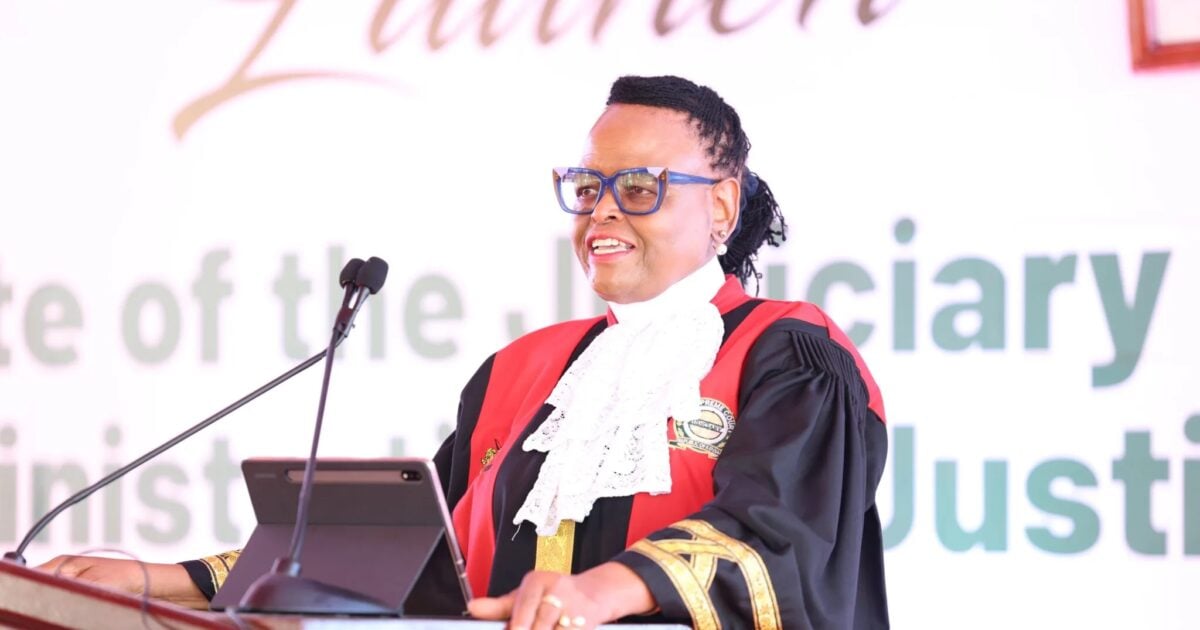
- Chief Justice Martha Koome's 2026 State of the Judiciary and Administration of Justice Annual Report highlighted a 103 percent Case Clearance Rate and a 15.8 percent reduction in cases pending over one year.
- Judicial access expanded with new Court of Appeal and Magistrates Courts, alongside 15 new Small Claims Courts, though 101 constituencies still lack Magistrates Courts.
- Alternative dispute resolution mechanisms, including Court-Annexed Mediation, facilitated Sh14.73 billion in settlements from Sh21.78 billion in referred disputes.
- Despite 1,280 new appointments, the Judiciary faces a significant Kenya judicial staffing deficit, operating at approximately 66 percent of its approved establishment, and a Sh12.95 billion funding gap.
Progress in Case Management
However, the report also underscored a persistent challenge: approximately 59 percent of the total pending caseload, amounting to 341,412 cases, has remained unresolved for more than a year.
Kenya's Judiciary has successfully cleared more cases than were filed for the second consecutive financial year, resulting in a 2.5 percent reduction in the overall pending caseload. This significant achievement was highlighted by Chief Justice Martha Koome, who presented the 2026 State of the Judiciary and Administration of Justice Annual Report (SOJAR). The report indicates that during the 2025/2026 financial year, courts resolved a total of 576,702 cases, while 561,580 new cases were filed, leading to an impressive Case Clearance Rate (CCR) of 103 percent.
The efforts to enhance court efficiency, strengthen institutional systems, and broaden access to justice were cited by Chief Justice Koome as key drivers behind this improved performance, despite ongoing resource and staffing limitations. The total pending caseload saw a decrease from 595,076 cases at the start of the reporting period to 579,954 by June 30, 2026. Furthermore, the backlog of cases that had been pending for over one year experienced a notable decline of 15.8 percent.
However, the report also underscored a persistent challenge: approximately 59 percent of the total pending caseload, amounting to 341,412 cases, has remained unresolved for more than a year. This figure emphasizes the considerable pressure on the courts and the urgent necessity to address the existing Kenya judicial staffing deficit. The Chief Justice's remarks in the 2026 report provide crucial Kenya court efficiency statistics, offering a comprehensive overview of the Judiciary's operational landscape.
Expanding Judicial Reach and Alternative Resolution
In a concerted effort to enhance access to justice, the Judiciary significantly expanded its geographical footprint throughout the year. This expansion included the establishment of two new Court of Appeal stations in Kakamega and Meru, alongside the operationalization of the Eldoret Court of Appeal station and the opening of an Embu sub-registry. Additionally, five new Magistrates Courts commenced operations, bringing the national total to 148, while 15 new Small Claims Courts increased their presence to 55 stations across the country. Despite these advancements, 101 constituencies still lack Magistrates Courts, a gap Chief Justice Koome identified as a continuing priority for ensuring equitable geographical access to judicial services.
Significant strides were also made in Kenya alternative dispute resolution progress. Court-Annexed Mediation, for instance, now extends its services to all 47 counties through an expanded network comprising 128 registries. This mechanism proved highly effective, with disputes valued at Sh21.78 billion referred to mediation, ultimately leading to settlements worth Sh14.73 billion being achieved without the need for full trials. Complementing this, Alternative Justice Systems (AJS) are now operational in 29 court stations, and 14 counties have developed specific action plans to support their implementation, further diversifying avenues for dispute resolution.
The digital transformation of judicial processes continued to advance, aiming to streamline operations and improve service delivery. Electronic filing systems and the Case Tracking System (CTS) are now fully operational across all courts and tribunals. During the reporting period, an additional 192,633 case files were digitized, bringing the cumulative total to 749,522. The Judiciary Contact Centre played a vital role, successfully resolving 13,574 enquiries, while the pilot phase of Mahakama AI, an innovative legal research tool, was successfully initiated, signaling a move towards AI-driven legal support.
Addressing Resource Gaps and Legislative Needs
Despite the notable progress in case clearance and service expansion, the Judiciary continues to grapple with substantial resource constraints, particularly concerning staffing and funding. While 1,280 new appointments were made, including 53 Judges and 100 Resident Magistrates, the institution still operates with 8,017 employees against an approved establishment of 12,079 positions. This represents a staffing level of approximately 66 percent, a significant Kenya judicial staffing deficit that Chief Justice Martha Koome emphasized continues to impede the Judiciary's capacity to improve case resolution timelines and expand essential services.
Financially, the Judiciary's budget saw a 19 percent increase, reaching Sh27.15 billion during the 2025/2026 financial year. However, this allocation remains insufficient to meet operational requirements, leaving a substantial funding gap of Sh12.95 billion. Chief Justice Koome has consistently advocated for adequate, predictable, and sustainable financing to support critical areas such as recruitment, infrastructure development, technological modernization, and ensuring access to justice in underserved communities.
Further legislative reforms are deemed essential to bolster the judicial framework. These include the enactment of the Tribunals Bill and the Kenya Judiciary Academy Bill, alongside necessary reviews of the Kadhis Courts Act and the Small Claims Court Act. On matters of accountability, the Chief Justice reiterated the Judiciary's unwavering commitment to integrity and public trust, asserting that corruption, bribery, favoritism, and misconduct have no place within the administration of justice. The Office of the Judiciary Ombudsman demonstrated its effectiveness by resolving 1,111 out of 1,243 complaints received, achieving an 89 percent resolution rate. Deputy President Kithure Kindiki also reaffirmed the government's commitment to supporting an independent judiciary.
Practical Implications
Lawyers should note the continued expansion of judicial access points and the growing efficacy of Alternative Dispute Resolution mechanisms in Kenya, which may influence litigation strategies and client advice regarding dispute resolution avenues. The ongoing digital transformation and proposed legislative reforms also signal evolving procedural landscapes and potential changes in specific legal frameworks.
Source
How does this affect you?
Get an AI analysis of this article grounded in your jurisdictions, practice areas, and any policy documents you've uploaded to Wansom.
Finish Reading the Full Story and the Expert Analysis.
Get the latest legal & regulatory intelligence in Kenya
Wansom is AI and can make mistakes.