
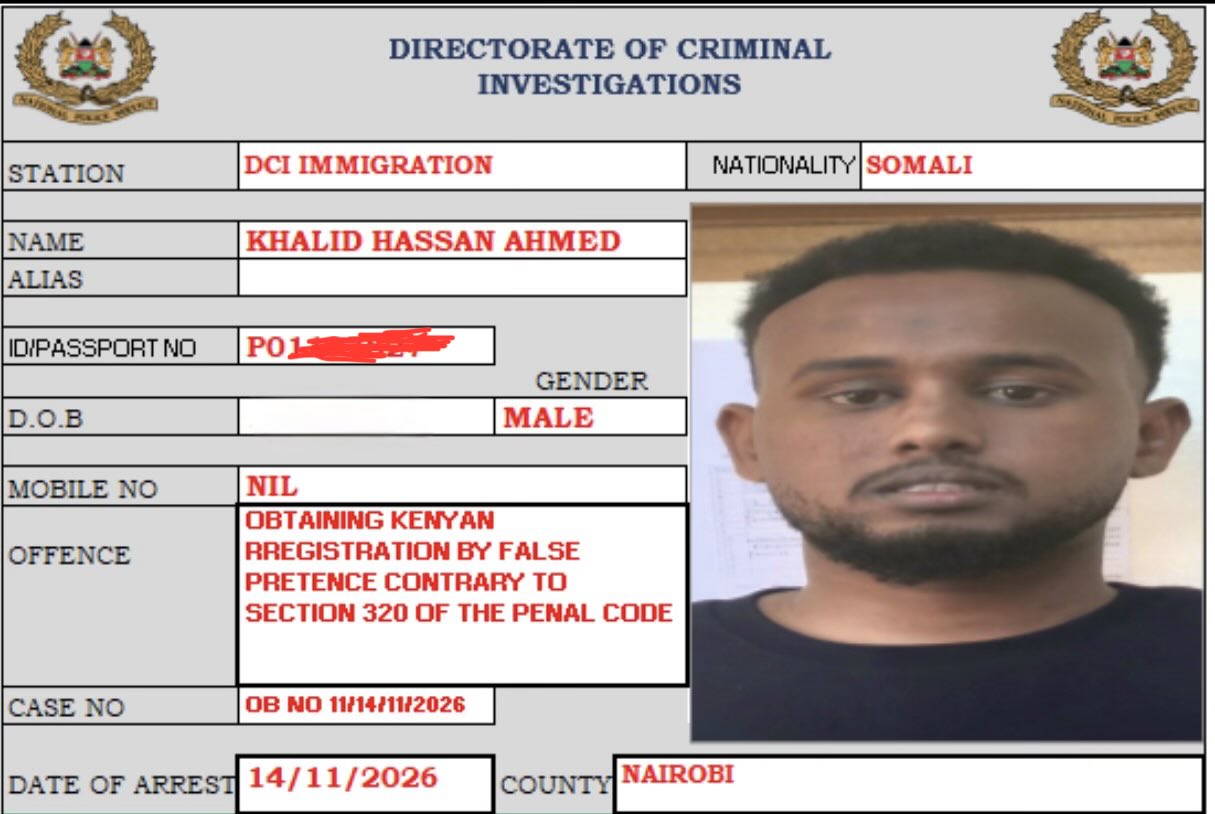
Khalid Hassan Ahmed: Kenya Passport Fraud Conviction, Ksh250K Fine
Summary
- Khalid Hassan Ahmed, a Somali national, was convicted for fraudulently obtaining Kenyan identity documents.
- He was intercepted by DCI detectives at Jomo Kenyatta International Airport on November 14, 2026, while using a Kenyan passport.
- Ahmed pleaded guilty to three charges related to the fraudulent acquisition of both a Kenyan passport and a Maisha Card.
- The court imposed a fine of Ksh250,000 for his offenses.
What Happened
The successful prosecution of a Somali national for the fraudulent acquisition of a Kenyan passport and Maisha Card sends a strong message regarding the risks associated with attempting to obtain official Kenyan documents through illegal means.
A Somali national, Khalid Hassan Ahmed, was recently convicted and subjected to a significant fine for the fraudulent acquisition of Kenyan identity documents. The conviction followed his apprehension by detectives from the Directorate of Criminal Investigations (DCI) at Jomo Kenyatta International Airport (JKIA) on November 14, 2026. Ahmed was attempting to travel using a Kenyan passport when he was intercepted, leading to the discovery of his illicitly obtained documents.
Upon his interception, authorities determined that Ahmed had not only fraudulently acquired a Kenyan passport but also a Maisha Card. He subsequently entered a guilty plea to three distinct charges related to these offenses. The court imposed a fine of Ksh250,000 as a penalty for his actions, underscoring the severity with which such cases of document fraud are treated within the Kenyan legal system.
Legal Context
The case of Khalid Hassan Ahmed highlights the stringent legal framework in Kenya designed to combat identity and document fraud, particularly concerning national identification and travel documents. The DCI's proactive role in intercepting individuals attempting to use fraudulently obtained documents, such as the Kenyan passport and Maisha Card, demonstrates the ongoing efforts by law enforcement to uphold the integrity of the country's identification systems. Ahmed's conviction for fraudulent acquisition of these documents, coupled with his guilty plea to three charges, serves as a clear indicator of the legal consequences for those who attempt to circumvent established procedures for obtaining official Kenyan identification.
The substantial fine of Ksh250,000 levied against Ahmed reflects the judiciary's stance on deterring such criminal activities. This penalty is consistent with the broader legal intent to safeguard national security and prevent the misuse of identity documents for illicit purposes, including potential links to cross-border crimes or illegal immigration. The emphasis on prosecuting cases involving the fraudulent acquisition of Kenyan identity documents, including the Maisha Card, reinforces the legal system's commitment to maintaining robust identity verification processes.
Why It Matters
This conviction of Khalid Hassan Ahmed for passport fraud in Kenya carries significant implications for both national security and the integrity of Kenya's identity management systems. The interception at JKIA, a critical international gateway, underscores the vulnerability points that fraudulent document holders might exploit and the importance of vigilant enforcement. The successful prosecution of a Somali national for the fraudulent acquisition of a Kenyan passport and Maisha Card sends a strong message regarding the risks associated with attempting to obtain official Kenyan documents through illegal means.
The outcome of this case serves as a crucial precedent, emphasizing that individuals engaging in document fraud, such as the fraudulent acquisition of a Maisha Card or a Kenyan passport, will face severe legal repercussions. It reinforces the need for robust verification processes and continuous vigilance by authorities like the DCI to prevent the proliferation of fake or illegally obtained identity documents. This incident highlights the ongoing challenges in securing national identity frameworks against sophisticated attempts at circumvention, making such convictions vital for upholding public trust and national security.
Practical Implications
This case highlights the severe penalties for fraudulent acquisition of Kenyan identity documents, including passports and Maisha Cards. Lawyers and compliance officers should review and strengthen their identity verification protocols, particularly for foreign nationals, to mitigate risks of complicity in document fraud and ensure compliance with immigration and anti-money laundering regulations.
Source
How does this affect you?
Get an AI analysis of this article grounded in your jurisdictions, practice areas, and any policy documents you've uploaded to Wansom.
Finish Reading the Full Story and the Expert Analysis.
Get the latest legal & regulatory intelligence in Kenya
Wansom is AI and can make mistakes.