
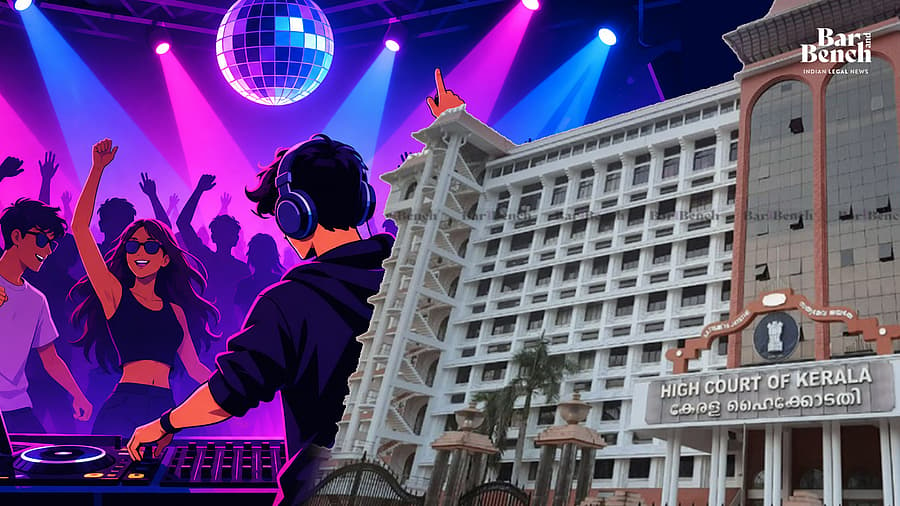
Kerala High Court: DJ Party Curbs Questioned, Police Restrictions Scrutinized
Summary
- The Kerala High Court questioned police targeting of DJ parties and nightlife, deeming a total ban impractical and excessive.
- Justices Devan Ramachandran and Basant Balaji are hearing the State’s appeal against a November 10 single-judge ruling.
- The single-judge ruling stated police cannot restrict DJ party timings at licensed establishments permitted to operate late hours.
- Justice Ramachandran observed police actions appeared based on stereotypes equating nightlife with drug activities and affirmed disc jockeying as a profession.
- The court asked the State to respond by November 20 on whether any law exists to regulate DJ parties.
Judicial Scrutiny of Nightlife Restrictions
Justice Ramachandran specifically challenged the focus on DJ parties, noting that police actions appeared to be rooted in stereotypes that unfairly link nightlife with illicit drug activities.
The Kerala High Court recently expressed significant reservations regarding the police's approach to regulating DJ parties and general nightlife activities within the State. During proceedings in the case of State of Kerala & ors v Mahadevan, a bench comprising Justices Devan Ramachandran and Basant Balaji questioned the rationale behind targeting such events, suggesting that a complete prohibition on these activities is both impractical and excessive. This judicial inquiry into Kerala High Court DJ party curbs underscores a growing concern over the arbitrary nature of certain restrictions.
Justice Ramachandran specifically challenged the focus on DJ parties, noting that police actions appeared to be rooted in stereotypes that unfairly link nightlife with illicit drug activities. He emphasized that disc jockeying is a legitimate profession, deserving of recognition as such. The court's observations highlight a critical examination of how law enforcement distinguishes between licensed entertainment and potential criminal behavior, particularly concerning Kerala High Court nightlife.
The Appeal and Underlying Legal Vacuum
The High Court's current hearing stems from an appeal filed by the State against a single-judge ruling issued on November 10. This earlier decision had clarified that police authorities are not empowered to impose restrictions on the operational timings of DJ parties held at establishments possessing valid liquor licenses, which inherently permit late-hour operations. The State's challenge to this ruling brings into focus the ongoing debate surrounding DJ party restrictions India and specifically within Kerala.
During the recent hearing, Justice Ramachandran posed pointed questions regarding the State's selective enforcement. He queried why DJ parties were specifically targeted when the sale of liquor, a significant revenue source for the government, was permitted without issue. The court further pressed the State to provide a legal framework, asking whether any specific law exists to regulate DJ parties. This inquiry into the legal basis for Kerala liquor license DJ parties suggests a potential vacuum in legislation governing these entertainment forms.
Broader Implications for Entertainment and Law Enforcement
The observations made by Justice Devan Ramachandran carry substantial weight for the future of entertainment venues and the scope of police powers in Kerala. His rhetorical questions, such as "Should we say that nobody can dance in a bar or listen to music?" and "How can we say that listening to music or dancing leads to drug consumption? Don't people dance in churches and temples?", directly challenge the underlying assumptions guiding current restrictions. These Justice Devan Ramachandran observations suggest a need for a more nuanced approach than blanket bans.
The court's skepticism about equating music and dancing with drug use indicates a potential shift away from broad, stereotype-driven prohibitions towards a more evidence-based regulatory approach. The upcoming hearing, scheduled for November 20, Friday, will be crucial as the State is expected to respond to the court's demand for a legal justification for its Kerala High Court DJ party curbs. The outcome could significantly impact how hospitality businesses operate and how nightlife is perceived and regulated across the region.
Practical Implications
Lawyers advising hospitality businesses in Kerala should note the High Court's skepticism regarding police-imposed DJ party restrictions, as the ongoing case (State of Kerala v Mahadevan) may clarify or invalidate current informal bans, impacting operational compliance for licensed establishments.
Source
How does this affect you?
Get an AI analysis of this article grounded in your jurisdictions, practice areas, and any policy documents you've uploaded to Wansom.
Finish Reading the Full Story and the Expert Analysis.
Get the latest legal & regulatory intelligence in India
Wansom is AI and can make mistakes.