
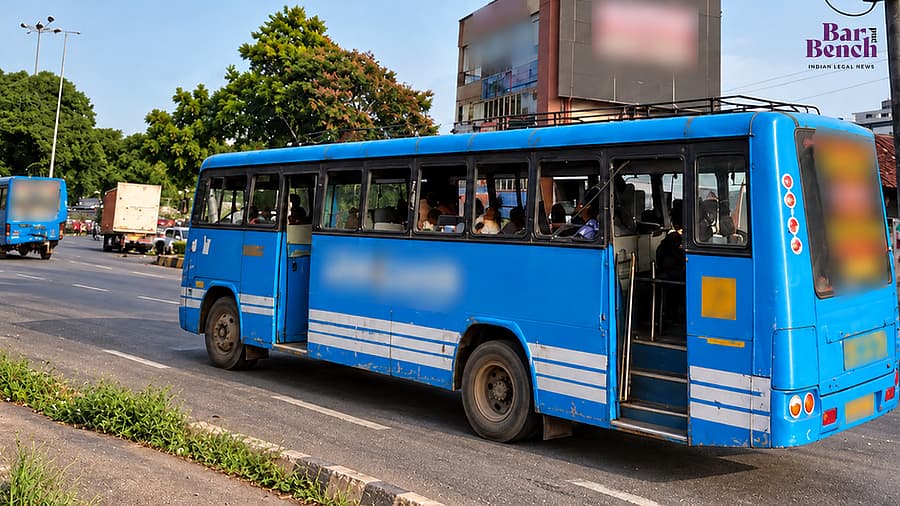
Kerala High Court Criticizes Authorities on Reckless Bus Driving, Road Safety
The Kerala High Court, through Justice Devan Ramachandran, recently admonished traffic police authorities in the state for lax enforcement of road safety rules, particularly concerning reckless driving by private bus operators, during a hearing in the case of CP Ajithkumar & anr v State of Kerala & ors.
This judicial intervention arose from repeated instances of dangerous and reckless driving by private buses, which were brought to the court's attention, including incidents in Kochi and Kannur where buses endangered pedestrians. Justice Ramachandran strongly questioned the authorities on why buses could not be confined to the slow lane and unequivocally rejected the argument that maintaining schedule timings could serve as an excuse for reckless driving, stating that any vehicle becomes a “killing machine” if not driven carefully. The court's observations underscore a deep concern for public safety and a demand for stricter adherence to and enforcement of traffic regulations against commercial vehicles.
From a legal perspective, this development is highly significant for practitioners, businesses, and the public in Kerala. It signals a proactive stance by the judiciary in overseeing the executive's duty to ensure public safety, potentially leading to more stringent enforcement actions by traffic police and transport departments. For transport companies, particularly private bus operators, it highlights an increased risk of judicial scrutiny and potential liability in cases involving negligent driving. The court's strong remarks could also influence future policy decisions regarding traffic management, route planning, and driver accountability, potentially leading to amendments in state-level motor vehicle rules or stricter licensing conditions.
The legal context for this matter primarily involves the Motor Vehicles Act, 1988, and its associated rules, which govern road safety, traffic regulations, and penalties for violations across India. High Courts, under Article 226 of the Constitution of India, possess the power to issue directions to state authorities to ensure the enforcement of laws and protection of fundamental rights, including the right to life (Article 21), which is directly impacted by road safety. While the specific outcome of this matter is not yet reported, the court's observations indicate a clear judicial intent to address the issue of reckless driving as a matter of public interest, potentially through ongoing monitoring or further directives to the state authorities.
Practitioners representing transport companies or individual drivers should immediately advise their clients to review and reinforce strict adherence to traffic laws, driver training protocols, and internal policies that might inadvertently incentivize reckless driving, such as unrealistic scheduling. Attorneys involved in motor accident claims should anticipate a more critical judicial approach towards commercial vehicle operators, potentially impacting liability assessments and compensation awards. Furthermore, legal professionals should monitor any subsequent orders or directions issued by the Kerala High Court in this case, as they could set important precedents for enforcement and accountability in road safety matters across the state. Businesses in the public transport sector must prepare for increased regulatory oversight and potential legal challenges if they fail to demonstrate robust compliance with safety standards.
How does this affect you?
Get an AI analysis of this article grounded in your jurisdictions, practice areas, and any policy documents you've uploaded to Wansom.
Finish Reading the Full Story and the Expert Analysis.
Get the latest legal & regulatory intelligence in India
Wansom is AI and can make mistakes.