
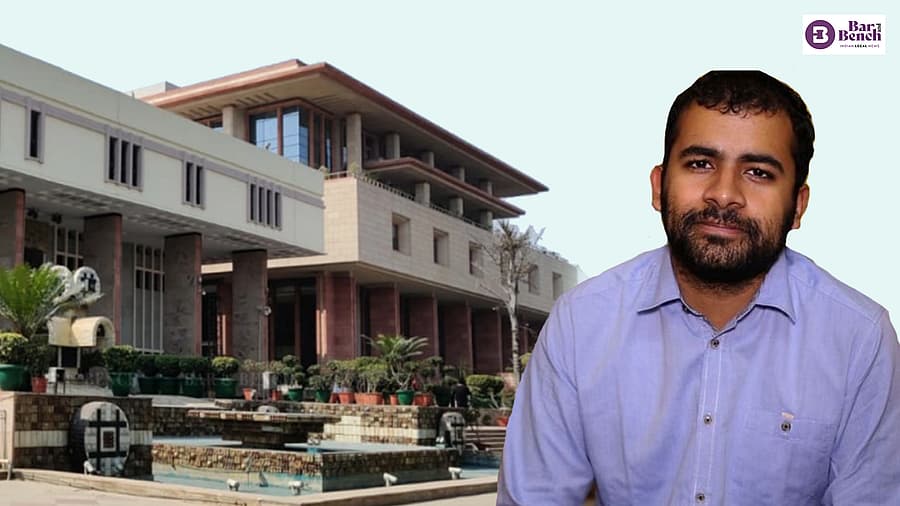
Delhi High Court Rejects Vijay Nair Recall Order Plea
Summary
- The Delhi High Court rejected Vijay Nair's plea to recall a five-month-old order from May 2026.
- Nair, a former AAP communications in-charge, challenged an order in the CBI's excise policy case.
- The original order recorded Nair's counsel having "no objection" to a procedural arrangement, which Nair later denied.
- Justice Swarana Kanta Sharma ruled that a signed judicial record, dictated in open court, cannot be displaced by a subsequent assertion.
- The court emphasized that no objection was raised at the time the original order was recorded.
What Happened
The court's decision firmly established that a judicial record, which meticulously documents the proceedings and submissions presented before the court, cannot be easily set aside.
The Delhi High Court recently issued a significant ruling on Friday, rejecting a petition filed by Vijay Nair, the former communications in-charge for the Aam Aadmi Party. Nair had sought the recall of a five-month-old court order, specifically one issued in May 2026, which pertained to a Central Bureau of Investigation (CBI) plea concerning the discharge of all accused individuals in the ongoing excise policy case. This particular Delhi High Court Vijay Nair recall order stems from a prior decision by Justice Swarana Kanta Sharma.
The May 2026 order, which was the subject of Nair's challenge, had explicitly recorded that both Nair and another respondent had submitted applications questioning the maintainability of the case. Furthermore, the order documented a submission by Solicitor General Tushar Mehta, suggesting that arguments related to these maintainability applications could be heard concurrently with the arguments on the main petition. Crucially, the order also noted that "counsels for the respondents have no objection to the same," implying consent to this procedural arrangement.
However, in a subsequent application, Nair contended that no such statement of consent was ever made. His legal representative, Senior Advocate Shadan Farasat, affirmed that the application was filed with due responsibility, emphasizing that the alleged consent was, in fact, never given. Farasat further highlighted that the CBI was reportedly leveraging this specific May 2026 order to counter Nair's request before the roster bench, where he sought to have the maintainability of the case decided prior to the main petition's hearing in the Vijay Nair excise policy case.
Legal Context
In a detailed ruling, Justice Swarana Kanta Sharma ultimately dismissed Nair's plea for the recall of the order. The Justice Swarana Kanta Sharma ruling underscored the fundamental principle of the sanctity of judicial records. The court observed that the original order had been dictated in open court, subsequently signed by the judge, and then officially uploaded, establishing it as a formal judicial record. This process lends significant weight and finality to the recorded proceedings.
The court's decision firmly established that a judicial record, which meticulously documents the proceedings and submissions presented before the court, cannot be easily set aside. It cannot be "displaced merely on the basis of a subsequent assertion to the contrary." This principle is crucial for maintaining the integrity and reliability of court proceedings. The ruling also noted that no objection was raised by the parties at the time the original order was recorded, further solidifying its standing. This aspect is central to understanding the court's reluctance to grant the recall of court order Delhi.
The implication here is profound for the judicial record challenge India. Once a court order is formally recorded, signed, and uploaded, any subsequent claim of non-consent or inaccuracy faces a very high bar for challenge. The court expects immediate clarification or objection if a party believes a record does not accurately reflect the proceedings or their submissions. The absence of such an immediate objection significantly weakens any later attempt to dispute the record's veracity.
Why It Matters
This ruling carries significant implications for legal practice and procedural strategy, particularly within the context of high-profile cases like the CBI excise policy case India. It serves as a stark reminder to legal professionals about the critical importance of meticulously verifying the accuracy of court orders as they are being recorded or immediately thereafter. Lawyers must be vigilant in ensuring that any consents, submissions, or procedural agreements attributed to their clients are precisely reflected in the judicial record.
The court's firm stance against challenging a signed judicial record based on a subsequent assertion of non-consent highlights a key procedural hurdle. Such challenges are highly unlikely to succeed, especially when the original order was dictated in open court and no immediate objection was raised. This judicial posture reinforces the idea that the court's official record is presumed to be correct and reflects the true state of affairs during proceedings.
Ultimately, this decision underscores that the integrity of judicial records is paramount. It influences how legal teams must strategize, emphasizing proactive engagement with the court's recording of proceedings. Relying on a later denial to overturn a formally recorded consent is a precarious strategy, as demonstrated by the rejection of Vijay Nair's plea. This outcome reinforces the need for real-time diligence in court, ensuring that the record accurately reflects all parties' positions and agreements.
Practical Implications
Lawyers should meticulously verify the accuracy of court orders, particularly regarding recorded consents or submissions, as challenging a signed judicial record based on a subsequent assertion of non-consent is highly unlikely to succeed and can impact procedural strategy in ongoing litigation.
Source
How does this affect you?
Get an AI analysis of this article grounded in your jurisdictions, practice areas, and any policy documents you've uploaded to Wansom.
Finish Reading the Full Story and the Expert Analysis.
Get the latest legal & regulatory intelligence in India
Wansom is AI and can make mistakes.