
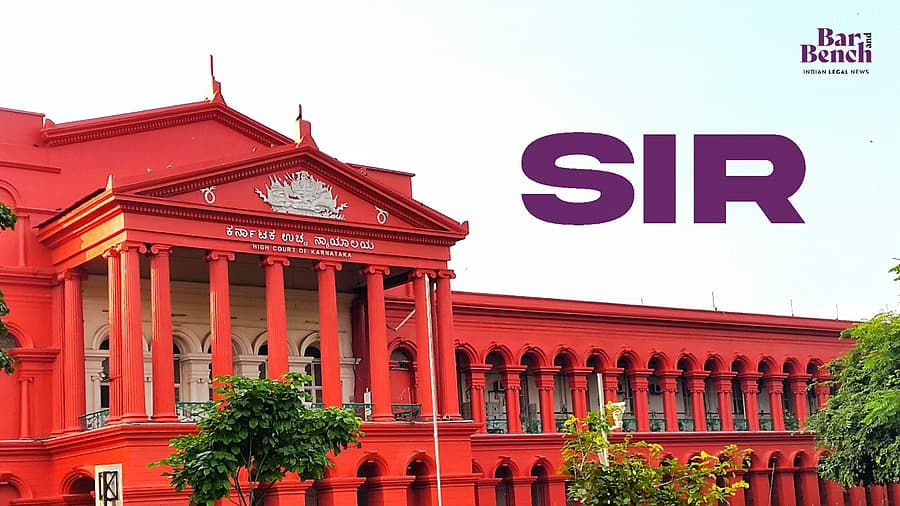
Karnataka High Court Stays Proceedings Against BJP Agents in Voter Deletion Case
The Karnataka High Court, on Friday, stayed proceedings against two BJP booth-level agents (BLAs), GS Vasanthalakshmi and Deepak Singh R, who were booked in separate cases for allegedly attempting to delete names of particular community voters from electoral rolls in Bengaluru’s Malleshwaram Assembly constituency during the Special Intensive Revision (SIR) exercise.
This ruling is legally significant for practitioners as it clarifies the boundaries of criminal liability in the context of electoral roll revisions and emphasizes the procedural safeguards inherent in electoral law. The High Court's observation that the First Information Reports (FIRs) appeared premature highlights that administrative processes must be allowed to conclude before criminal charges are automatically invoked for actions taken within those processes. For political parties, their agents, and individuals involved in electoral activities, this decision provides crucial guidance on the scope of permissible actions during voter list revisions and the circumstances under which such actions might attract criminal prosecution.
The legal context for this matter involves India's electoral laws, primarily the Representation of the People Act, 1950, and associated rules governing voter registration and deletion, including the use of Form 7 for objections. The "Special Intensive Revision (SIR)" is the administrative exercise under which the alleged actions occurred. The High Court's intervention to stay the proceedings likely stems from its inherent powers under Section 482 of the Code of Criminal Procedure, 1973, which allows it to quash or stay proceedings to prevent abuse of the process of any court or otherwise to secure the ends of justice. The court's emphasis on the role of the "competent electoral authority" underscores the administrative nature of the process.
The key parties involved are the Karnataka High Court, specifically Justice Anant Ramanath Hegde, the petitioners GS Vasanthalakshmi and Deepak Singh R (BJP booth-level agents), the Vyalikaval and Yeshwanthapura police stations (who registered the FIRs), and Senior Advocate M Aruna Shyam, who represented the petitioners. The "competent electoral authority" is also a crucial, though unnamed, entity in the administrative process of voter deletion. The excerpt does not report the final outcome of the FIRs, only that the proceedings were stayed.
Practitioners advising political parties, candidates, or individuals engaged in electoral processes should note that the mere submission of objections or applications for voter deletion, as part of a prescribed administrative process like the SIR, does not automatically constitute a criminal offense. Criminal charges related to electoral roll revisions may be challenged as premature if the competent electoral authority has not yet made a final decision on the applications. This case highlights the importance of understanding the interplay between administrative electoral procedures and criminal law, and the potential for judicial intervention to prevent premature criminalization of actions taken within established administrative frameworks.
How does this affect you?
Get an AI analysis of this article grounded in your jurisdictions, practice areas, and any policy documents you've uploaded to Wansom.
Finish Reading the Full Story and the Expert Analysis.
Get the latest legal & regulatory intelligence in India
Wansom is AI and can make mistakes.