
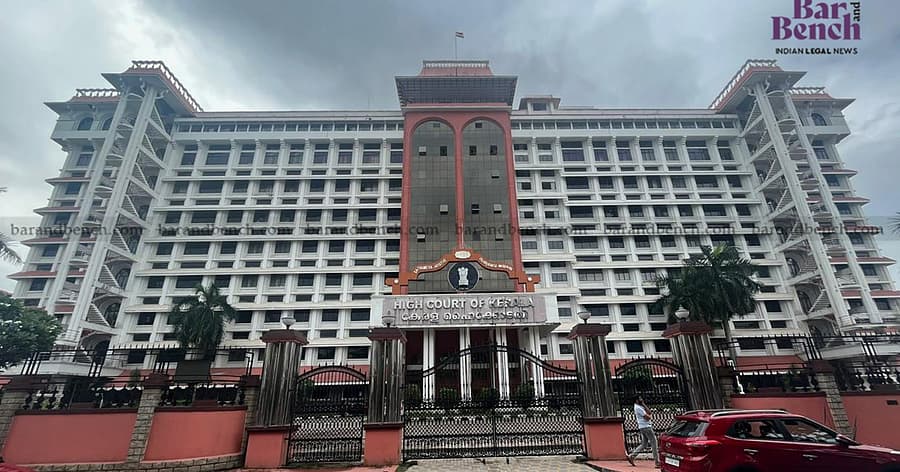
Kerala HC: Anticipatory Bail for Advocate in Sexual Harassment Case
Summary
- The Kerala High Court granted anticipatory bail to an advocate accused of sexually harassing a female lawyer inside a Palakkad court hall.
- Justice Kauser Edappagath ruled that custodial interrogation of the accused was unnecessary for the investigation.
- The court noted a prior criminal case filed by the accused advocate against the complainant and others.
- The alleged incident occurred on August 5, 2026, and the FIR was registered under Section 75(1)(i) of the Bharatiya Nyaya Sanhita, 2023.
- The accused denied the allegations, claiming false implication.
What Happened
The emphasis on the necessity of custodial interrogation, rather than the inherent seriousness of the charge itself, sets a precedent for how courts might weigh personal liberty against investigative requirements.
The Kerala High Court recently granted pre-arrest bail to an advocate who stands accused of sexually harassing a female colleague within the confines of a court hall in Palakkad. The decision, issued by Justice Kauser Edappagath, came after the court determined that the custodial interrogation of the accused lawyer was not a necessary step in the ongoing investigation. This ruling pertains to a significant Palakkad advocate sexual harassment case that has drawn attention to conduct within judicial premises.
The alleged incident took place on August 5, 2026, at approximately 11:40 AM, inside Additional District and Sessions Court-V in Palakkad. According to the complaint lodged by the female advocate, the accused allegedly pressed her buttocks with sexual intent as she was exiting the courtroom. Following this, she promptly filed a complaint at the Palakkad Town South Police Station, leading to the registration of a First Information Report (FIR).
The FIR in this matter was registered under Section 75(1)(i) of the Bharatiya Nyaya Sanhita, 2023 (BNS), a provision specifically addressing the crime of sexual harassment. In response to these serious allegations, the accused lawyer vehemently denied any wrongdoing, asserting his innocence and claiming that he had been falsely implicated in the case. He subsequently sought anticipatory bail to prevent his arrest.
Legal Context
The Kerala High Court's decision to grant anticipatory bail to the advocate in this sexual harassment case hinged primarily on the assessment that his custodial interrogation was not essential for the investigation. Justice Kauser Edappagath, presiding over the matter, explicitly stated in the September 11, 2026 order that "Considering the allegations made against the applicant, his custodial interrogation seems unnecessary. For these reasons, I find this to be an appropriate case to grant pre-arrest bail to the applicant." This highlights a key consideration in pre-arrest bail sexual harassment India cases: the necessity of physical custody for effective investigation, rather than the mere gravity of the accusation.
A crucial factor influencing the court's judgment was the existence of a prior legal dispute between the parties. The court took note that a separate criminal case had previously been registered against the complainant female advocate and others, initiated at the instance of the accused advocate. This background of existing legal contention between the individuals involved likely played a role in the court's evaluation of the necessity for custodial interrogation, suggesting a potential for the current allegations to be intertwined with earlier conflicts.
The specific legal framework invoked in the FIR is Section 75(1)(i) of the Bharatiya Nyaya Sanhita, 2023 (BNS). This new provision defines and criminalizes sexual harassment, reflecting India's evolving legal landscape concerning offenses against women. The Bharatiya Nyaya Sanhita, 2023, came into effect on July 1, 2024, replacing the Indian Penal Code of 1860. Section 75(1)(i) specifically addresses physical contact and advances involving unwelcome and explicit sexual overtures. The application of this section in a case involving legal professionals underscores the broad reach of the new criminal code and its implications for various segments of society. The ruling by Justice Kauser Edappagath on anticipatory bail in this context provides an early interpretation of how courts may approach such serious charges under the BNS when considering pre-arrest liberty.
Why It Matters
This ruling by the Kerala High Court offers significant insight into the judicial approach to anticipatory bail, particularly in cases involving allegations of sexual harassment within professional settings, and especially when legal professionals are involved. The emphasis on the necessity of custodial interrogation, rather than the inherent seriousness of the charge itself, sets a precedent for how courts might weigh personal liberty against investigative requirements. It suggests that even for grave offenses like sexual harassment under the new Bharatiya Nyaya Sanhita, pre-arrest detention is not automatic if the court finds other means sufficient for investigation.
Furthermore, the court's consideration of prior disputes between the complainant and the accused is a critical aspect of this Kerala HC anticipatory bail advocate sexual harassment decision. It indicates that courts may scrutinize the context surrounding such allegations, particularly when there is a history of legal conflict or counter-allegations between the parties. This nuanced approach acknowledges the complexities that can arise in interpersonal disputes, even when serious charges are made, and underscores the importance of presenting a comprehensive picture to the court during bail proceedings.
The case also highlights the evolving application of the Bharatiya Nyaya Sanhita 2023 Section 75(1)(i), providing an early judicial interpretation of its scope in anticipatory bail matters. For legal practitioners and those involved in the justice system, this decision serves as a reminder that the grant of pre-arrest bail in sexual harassment cases in India is a fact-specific inquiry, heavily influenced by the perceived necessity of custodial interrogation and the broader circumstances, including any pre-existing grievances between the parties.
Practical Implications
Lawyers handling sexual harassment cases, particularly those involving legal professionals or within court premises, should note the Kerala High Court's stance on anticipatory bail, emphasizing the necessity of custodial interrogation over the gravity of the charge itself. This ruling provides insight into the factors courts consider when granting pre-arrest bail, especially where there are prior disputes or counter-allegations between the parties.
Source
Source: Original reporting via Live Law
How does this affect you?
Get an AI analysis of this article grounded in your jurisdictions, practice areas, and any policy documents you've uploaded to Wansom.
Finish Reading the Full Story and the Expert Analysis.
Get the latest legal & regulatory intelligence in India
Wansom is AI and can make mistakes.