
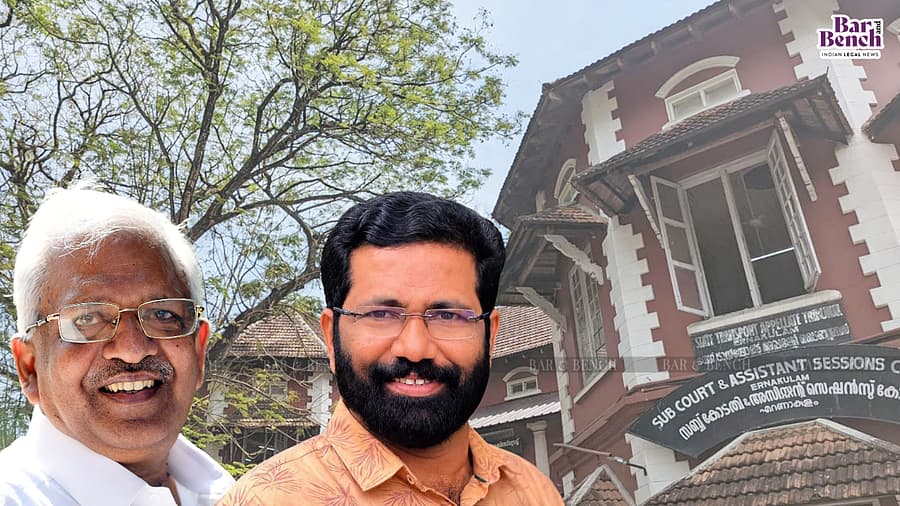
Kerala CBI Court: P Jayarajan Acquitted in Ariyil Shukoor Murder
Summary
- A Special CBI court in Ernakulam acquitted CPI(M) leaders P Jayarajan and TV Rajesh, along with 16 others, in the 2012 Ariyil Shukoor murder case.
- Thirteen individuals were convicted in connection with the murder of Muslim Students Federation worker Abdul Shukoor.
- The prosecution alleged Shukoor's murder was retaliation for an attack on a vehicle carrying Jayarajan and Rajesh, with the conspiracy planned at Taliparamba Co-operative Hospital.
- The Kerala High Court ordered a CBI probe in February 2016 after the initial Kerala Police investigation.
- The CBI filed its chargesheet in February 2019, and the murder trial reportedly began in May 2025, involving around 41 witnesses.
Verdict Details
The acquittal of prominent CPI(M) leaders like P Jayarajan and TV Rajesh in the Abdul Shukoor murder conviction case demonstrates the significant hurdles faced by prosecuting agencies in establishing culpability for conspiracy and murder, especially in politically charged environments.
A Special Central Bureau of Investigation (CBI) court in Ernakulam recently delivered its judgment in the high-profile Ariyil Shukoor murder case, convicting thirteen individuals while acquitting eighteen others. Among those cleared of charges were prominent Communist Party of India (Marxist) leaders P Jayarajan and TV Rajesh, alongside Shyamjith, who is the son of CPI(M) State Secretary MV Govindan. The verdict, pronounced by Special CBI court III Judge Sabarinathan P on Thursday, November 19, marks a significant development in a case that has drawn considerable attention in Kerala.
The court's decision means that while a group of individuals faces conviction for their involvement in the 2012 killing of Muslim Students Federation (MSF) worker Abdul Shukoor, key political figures implicated in the investigation have been exonerated. The sentencing for the thirteen convicted accused was scheduled to be announced later on the same day. This outcome underscores the intricate challenges in prosecuting complex criminal cases, particularly those with political undertones, and the rigorous evidentiary standards required for conviction.
Background of the Incident
The case revolves around the murder of Abdul Shukoor in Kannur on February 20, 2012. According to the prosecution's narrative, Shukoor's death was an act of retaliation following an earlier assault on a vehicle transporting P Jayarajan and TV Rajesh. The CBI's investigation further alleged that the conspiracy to commit the murder was formulated at the Taliparamba Co-operative Hospital, where the two CPI(M) leaders had been admitted after the attack on their convoy.
Investigation and Judicial Process
The initial investigation into the Ariyil Shukoor murder was conducted by the Kerala Police. However, the trajectory of the case shifted significantly after Shukoor's mother filed a petition, leading the Kerala High Court to mandate a Central Bureau of Investigation (CBI) probe in February 2016. This intervention by the High Court elevated the case to a federal investigative agency, signaling its perceived complexity and public interest.
The CBI subsequently filed its chargesheet in February 2019. The murder trial, during which approximately 41 witnesses were examined, was reported to have commenced in May 2025. This timeline, as reported, highlights the protracted nature of the legal proceedings, spanning several years from the initial incident to the eventual verdict in the P Jayarajan murder case verdict.
Legal Significance
The acquittal of prominent CPI(M) leaders like P Jayarajan and TV Rajesh in the Abdul Shukoor murder conviction case demonstrates the significant hurdles faced by prosecuting agencies in establishing culpability for conspiracy and murder, especially in politically charged environments. This verdict serves as a critical case study for criminal defense lawyers, illustrating the high evidentiary thresholds required for conviction, particularly concerning allegations of criminal conspiracy. The involvement of the CBI, typically associated with thorough investigations, underscores that even with extensive resources, proving intent and direct involvement in complex political murder cases remains a formidable challenge.
The outcome in the State of Kerala v Sumesh KV & ors case highlights the complexities of the Indian legal system when dealing with high-profile criminal proceedings. The acquittals, despite the detailed allegations by the CBI regarding the planning and execution of the murder, emphasize the judiciary's strict adherence to the burden of proof. This case will likely be referenced in discussions about the challenges of securing convictions against influential individuals in politically sensitive criminal matters, reinforcing the principle that allegations, however detailed, must be substantiated by irrefutable evidence in court.
Practical Implications
This verdict in a high-profile political murder case demonstrates the complexities of establishing culpability for conspiracy and murder, even with CBI involvement. Criminal defense lawyers should note this as a case study for analyzing evidence thresholds for acquittal in politically charged criminal proceedings, particularly concerning the burden of proof for conspiracy allegations.
Source
How does this affect you?
Get an AI analysis of this article grounded in your jurisdictions, practice areas, and any policy documents you've uploaded to Wansom.
Finish Reading the Full Story and the Expert Analysis.
Get the latest legal & regulatory intelligence in India
Wansom is AI and can make mistakes.