
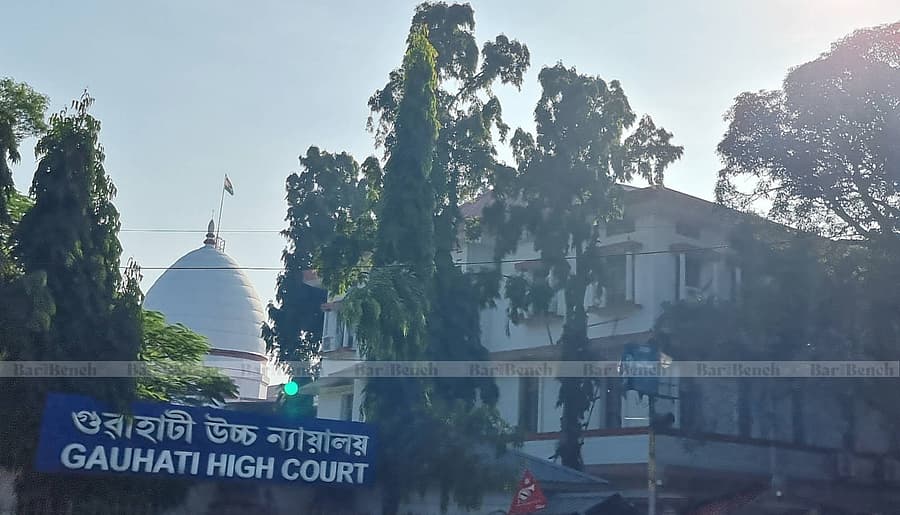
Gauhati High Court: Social Media Not Proof of Financial Independence for Maintenance
Summary
- The Gauhati High Court ruled that a wife's social media posts showing an 'enjoyable life' do not prove financial independence.
- This decision overturned a family court order that had denied a woman maintenance based on her social media activity.
- The family court had questioned how the woman financed her lifestyle and suggested she could find employment.
- The High Court stated that social media uploads do not demonstrate the ability to finance a lifestyle through employment.
- The case involved a marriage in March 2023, with separation three months later, and a maintenance claim of ₹15,000 per month.
What Happened
The Gauhati High Court recently overturned a family court's decision, asserting that a wife's social media activity depicting an 'enjoyable life' does not, by itself, constitute proof of her financial independence or capacity for self-maintenance.
The Gauhati High Court recently overturned a family court's decision, asserting that a wife's social media activity depicting an 'enjoyable life' does not, by itself, constitute proof of her financial independence or capacity for self-maintenance. This significant ruling emerged from a case where a woman had sought monthly maintenance of ₹15,000 from her husband following a brief marriage. The couple had solemnized their union in March 2023 but separated just three months later.
The family court had initially denied the woman's plea for maintenance from her husband, citing her social media posts. These posts, which showed her 'enjoyful life at Guwahati,' led the lower court to question her financial means and conclude that she was an able-bodied individual capable of securing employment to support herself. The wife had contended that while she previously worked as a sales promoter, she was no longer employed and resided with her parents. Her husband, in opposition, claimed she was employed and earning a monthly salary, also disputing her assertions regarding his income and assets.
Legal Context
A Division Bench comprising Justices Michael Zothankhuma and Sanjeev Kumar Sharma delivered the Gauhati High Court's judgment, directly challenging the family court's interpretation of social media evidence. The High Court explicitly stated that the family court's finding, based on the petitioner-wife's 'enjoyable life at Guwahati' as uploaded on social media, did not sufficiently demonstrate her ability to finance her lifestyle through employment. This ruling clarifies the evidentiary standard in cases concerning wife maintenance social media evidence, emphasizing that such posts are not conclusive proof of financial capability.
The court's decision underscores a critical distinction: while social media might offer glimpses into a person's lifestyle, it rarely provides concrete financial independence proof India requires in legal proceedings. The High Court's intervention highlights the need for more substantial evidence when assessing a spouse's ability to maintain themselves, moving beyond superficial online portrayals. This sets a precedent for how family courts should evaluate claims of financial self-sufficiency in maintenance from husband India cases.
Why It Matters
This Gauhati High Court maintenance ruling holds considerable weight for future family court social media appeal cases and the broader landscape of maintenance claims. It firmly establishes that mere visual representations of an 'enjoyable life' on social media platforms are insufficient to rebut a claim for maintenance. Lawyers advising clients in such disputes must now emphasize the necessity of presenting concrete financial documentation and evidence of actual income or assets, rather than relying on a spouse's online persona.
The judgment serves as a crucial clarification regarding the evidentiary standard for proving a spouse's financial independence in maintenance proceedings. It limits the weight that can be attributed to social media posts, ensuring that courts focus on tangible financial realities rather than potentially misleading digital impressions. This approach aims to prevent the misuse of social media as a primary tool to deny legitimate maintenance claims, reinforcing the principle that a person's online image does not automatically equate to their financial capacity. The ruling provides important guidance on Gauhati High Court social media maintenance issues, ensuring a more robust and equitable assessment of financial claims.
Practical Implications
This ruling clarifies the evidentiary standard for proving a spouse's financial independence in maintenance proceedings, specifically limiting the weight given to social media posts depicting an 'enjoyable life'. Lawyers should advise clients that such posts alone are insufficient to rebut a maintenance claim and that concrete financial evidence is required to demonstrate a spouse's ability to maintain themselves.
Source
How does this affect you?
Get an AI analysis of this article grounded in your jurisdictions, practice areas, and any policy documents you've uploaded to Wansom.
Finish Reading the Full Story and the Expert Analysis.
Get the latest legal & regulatory intelligence in India
Wansom is AI and can make mistakes.