
Kenya Judiciary: 2026 Report Highlights Persistent Case Backlog
Summary
- The Kenya Judiciary's 2025/2026 annual report indicates a persistent case backlog despite a 103% clearance rate.
- Chief Justice Martha Koome reported a 2.5% reduction in pending cases, yet 59% of matters remained unresolved for over a year.
- A significant staffing shortage persists, with the Judiciary operating at only 66% of its approved establishment.
- The Judiciary expanded court-annexed mediation to all 47 counties, facilitating settlements worth Ksh13.05 billion.
- Despite a budget increase, the Judiciary faces a Ksh12.95 billion funding shortfall, hindering recruitment and infrastructure development.
Persistent Challenges in Case Resolution
Despite a 103% case clearance rate in the 2025/2026 financial year, the Kenya Judiciary continues to grapple with a substantial backlog, as detailed in the latest State of the Judiciary Annual Report.
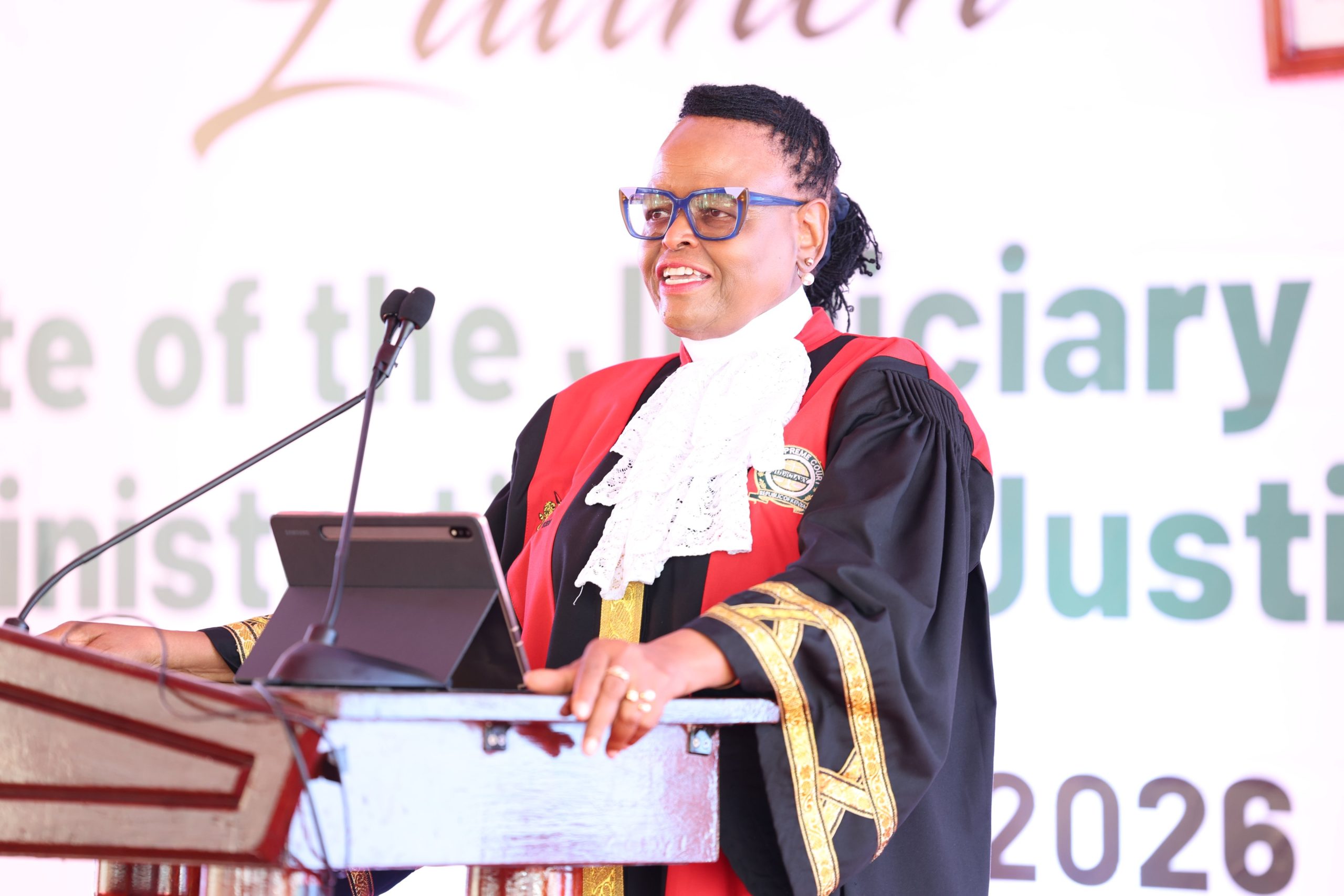
Despite a notable improvement in its case clearance rate, the Kenya Judiciary continues to confront a significant backlog of unresolved matters, as highlighted in the recently released State of the Judiciary and the Administration of Justice Annual Report for the 2025/2026 financial year. Chief Justice Martha Koome acknowledged that while courts resolved more cases than were filed during this period, the overall volume of pending litigation remains a substantial hurdle to efficient justice delivery.
According to the Chief Justice Martha Koome report, the total number of pending cases saw a modest reduction of 2.5 percent, decreasing from 595,076 at the start of the financial year to 579,954 by June 30, 2026. Furthermore, cases that had languished unresolved for over one year experienced a 15.8 percent decline. However, a substantial portion of the backlog, specifically 341,412 cases, representing 59 percent of all pending matters, still awaited resolution for more than a year.
Addressing this persistent backlog is compounded by a critical Judiciary staffing shortage Kenya. Chief Justice Koome emphasized the urgent need for additional judicial officers and support staff. The Judiciary currently operates with 8,017 employees against an approved establishment of 12,079, fulfilling only about 66 percent of its required personnel.
Strategic Initiatives and Operational Enhancements
In the 2025/2026 financial year, the Kenya Judiciary demonstrated enhanced operational efficiency, achieving a commendable Kenya court clearance rate 2026 of 103 percent. This was accomplished by resolving 576,702 cases against 561,580 new filings. Chief Justice Koome attributed this improved performance to a combination of enhanced court efficiency, strengthened institutional systems, and expanded access to justice initiatives.
Significant strides were made in bolstering judicial capacity and presence across the nation. The Judiciary appointed 53 Judges and 100 Resident Magistrates, contributing to a total of 1,280 new appointments. Geographical reach was also expanded with the establishment of new Court of Appeal stations in Kakamega and Meru, alongside the operationalization of the Eldoret Court of Appeal station. Five additional Magistrates’ Courts became operational, bringing their total to 148, while 15 new Small Claims Courts increased their national presence to 55.
Crucially, the Kenya court-annexed mediation expansion saw this alternative dispute resolution mechanism extended to all 47 counties, supported by the addition of 42 new mediation registries, bringing the national total to 128. This initiative proved highly effective, with disputes valued at Ksh20.88 billion referred for mediation, resulting in settlements worth Ksh13.05 billion without the need for full trials. Furthermore, digital services were expanded, with electronic filing and the Case Tracking System now operational across all courts and tribunals, and an additional 192,633 case files digitized, accumulating to 749,522 digital files.
Funding Constraints and Future Demands
Despite the Judiciary's concerted efforts and operational improvements, inadequate funding remains a significant constraint on its capacity. While the institution's budget saw a 19 percent increase to Ksh27.15 billion in the 2025/2026 financial year, this allocation still fell short of its operational requirements, resulting in a substantial funding shortfall of Ksh12.95 billion.
Chief Justice Koome underscored the necessity of adequate and predictable financing to support critical areas such as recruitment of personnel, infrastructure development, technological modernization, and the expansion of court services to underserved communities. She also reiterated the Judiciary's firm stance against corruption, bribery, favouritism, and misconduct, emphasizing that such practices have no place within the administration of justice. In a move towards greater accountability, the Office of the Judiciary Ombudsman successfully resolved 1,111 of the 1,243 complaints received during the year, achieving an 89 percent resolution rate.
Practical Implications
Lawyers should anticipate continued litigation delays in Kenya due to the persistent case backlog and judicial staffing shortages, as highlighted in the 2025/2026 report. This reinforces the strategic importance of exploring court-annexed mediation and other alternative dispute resolution mechanisms for clients seeking faster and more cost-effective dispute resolution.
Source
How does this affect you?
Get an AI analysis of this article grounded in your jurisdictions, practice areas, and any policy documents you've uploaded to Wansom.
Finish Reading the Full Story and the Expert Analysis.
Get the latest legal & regulatory intelligence in Kenya
Wansom is AI and can make mistakes.