
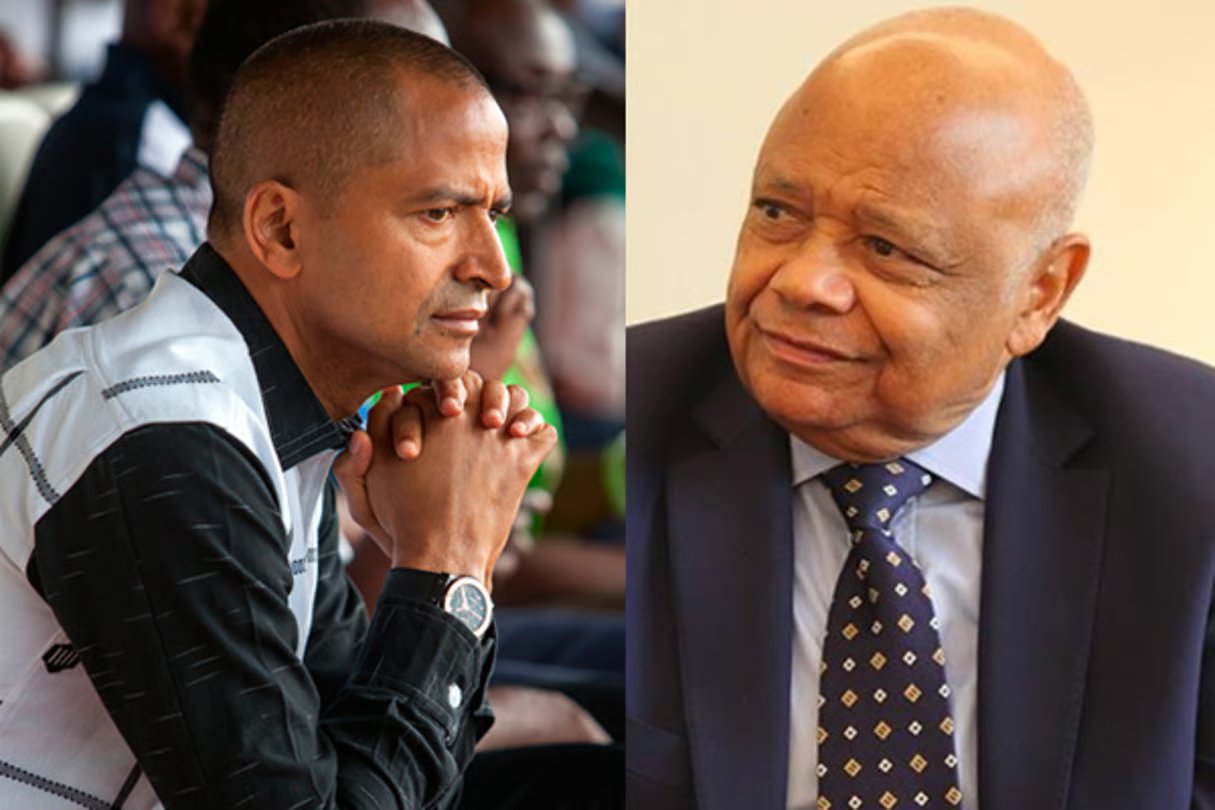
Katebe Katoto à Katumbi : « Le juge n'est pas dans la rue, ni sur les médias, il est à la cour »
Summary
- Raphaël Katebe Katoto addressed his property dispute with half-brother Moïse Katumbi during a public interview on September 29, 2026.
- The legal confrontation centers on a judicial procedure concerning various properties.
- Katebe Katoto emphasized that legal matters should be resolved in court, stating, "The judge is not in the street, nor in the media, he is in court."
- The interview took place on a "Space live" event hosted by Stanis Bujakera Tshiamala.
- This high-profile dispute highlights the importance of adhering to formal judicial procedures in the Democratic Republic of Congo.
The High-Profile Property Dispute
Raphaël Katebe Katoto's pointed declaration, stating that "The judge is not in the street, nor in the media, he is in court," serves as a critical reminder of the formal channels designated for legal resolution within the Democratic Republic of Congo.
A significant legal confrontation involving prominent Congolese figures, Raphaël Katebe Katoto and his half-brother Moïse Katumbi, continues to unfold, centered on a judicial procedure concerning various properties. The dispute, which has garnered public attention, was recently addressed by Raphaël Katebe Katoto during a live interview. Speaking on Tuesday, September 29, 2026, as a guest on the "Space live" event organized by Stanis Bujakera Tshiamala, Katebe Katoto offered his perspective on the appropriate venue for resolving such complex legal matters.
During the public forum, Katebe Katoto directly addressed the ongoing lawsuit, which pits him against Moïse Katumbi over the ownership and disposition of assets. His remarks underscored a fundamental principle of legal resolution, emphasizing that judicial proceedings should be confined to the courtroom rather than debated in public or media spaces. This stance highlights a broader discussion about the integrity of the legal process, particularly when high-profile individuals are involved in a Congolese family property dispute.
Upholding Judicial Integrity in the DRC
Raphaël Katebe Katoto's pointed declaration, stating that "The judge is not in the street, nor in the media, he is in court," serves as a critical reminder of the formal channels designated for legal resolution within the Democratic Republic of Congo. This assertion underscores the imperative of adhering strictly to established judicial procedures, especially in property disputes that involve influential personalities like those in the Katebe Katoto Katumbi property dispute DRC. The integrity of the DRC judicial procedure property system relies on cases being heard and decided within the confines of a courtroom, where evidence is formally presented, and legal arguments are made before an impartial arbiter.
This statement from Katebe Katoto implicitly cautions against attempts to influence judicial outcomes through public opinion or media campaigns. Such actions, he suggests, can undermine the impartiality of the court and potentially prejudice the legal process. For the Congolese judiciary to function effectively and maintain public trust, it is essential that all parties, regardless of their public standing, respect the sanctity of court proceedings and allow legal matters to be resolved through the proper channels, rather than through public discourse or media speculation.
Broader Implications for Congolese Justice
The ongoing lawsuit between Raphaël Katebe Katoto and Moïse Katumbi, a high-profile Raphaël Katebe Katoto Moïse Katumbi lawsuit, brings into focus the challenges and expectations placed upon the justice system in the Democratic Republic of Congo. When disputes involving prominent political or business figures become public, there is often a temptation for parties to engage in public discourse, potentially seeking to sway public perception outside the courtroom. Katebe Katoto's judge court statement, advocating for a strict adherence to the rule of law and the sanctity of judicial proceedings, is therefore particularly significant.
This case serves as a high-profile example of how the Congolese legal framework navigates disputes involving influential individuals. It reinforces the principle that legal battles, particularly those concerning substantial assets, must be resolved through formal legal channels to ensure fairness, transparency, and to uphold public confidence in the judiciary. The emphasis on the court as the sole legitimate forum for judgment underscores the importance of an independent and impartial judicial system, even when faced with intense public scrutiny and the political implications often associated with such prominent figures in the DRC.
Practical Implications
This article highlights an ongoing high-profile property dispute in the DRC, reminding legal professionals of the importance of adhering to formal judicial procedures and advising clients against litigating through public or media channels.
Source
Source: Original reporting via PMaki
How does this affect you?
Get an AI analysis of this article grounded in your jurisdictions, practice areas, and any policy documents you've uploaded to Wansom.
Finish Reading the Full Story and the Expert Analysis.
Get the latest legal & regulatory intelligence in DR Congo
Wansom is AI and can make mistakes.