
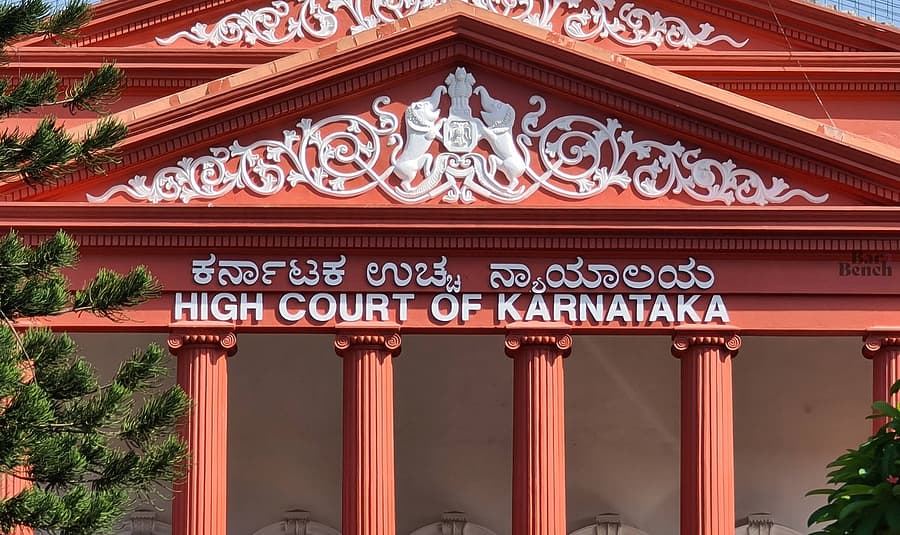
Karnataka High Court: Quashes SC/ST Act Complaint Against Baba Kalyani
Summary
- The Karnataka High Court quashed a criminal complaint under the Scheduled Castes and Scheduled Tribes (Prevention of Atrocities) Act against Bharat Forge chairman Baba Kalyani.
- The complaint, filed in 2018, alleged an incident from 2007, resulting in an unexplained delay of 11 years.
- Justice M Nagaprasanna ruled the complaint was an "abuse of the process of law" and a "misuse" of the Act's provisions.
- The ruling also provided relief to businessman Ashok Kheny and D Ravishankar, who were named alongside Kalyani.
- The case stemmed from a land dispute related to the NICE road project in Bengaluru, involving entities connected to Kalyani.
Court Quashes SC/ST Act Case
This ruling by the Karnataka High Court, which quashes the SC/ST Act case against Baba Kalyani, serves as a vital reminder for legal professionals and compliance officers regarding the diligent application of protective statutes.
The Karnataka High Court recently invalidated a criminal complaint lodged under the Scheduled Castes and Scheduled Tribes (Prevention of Atrocities) Act, specifically targeting Baba Kalyani, the chairman of Bharat Forge. This significant judicial intervention arose from a protracted land dispute linked to the Bengaluru-based NICE road project. The ruling, delivered by Justice M Nagaprasanna, also extended relief to two other individuals, businessman Ashok Kheny and D Ravishankar, who were implicated in the same complaint.
The legal challenge, formally titled Baba Kalyani Vs Rajendran, centered on allegations that the court ultimately deemed an abuse of the legal process. The complaint, initiated in 2018, referenced an alleged incident that had purportedly taken place as far back as 2007. This substantial gap of eleven years between the alleged event and the filing of the complaint proved to be a critical factor in the court's decision, as the complainants failed to provide any satisfactory explanation for the prolonged delay.
Judicial Scrutiny of Delayed Allegations
Justice M Nagaprasanna, in the November 4 order, highlighted the profound concerns raised by the unexplained delay. The court explicitly characterized the complaint as a "classic illustration" of the misuse and abuse inherent in the provisions of the Scheduled Castes and Scheduled Tribes (Prevention of Atrocities) Act. This strong judicial language underscores the court's stance against the weaponization of protective legislation for purposes other than its intended aim.
The court's analysis pointed out a significant discrepancy: while the narrative within the complaint spanned from 2007 to 2018, the core incident itself was confined solely to 2007. This temporal disconnect, coupled with the absence of a justifiable reason for the eleven-year lag, led the court to conclude that the proceedings were an improper invocation of the law. This ruling sets a crucial precedent for scrutinizing the timeliness and bona fides of allegations brought under the SC/ST Act.
Background of Key Figures and Project
Babasaheb Neelkanth Kalyani, widely known as Baba Kalyani, holds prominent positions as the Chairman and Managing Director of Bharat Forge, in addition to leading the extensive Pune-based Kalyani Group. His connection to the contentious NICE road project stems from his past role as a director and current shareholder in Nandi Infrastructure Corridor Enterprises Limited (NICEL), the entity responsible for the project's development. Kalyani maintains a direct ownership of five percent in NICEL, while BF Utilities, a company within the Kalyani Group, holds a substantial seventy-five percent stake.
The complaint, which was ultimately quashed, originated from a private filing by S Rajendran, S Meganathan, and S Sampath. Their allegations formed the basis of the legal action against Kalyani and the other named individuals. Ashok Kheny, another beneficiary of the court's decision, is also associated with NICEL, further linking the parties to the infrastructure venture at the heart of the dispute.
Implications for Legal Practice
This ruling by the Karnataka High Court, which quashes the SC/ST Act case against Baba Kalyani, serves as a vital reminder for legal professionals and compliance officers regarding the diligent application of protective statutes. It reinforces the principle that while laws like the Scheduled Castes and Scheduled Tribes (Prevention of Atrocities) Act are crucial for safeguarding vulnerable communities, they are not immune to scrutiny when their provisions appear to be invoked without proper justification or with significant, unexplained delays. The court's emphasis on the "misuse and abuse" of the Act provides a strong basis for challenging complaints that lack temporal coherence or genuine intent.
The decision by Justice M Nagaprasanna highlights that courts will critically evaluate the circumstances surrounding the filing of such complaints, particularly when there is a substantial time gap between the alleged incident and the initiation of legal proceedings. This judicial stance offers a significant precedent for challenging cases where the bona fides of the allegations are questionable, thereby helping to prevent the exploitation of important legislation.
Practical Implications
Lawyers and compliance officers should note this ruling as a strong precedent against the misuse of the SC/ST Act, particularly when there are significant, unexplained delays in filing complaints. It underscores that courts will scrutinize the timeliness and bona fides of such allegations, providing a basis to challenge cases that appear to be an abuse of process.
Source
How does this affect you?
Get an AI analysis of this article grounded in your jurisdictions, practice areas, and any policy documents you've uploaded to Wansom.
Finish Reading the Full Story and the Expert Analysis.
Get the latest legal & regulatory intelligence in India
Wansom is AI and can make mistakes.