
MP High Court: Police Out-of-Turn Promotion Is Discretionary
Summary
- The MP High Court ruled that police constable Santosh Dubey was not entitled to an out-of-turn promotion for rescuing neighbors while off duty.
- The court clarified that Rule 56(3) of the Madhya Pradesh Vishesh Sashastra Bal Niyam, 1973, grants discretionary power for promotions, not an automatic right for every act of bravery.
- Distinguished performance for an out-of-turn promotion must be connected to official police duties, which Dubey's off-duty act was not.
- This decision overturned a Single Judge's order that had granted Dubey promotion to Head Constable with effect from May 8, 2000.
- The ruling emphasized that courts will only interfere with departmental decisions on discretionary promotion police India if they are palpably arbitrary or perverse, citing *State of M.P. v. Sanjay Shukla*.
The Promotion Dispute
The bench underscored that while the incident undeniably showcased courage and humanity, such an act, when performed off-duty and outside the scope of official assignments, does not automatically create a legal entitlement to an out-of-turn promotion under the relevant rules.
The Madhya Pradesh High Court recently addressed a long-standing claim for an out-of-turn promotion by a police constable, Santosh Dubey, who had performed a heroic act while off duty. Dubey had rescued two neighbors, Nalini Bai and Francis Joseph, whose clothes had caught fire, extinguishing the flames and arranging for their medical treatment. This incident, occurring after 8:30 p.m. when the constable was not on official assignment, earned him a cash reward of Rs 1,000 from his department, but not the out-of-turn promotion he sought.
Despite the departmental recognition, a competent committee deemed Dubey unsuitable for an out-of-turn promotion. His pursuit of this claim spanned over two decades, leading to a High Court directive on September 7, 2020, which acknowledged a potential injustice and ordered the State to re-evaluate his representation. However, by December 14, 2020, the authority again concluded that the incident did not fall within the parameters of Rule 56(3) of the Madhya Pradesh Vishesh Sashastra Bal Niyam, 1973. A Single Judge of the High Court, in W.P. No. 24814/2003, subsequently ruled in Dubey's favor, noting his undisputed bravery and pointing to instances where other police personnel received out-of-turn promotions for seemingly less significant acts. This order directed his promotion to Head Constable effective May 8, 2000, including consequential pensionary benefits but no back wages.
Interpreting Discretionary Promotion Rules
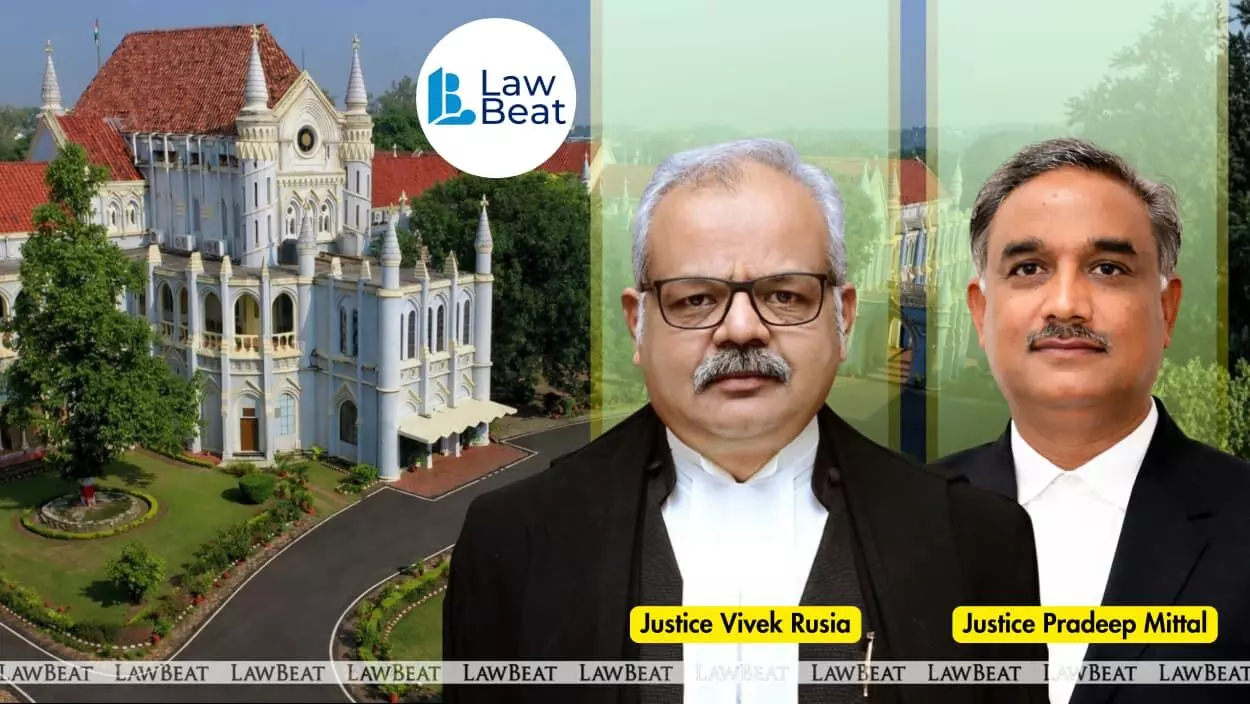
The State, represented by Government Advocate Piyush Jain, challenged the Single Judge's decision, arguing that Rule 56(3) of the Madhya Pradesh Vishesh Sashastra Bal Niyam, 1973, is an enabling provision that does not confer an automatic right to promotion. Advocate Nand Kishore Tiwari appeared for the respondent, Santosh Dubey. A Division Bench, comprising Acting Chief Justice Vivek Rusia and Justice Pradeep Mittal, meticulously examined the wording of the Rule, particularly the phrase "may promote," concluding that it unequivocally grants discretionary power to the competent authority. This interpretation signifies that an out-of-turn promotion is not an automatic consequence of every act of courage or public service.
The Rule specifies eligibility for officers who have distinguished themselves in anti-dacoity operations, law and order situations, shooting competitions, or "in some other field of duty," or who have received particular police medals. The Court emphasized that the phrase "in some other field of duty" must be understood within the context of the preceding expressions, implying distinguished performance directly connected to the duties and functions of the police force. It clarified that this provision cannot be extended to encompass every meritorious or humanitarian act performed by police personnel, irrespective of its connection to their official responsibilities.
Rationale for Overturning the Promotion
The Division Bench found that Santosh Dubey's act, while commendable, did not align with the specific criteria for an out-of-turn promotion under Rule 56(3) police promotion MP. The incident occurred when he was off duty and was not part of any official assignment. Furthermore, there was no evidence that he had received any of the specific medals mentioned in the Rule, and the Rs 1,000 cash reward could not be equated with such distinctions. The bench underscored that while the incident undeniably showcased courage and humanity, such an act, when performed off-duty and outside the scope of official assignments, does not automatically create a legal entitlement to an out-of-turn promotion under the relevant rules.
In reaching its decision, the MP High Court relied on the Supreme Court's precedent in *State of M.P. v. Sanjay Shukla*, which established that out-of-turn promotions cannot be claimed as a matter of right. This principle dictates that courts should only intervene in such departmental decisions if they are palpably arbitrary or perverse. Applying this to the Santosh Dubey promotion case, the High Court determined that the departmental committee's decision not to grant the promotion was neither arbitrary nor perverse. The bench also explicitly rejected the argument for promotion based on parity with other police personnel who might have received similar benefits for different acts, reinforcing the discretionary nature of these promotions in India.
Practical Implications
Lawyers advising police personnel or departments in Madhya Pradesh should note this ruling, which clarifies that out-of-turn promotions under Rule 56(3) are discretionary and not an automatic entitlement for acts of bravery, particularly if not directly connected to official duties. This limits the grounds for challenging departmental decisions on such promotions, emphasizing that courts will only interfere if the decision is palpably arbitrary or perverse.
Source
How does this affect you?
Get an AI analysis of this article grounded in your jurisdictions, practice areas, and any policy documents you've uploaded to Wansom.
Finish Reading the Full Story and the Expert Analysis.
Get the latest legal & regulatory intelligence in India
Wansom is AI and can make mistakes.