
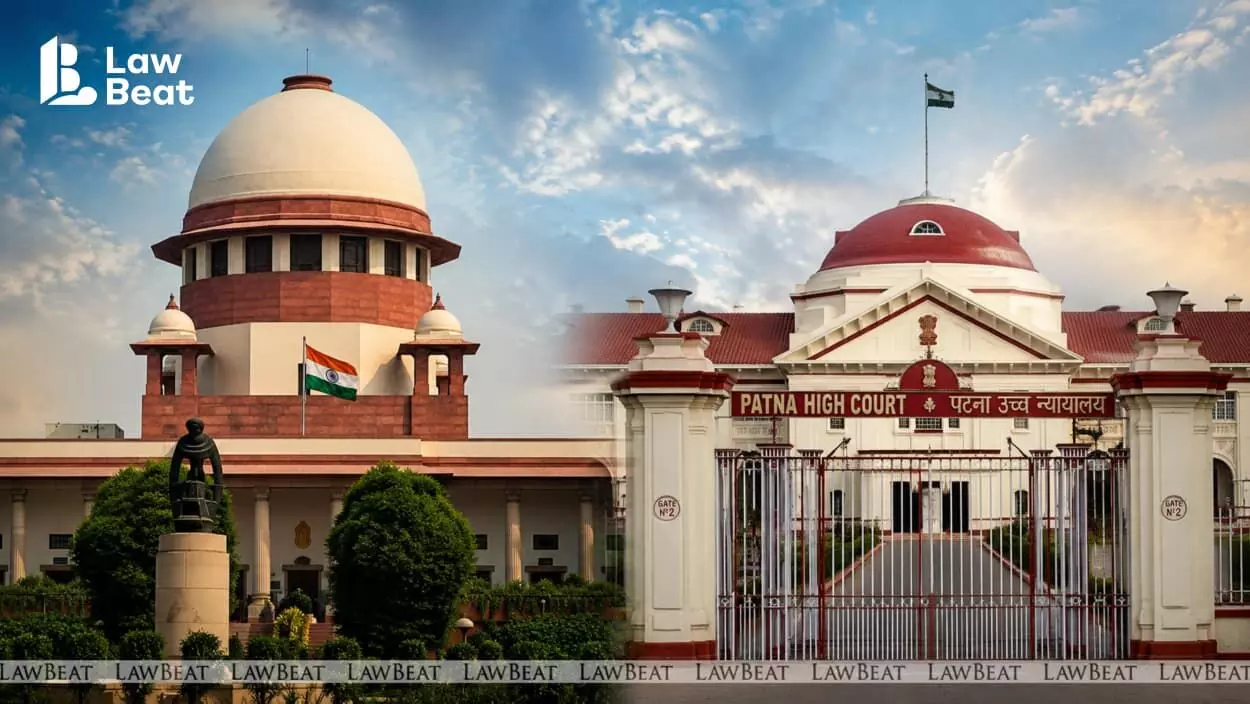
Supreme Court Mulls Review: Patna High Court's Attempted Rape Ruling
Summary
- The Supreme Court has taken suo motu cognizance of a Patna High Court judgment that ruled certain acts against a woman did not constitute attempted rape.
- The Patna High Court had acquitted a photo studio owner, finding that confining, chest pressing, and attempting to remove a salwar amounted to outraging modesty, not attempted rape.
- The Supreme Court's three-judge bench suggested state judicial academies review high court judgments for objectionable remarks concerning women.
- The apex court also indicated that High Courts could be directed to expunge such observations through their own suo motu cases.
- The original incident involved allegations of the accused locking a woman in a studio, undressing himself, and forcibly molesting her with intent to rape.
What Happened
The Supreme Court's proactive engagement in this case underscores a critical concern regarding the interpretation of sexual assault laws and the broader implications of judicial pronouncements on gender sensitivity.
The Supreme Court has initiated a review of a controversial judgment from the Patna High Court, which determined that actions such as confining a woman, pressing her chest, and attempting to remove her lower garment did not amount to attempted rape. This ruling, delivered by Justice Purnendu Singh, set aside the conviction of a photo studio owner, Himanshu Kr. Pathak @ Mithiya Pathak, who had been found guilty by a trial court in 2013. The trial court had sentenced Pathak to three years of rigorous imprisonment for attempted rape under Section 376 read with Section 511 of the IPC, alongside wrongful confinement under Section 342.
The original incident, which led to an FIR on January 20, 2008, occurred the previous day at 'Chhaya Studio' in Amarpur, Banka district. According to the prosecution, the studio owner, Pathak, invited the victim inside for a photograph, instructing her father to wait outside to view the image on a computer. Once inside, the accused locked the door. The victim testified that Pathak undressed himself, tried to remove her salwar, and forcibly molested her by pressing her chest, all with the intention of committing rape. Her cries prompted her father to force open the door, at which point the accused violently pushed him aside and fled the scene.
In its re-evaluation, the Patna High Court concluded that while the acts of confining the victim, physically molesting her by pressing her chest, and attempting to remove her salwar constituted the offense of outraging her modesty, they did not meet the legal threshold for attempted rape. The High Court cited a complete absence of medical corroboration and a lack of an unequivocal overt act to commit rape as key reasons for its decision. Furthermore, the court highlighted significant procedural deficiencies in the original trial, noting that the sole independent local witness out of five had turned hostile, the Investigating Officer was not examined, and no Medical Officer provided testimony, thereby lacking medical evidence to support the attempted rape charge. The court also considered the victim's parents to be "interested witnesses."
Legal Context
The Supreme Court's intervention stems from its suo motu cognizance of the Patna High Court's judgment, which it had previously criticized in July for its judicial reasoning. A three-judge bench, comprising Chief Justice of India Surya Kant, Justice Joymalya Bagchi, and Justice V Mohana, is currently hearing the matter. During the proceedings, CJI Kant emphasized the need for judges to conduct thorough research before issuing such decisions.
The Supreme Court has taken a proactive stance, suggesting that state judicial academies should be tasked with reviewing judgments from their respective high courts to identify and address any objectionable observations concerning women. CJI Kant further indicated that High Courts could ultimately be directed to initiate their own suo motu cases to expunge such remarks. In September, a bench led by CJI Surya Kant issued a notice in the case, identified as IN RE: ORDER DATED 09.07.2026 PASSED BY THE HIGH COURT OF JUDICATURE AT PATNA IN CRIMINAL APPEAL (SJ) NO. 775/2013 AND ANCILLARY ISSUES. During this hearing, CJI Kant informed Bihar Advocate General SD Sanjay that while there were "offending observations," the court would only be able to set aside the judgment after hearing the accused, instructing that service be ensured. Advocate Himanshu Pathak, appearing for the Supreme Court via video conferencing, requested additional time to file a reply, leading to a one-week adjournment of the matter.
Why It Matters
The Supreme Court's proactive engagement in this case underscores a critical concern regarding the interpretation of sexual assault laws and the broader implications of judicial pronouncements on gender sensitivity. By taking suo motu cognizance and proposing systemic reforms, the apex court is signaling a commitment to ensuring that judicial reasoning aligns with contemporary understandings of justice and victim protection. The suggestion to involve state judicial academies in scrutinizing high court judgments for problematic observations concerning women highlights a systemic issue that requires a coordinated response across the judiciary.
The directive for High Courts to potentially initiate their own suo motu cases to expunge objectionable remarks would empower them to rectify errors and promote a more consistent and sensitive application of the law. This initiative, championed by Chief Justice of India Surya Kant, aims to prevent future judgments from undermining the gravity of offenses against women and to foster a judicial environment where victims' experiences are appropriately recognized and addressed. The ongoing review serves as a crucial reminder of the judiciary's role in upholding fundamental rights and ensuring that legal interpretations do not inadvertently perpetuate harmful stereotypes or diminish the severity of criminal acts.
Source
How does this affect you?
Get an AI analysis of this article grounded in your jurisdictions, practice areas, and any policy documents you've uploaded to Wansom.
Finish Reading the Full Story and the Expert Analysis.
Get the latest legal & regulatory intelligence in India
Wansom is AI and can make mistakes.