
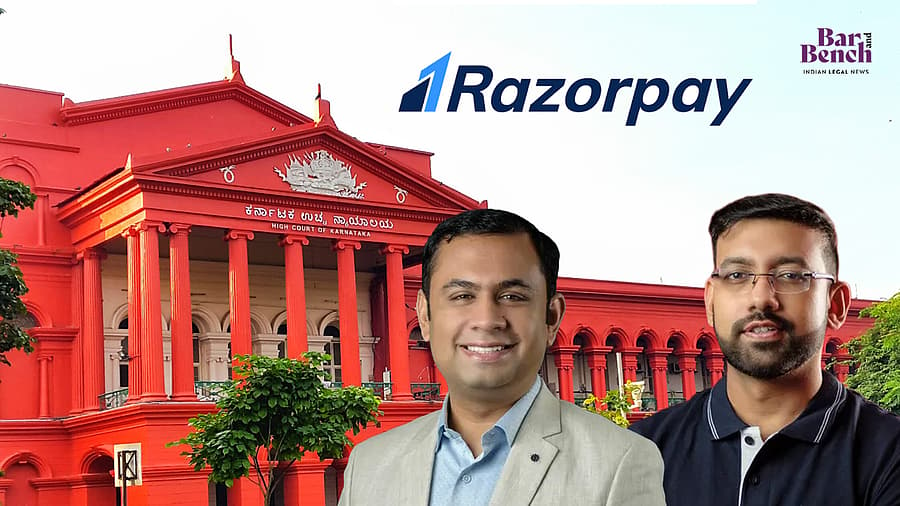
Karnataka High Court: No Quashing of Razorpay SFIO Case
Summary
- The Karnataka High Court refused to quash a Serious Fraud Investigation Office (SFIO) case against two Razorpay directors.
- The SFIO case alleges Razorpay failed to conduct diligent KYC procedures for Chinese-controlled digital lending apps.
- Razorpay Co-founder and CEO Harshil Mathur and Co-founder and Managing Director Shashank Kumar are the petitioners in Harshil Mathur v Union of India.
- Justice M Nagaprasanna ruled that the High Court cannot conduct a mini-trial on disputed facts, necessitating a full trial.
- The directors bear the burden of proving they complied with their fiduciary duties and due diligence during the trial.
Judicial Refusal to Quash Proceedings
The Court explicitly stated that whether fiduciary duties were complied with, or whether due diligence was adequately performed by the petitioners, constitutes a factual dispute that can only be properly assessed during a full-blown trial.
The Karnataka High Court recently declined to dismiss a case initiated by the Serious Fraud Investigation Office (SFIO) against two directors of the payment gateway Razorpay. This significant decision, stemming from the case of Harshil Mathur & Anr v Union of India, involves allegations that Razorpay facilitated the operations of a digital lending network reportedly under Chinese control. The petitioners, Razorpay Co-founder and CEO Harshil Mathur and Co-founder and Managing Director Shashank Kumar, had sought to have the proceedings against them quashed, but their plea was ultimately rejected.
Allegations of KYC Lapses in Digital Lending
Central to the SFIO case are claims that Razorpay failed to implement diligent Know Your Customer (KYC) procedures. These alleged lapses occurred prior to the onboarding of various digital loan applications, which were purportedly controlled by Chinese entities, as merchants on its platform. The allegations suggest that these failures allowed a high-risk digital lending ecosystem to operate through the payment gateway, raising serious questions about the company's compliance protocols and the oversight exercised by its leadership. The Serious Fraud Investigation Office is tasked with investigating corporate fraud, underscoring the gravity of the accusations.
Court's Stance on Factual Disputes
In a November 4 order, Justice M Nagaprasanna of the Karnataka High Court dismissed the directors' petition, asserting that the matter involved contested factual questions. The Court firmly reiterated its position that a High Court is not equipped to conduct a "mini-trial" to resolve such disputed allegations at an early stage of proceedings. Instead, the judicial body concluded that the onus rests squarely on the petitioners to demonstrate, during a comprehensive trial, that they upheld their fiduciary duties as Razorpay directors and exercised appropriate due diligence.
The Court explicitly stated that whether fiduciary duties were complied with, or whether due diligence was adequately performed by the petitioners, constitutes a factual dispute that can only be properly assessed during a full-blown trial. This approach highlights a judicial reluctance to intervene prematurely when the facts themselves are contested, pushing the burden of proof onto the accused directors to clarify their conduct.
Implications for Director Accountability
This ruling by the Karnataka High Court has significant implications for directors of payment gateways, particularly regarding their personal liability for compliance failures. The decision underscores the critical importance of robust Razorpay KYC digital lending protocols, especially when dealing with high-risk sectors or entities with opaque ownership structures. By refusing to quash the SFIO case, the Court has signaled that directors cannot easily avoid facing trial when allegations of breaches of fiduciary duty and due diligence are raised, particularly in complex financial fraud investigations. The Court found no justification for interference at this preliminary juncture, emphasizing that the directors must "come out clean" through a full legal process.
Practical Implications
This ruling underscores the significant personal liability exposure for directors of payment gateways regarding Know Your Customer (KYC) compliance, particularly when onboarding entities involved in high-risk sectors like digital lending. Lawyers advising payment service providers or their directors should emphasize robust due diligence protocols and be prepared for judicial reluctance to quash cases prematurely when factual disputes exist, pushing the burden of proof onto the directors during trial.
Source
How does this affect you?
Get an AI analysis of this article grounded in your jurisdictions, practice areas, and any policy documents you've uploaded to Wansom.
Finish Reading the Full Story and the Expert Analysis.
Get the latest legal & regulatory intelligence in India
Wansom is AI and can make mistakes.